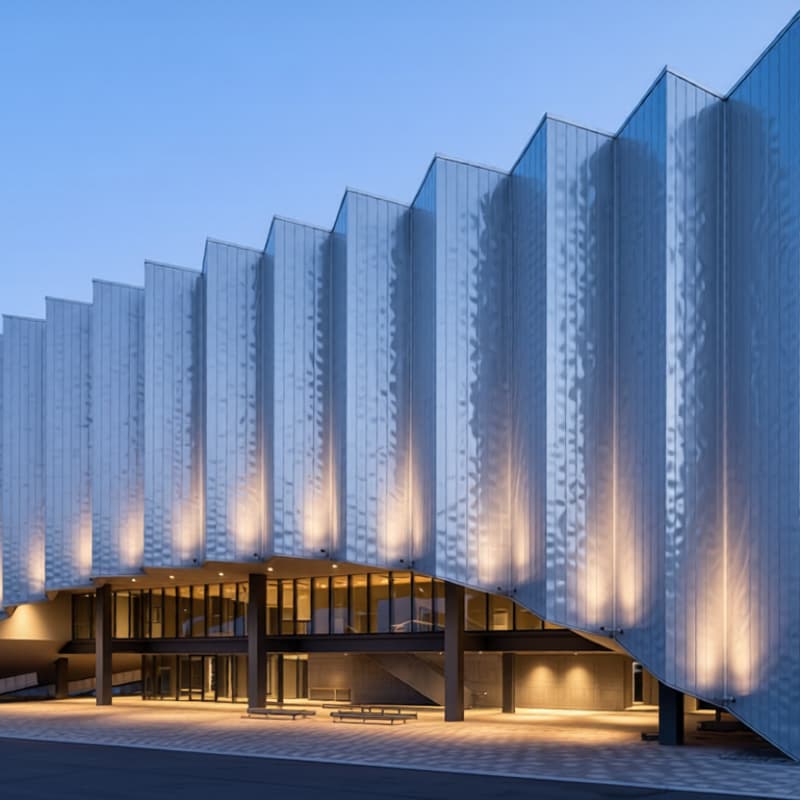

AI Design Lab for Architects: System Prompting, Site Intelligence & Motion Presentation
Generative AI is everywhere in architecture.
But most outputs are inconsistent, over-stylised, and disconnected from design logic.
This lab is designed for architects who want control.
Instead of generating random visuals, you will learn how to construct a structured AI design environment — where spatial philosophy, site intelligence, and presentation logic are embedded into the workflow itself.
Architects who master systems will outperform those who rely on isolated prompts.
This session focuses on building that system.
🔥 Agenda
[Part 1] System Prompting & Site Intelligence (June Chow)
• The practical difference between prompting and system prompting
• How to build a structured AI workflow live (Weavy + LLM)
• How to embed spatial philosophy into a persistent system
• How to reduce visual noise and maintain architectural coherence
• How to create consistency across multiple iterations
• The Anchor Method for structured urban site analysis
• Build 8 Urban Microscenes with a simple Design Brief
[Part 2] Motion-Based Architectural Communication (Tianyu Xu)
• How to transform architectural concepts into professional motion renders
• Workflows, storyboards and prompting techniques for videos
• Converting still concepts into cinematic walkthroughs
• How to avoid default AI output and general AI effects
• Vibe coding your own design tools for specific use cases
• Live demo: from ideas and still images to refined motion presentation
🧰 Tools & Systems Covered
• Workflow Tool (Weavy AI, Google AI Studio)
• Large Language Models (Gemini, Claude, Qwen)
• AI Image Models (Nano Banana, FLUX.2)
• Latest AI video models (Veo, Kling, Seedance)
What You Will Receive
• Copy-ready prompt templates
• A system prompt architecture framework
• The Anchor Method for site analysis
• Plug-and-play AI image and video workflows
• Slides + Recording access
FAQ
Q: I can already generate good images in Midjourney. Why do I need system prompting?
A: Strong single images are easy. Maintaining design logic across 10–20 iterations is difficult. System prompting ensures consistency in spatial philosophy, tone, and architectural intent.
Q: How is this different from watching YouTube tutorials on AI tools?
A: Most tutorials teach features. This lab teaches structure — how to build a repeatable workflow aligned with professional architectural thinking.
Q: Will this help in competitions and client presentations?
A: Yes. You will learn how to maintain conceptual coherence from early design exploration to motion-based presentation.
Q: Is this relevant if I only use AI for early-stage concept design?
A: Especially then. Early-stage inconsistency can distort design direction. Structured workflows protect conceptual clarity.
The detailed agenda may evolve with the latest AI advancements. The core architectural frameworks remain the focus.
🧠 About the Hosts
June Chow
Architect · Educator · AI Strategist
June Chow works at the intersection of architectural practice and generative intelligence. She has delivered AI-focused lectures and workshops for professional institutions, universities, and international design audiences, and serves as a jury member for global architecture and AI awards.
Her work focuses on building structured AI design systems — integrating system prompting, spatial philosophy, and controlled visual workflows into real-world architectural processes. June guides architects in moving beyond isolated experimentation toward disciplined, repeatable AI-driven design environments.
Tianyu Xu
Generative AI Educator · LinkedIn Top Voice
Tianyu has 180,000+ followers across social media and regularly share practical AI insights on LinkedIn. Tianyu believes in AI’s power to augment human capabilities. With a decade of digital marketing experience prior to generative AI, Tianyu combines creativity and data-driven insights in prompt engineering and AI tools. He is the coauthor of "Will ChatGPT Take My Job: Winning Strategies for Managers."