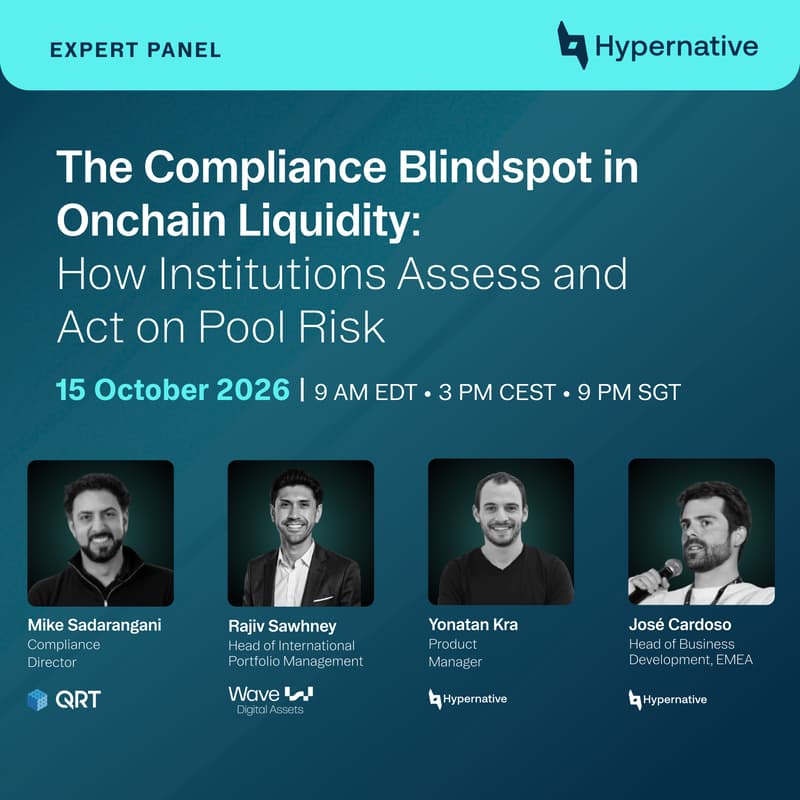

The Compliance Blindspot in Onchain Liquidity: How Institutions Assess and Act on Pool Risk
Most DeFi liquidity is permissionless. When an institution supplies a pool or trades a market, its capital is commingled with participants it neither controls nor, in most cases, can see. That layer sits outside what entity-level screening covers, which raises a question institutions are increasingly being asked internally: what does an institution actually take on from the other liquidity providers standing behind the pool it enters?
That exposure is not static. Pool composition changes as capital moves in and out, so the risk profile of a position can change after entry. The difficult question is not simply whether exposure exists. It is whether that exposure is material, whether it creates potential liability, and what the institution should do about it.
This expert panel brings together investment and compliance leaders to examine how institutions make those decisions in practice:
How pool-level risk differs from protocol-level risk, and where pool analysis fits alongside existing screening practices
The regulatory guidance institutions have today, how approaches differ across jurisdictions, and where greater clarity is needed
Best practices for assessing pool composition and materiality, including where investment and compliance teams may interpret the same findings differently
How commingling with other pool participants could affect an institution’s risk and potential liability
How better pool-level data can help institutions keep viable strategies open instead of defaulting to a blanket restriction
What ongoing monitoring and controls should cover, and when a change should trigger review, escalation or an adjustment to the position