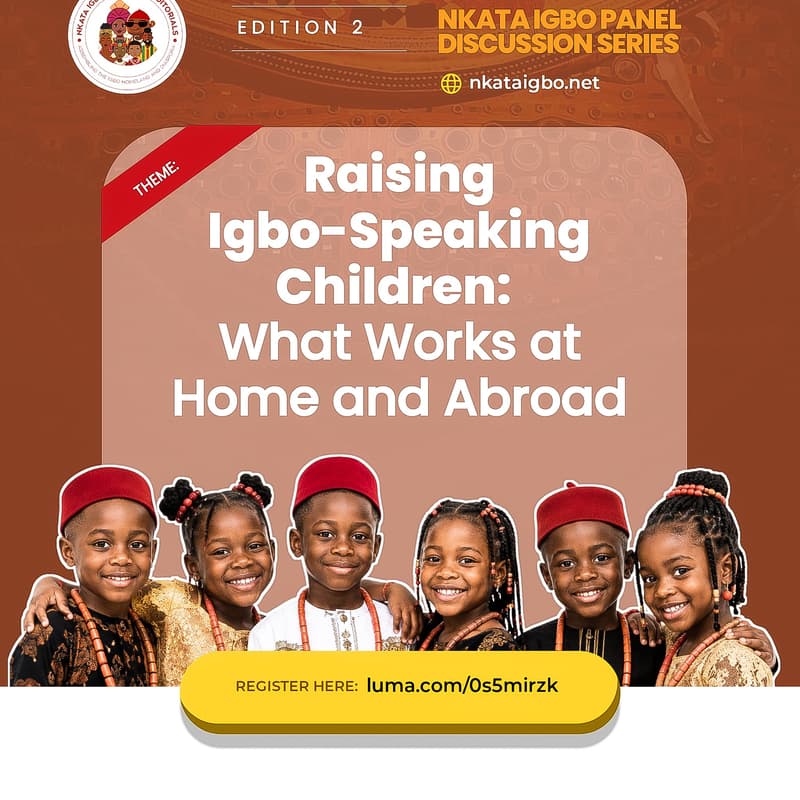
Nkata Igbo Panel Discussion (Edition 2)
Theme: Raising Igbo-Speaking Children: What Works at Home and Abroad
Background
The Igbo language is one of Africa's major indigenous languages and a vital part of the identity, history, and cultural heritage of Ndi Igbo. Yet, an increasing number of Igbo children—both in Nigeria and across the diaspora—are growing up unable to speak, read, or understand the language fluently. Urbanisation, migration, globalization, mixed-language households, and the dominance of English and other languages have made intergenerational language transmission increasingly difficult.
Research consistently shows that the home is the single most important environment for preserving a heritage language. Children who regularly hear and use their mother tongue at home are more likely to become confident speakers and to develop a stronger sense of cultural identity.
This discussion brings together parents, educators, linguists, and community leaders to share practical, experience-based strategies that families can adopt to raise children who not only understand Igbo but also speak it with confidence and pride, whether they live in Nigeria or anywhere else in the world.
Objectives
The discussion seeks to:
- Examine why many Igbo children are losing fluency in their mother tongue.
- Share practical, evidence-based approaches parents can implement at home.
- Explore the unique opportunities and challenges facing Igbo families in the diaspora.
- Discuss how schools, churches, grandparents, media, and community organizations can support parents.
- Inspire families to make intentional commitments toward preserving the Igbo language.