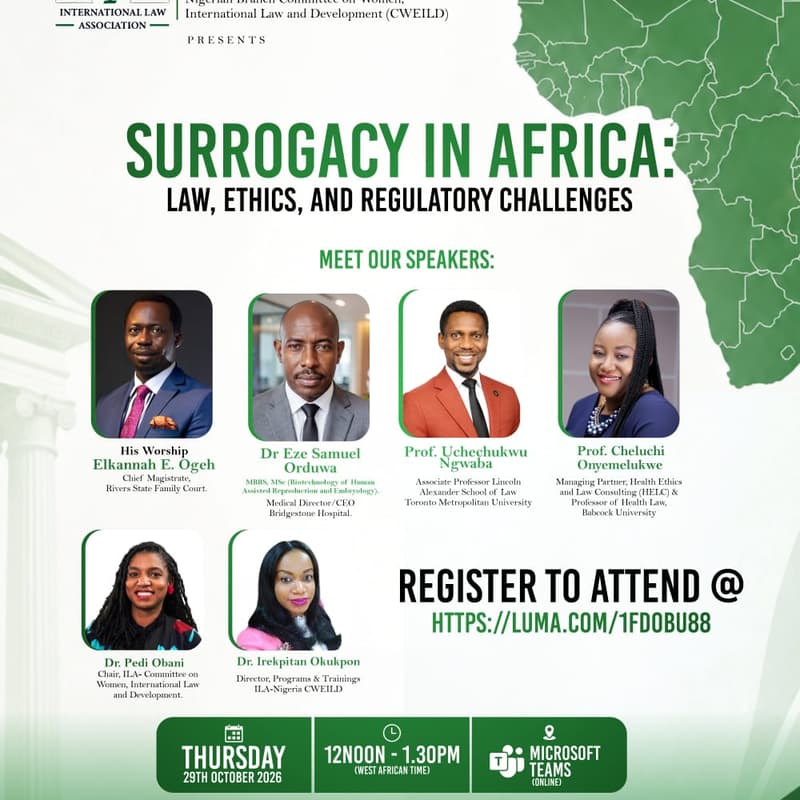
Surrogacy in Africa: Law, Ethics, and Regulatory Challenges
This webinar aims to:
a.) Examine the concept and procedure of surrogacy, and promoting collaboration between legal, medical, and policy actors, including guidance on consent processes, embryo transfer practices, and the structuring of surrogacy arrangements.
b.) Build a clear understanding of how surrogacy and assisted reproductive technologies are currently regulated across selected African countries, including Nigeria, drawing attention to key similarities, differences, and existing legal gaps that affect practice and enforcement.
c.) Examine how the law protects children born through surrogacy, with particular attention to ensuring their right to identity, birth registration, nationality, and secure legal parentage from the moment of birth.
d.) Explore the balance between respecting reproductive autonomy and preventing exploitation, especially for women who may act as surrogates, by considering how legal frameworks can safeguard against coercion, inequality, and financial vulnerability.
e.) Interrogate the realities of commercial and altruistic surrogacy models, including their ethical, legal, and economic dimensions, while addressing growing concerns around unregulated practices and exploitation.
f.) Generate practical, context-sensitive recommendations for strengthening surrogacy regulation in Africa, taking into account cultural and religious perspectives.