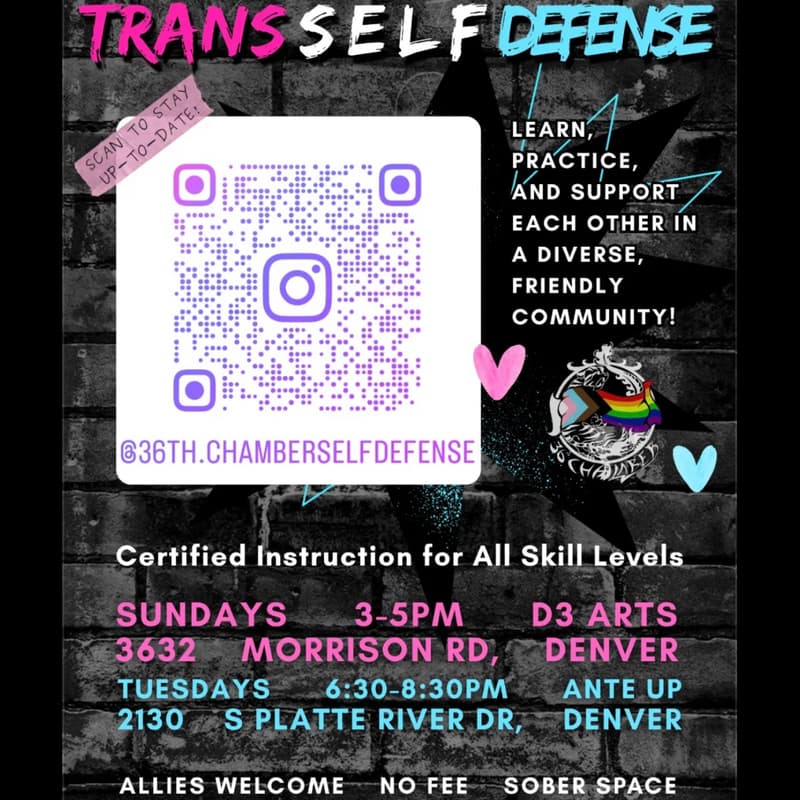

Trans Self Defense -36th Chamberselfdefense - No fee
Free Self Defense Class Hosted by 36.chamberselfdefense:
Community Agreements
36th Chamber Queer Self-Defense Collective
We Keep Us Safe – At all times, both in and out of the classroom, safety is our first priority
The skills you learn in this classroom are meant to help you protect yourself and your community. Use common sense in keeping yourself and your partner safe. Listen to instructors if they tell you to slow down, or tell you you’re going too hard.
Respect Bodily Consent – Respect taps, surrenders, and other stoppages
By entering this classroom, you consent to your body being touched in ways that may be uncomfortable, awkward, or painful. You have the right to revoke that consent at any time by tapping, saying “Tap”, or saying “Stop”. When this happens, you must disengage from your opponent. If you ignore taps repeatedly, there will be a conversation with leadership, and you may not be welcomed back.
Oops, Ouch – Acknowledge when you make a mistake
Mistakes will be made, and accidents will happen. When you hurt someone, be it physically or verbally, step up and own it. Everyone should feel empowered to speak up when another member makes them uncomfortable. You can always reach out to an instructor to help facilitate a conversation.
Self-Defense – These are basic self-defense techniques, don’t pick fights
The techniques you learn here are meant to give you a basic idea of how to defend yourself. They are not a substitute for years of training in a martial art. Real martial skill takes years of consistent practice to cultivate. Do not become overconfident in your skills and pick fights. Remember that running is almost always your best option to keep yourself safe.
Have Fun – Leave class in a better mood than when you came in
Just because this is serious work, doesn’t mean you shouldn’t have fun. Exercising with your friends is a great way to build community.
Community First, Always – The best defense will always be a strong community
Be kind to each other. Talk to your fellow students. Create connections with them. Build community. Most threats won’t come in the form of someone physically attacking you. We are much more likely to face precarious housing, food insecurity, or job discrimination. Help each other out, and accept help in return.