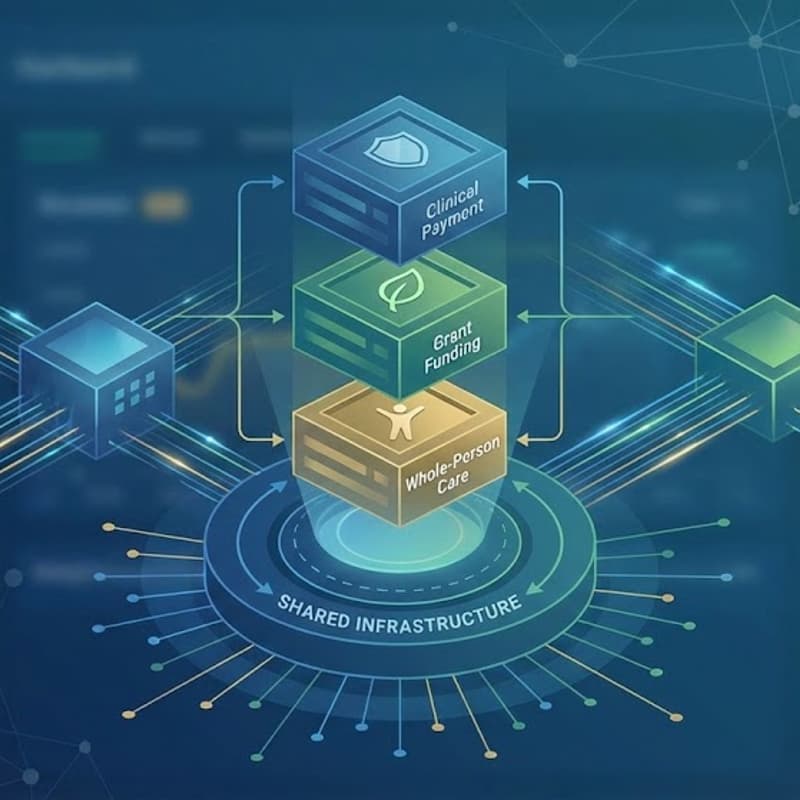
Infrastructure for Whole Person Health: How States & CBOs Can Stack Funding Sources (Rural Health Transformation, CMS Elevate + ACCESS)
Whole Person Health is Finally Funded. But Referrals Won't Get You Paid.
In 2026, a historic wave of federal funding is hitting the market to address the chronic disease epidemic. This includes the $50 Billion Rural Health Transformation Program (awarded to all 50 states), the new $100M MAHA ELEVATE Model, and CMS ACCESS.
Crucially, Medicare has also expanded Community Health Integration (CHI) payments to explicitly address "upstream drivers" of health—including physical inactivity and poor nutrition for patients with chronic health conditions.
But there is a catch: You cannot bill these codes with a simple referral.
To claim this revenue, regulations specifically mandate Standardized Care Plans.
The Technical Briefing
Join Matt Bishop, CEO of Open City Labs, for a high-level strategy session decoding the technical roadmap for States, Healthcare Providers, Community Based Organizations (CBOs), and Fitness Leaders. We will move beyond policy theory and break down the "Hard Infrastructure" required to execute.
We will cover:
The "Care Plan" Unlock: Why "Closed-Loop Referrals" are not billable events—and how to automate the creation of compliant Care Plans that unlock CMS ACCESS and Medicare G-Code revenue to address "upstream drivers"--no longer calling it social determinants or social drivers of health.
The "Ecosystem Play": How to leverage planning/infrastructure like CDC Alzheimer's BOLD Infrastructure grants (prevention) to align programs around chronic disease prevention and management and create a sustainable revenue engine for whole-person care.
The Rural Health Roadmap: A tactical analysis of the $50 Billion national investment in rural health. We will discuss the 3 Infrastructure Mistakes States Must Avoid as they deploy their average $200M awards to modernize data sharing.
New Revenue for Fitness & Lifestyle: How tech-forward gyms and fitness centers can partner with clinical providers to bill for "Lifestyle Support" and address physical inactivity under the expanded CHI + PIN "Upstream Drivers" definitions.
The "Silo Trap": Why buying separate software for every grant bankrupts your admin budget—and how to build a unified, integrated care with a "Billing Backbone" instead.
Who Should Attend:
C-Suite at CBOs, FQHCs, and YMCAs: CEOs, CFOs, and Strategy Officers looking for sustainable revenue models.
State Health Officials & Medicaid Directors: Leaders tasked with operationalizing the new MAHA and Rural Health Transformation initiatives.
Fitness & Wellness Executives: Leaders of gyms and lifestyle organizations looking to integrate with the healthcare payment system.
Network Leads: Directors of Community Care Hubs and referral networks.
Format: 45-Minute Technical Presentation + 15-Minute Executive Q&A.
Reserve your spot to learn about how your organization canbe part of building the infrastructure for whole person health and human thriving.