
Spirituality+AI: From Intention to Infrastructure (“The Relational Turn”)
Half of American adults are measurably lonely. Trust in institutions is at historic lows. The relational fabric that makes collective action possible—on climate, on governance, on AI—is fraying. The Surgeon General calls it an epidemic.
Modern technology has contributed to this separation we are experiencing from ourselves, each other, and the more-than-human world. And much of the tech industry's response—including at the intersection of spirituality, wellbeing, and AI—has been to optimize the individual’s experience: meditation apps, consciousness tools, personal awakening technology engineered to track my calm, my insight, my productivity, my awakening.
This work is real and important, but developmental research suggests that human capacity for relationship deepens through spiritual practice, transmission, and the right developmental conditions; the contemplative traditions have always known this and the most powerful spiritual tech is already deeply relational, yet the relational dimension still often remains implicit, under-resourced, and unmeasured.
What might be possible if the individuals already doing this relational work—across spiritual traditions, somatic lineages, civic infrastructure, and emerging technology—recognized themselves as part of a shared conversation, and chose to strengthen the connections among them?
We are convening this session to explore that question with people already doing this work across lineages that don't often share a room and to add a specific contribution to the broader stewardship and enablement work this emerging conversation already has underway.
Some of the questions we're working with:
Who might benefit, and how, from a shared conversation around something like 'Relational Technology'? What does this framing enable, and what might it foreclose or flatten?
What measurement infrastructure would allow us to prove that relational capacity is developing, not just assert it?
How do we fund relational technology without commodifying relationship itself? How do we make the case to funders who need evidence the current field can't yet provide?
Who governs this work? The traditions being drawn from have their own governance structures. The tech world has venture-backed startup governance. These are not compatible. What governance form honors both?
What would it look like for this room to contribute to the “stewardship” layer (i.e. not directing the field, but supporting its coherence)? And what are each of us willing to commit to?
During this daytime session, we’ll begin to explore these questions with the specificity, honesty, and relational depth that only a small, committed room can hold. Then later in the evening, we’ll open these questions to a broader community of builders and practitioners at a separate Public Convening.
What to Expect
This is a six-hour working session, and everyone in the room is a participant. You will be asked to share what you're building or enabling, what you need, and what you can offer. Come prepared.
The day is structured as a closed container; once the session begins, the room is sealed to protect the depth and continuity of what's emerging. The format mirrors the thesis: we build the relational layer by being in it together, not by talking about it from a distance.
Tentative Schedule
10:00 – 10:30 | Opening and Provocation.
Grounding. Introducing the thesis and the day's central questions.10:30 – 12:15 | Making the Room Legible.
A structured go-around: each person shares what they're building or enabling, what tradition or methodology they hold, what's working, and their biggest challenge. The goal is for the room to see itself: who's here, where effort is already converging, and where the gaps are.12:15 – 1:00 | Working Lunch.
1:00 – 2:45 | Working Session: What Does This Field Need?
Small mixed groups (builders, practitioners, funders, researchers, wisdom keepers) working on the field-building priorities* outlined below, including measurement, funding, governance, and talent. Groups report back. Facilitated synthesis of patterns across the room.2:45 – 3:00 | Break.
3:00 – 3:45 | Commitment Round.
Who in this room is positioned to act on what, and what are you willing to commit to, with your name attached? This is also where we propose a structure for how this group stays engaged going forward.3:45 – 4:00 | Close.
Honest assessment of what was accomplished, what's still unresolved, and clear next steps.
Intended Outputs
A proposed structure for ongoing community engagement.
What this group is committing to, with names attached.
Inputs toward a positioning paper on “Relational Technology” and its implications for what gets built, funded, and measured.
What This Room Can Offer
Part of what's needed across this work is an even stronger “stewardship layer”—the group of people willing to hold the broader landscape in view, to see across the boundaries of their own projects and organizations, and to act in service of the ecosystem as a whole. Stewards don’t direct the field; they support its coherence by sharing what they see, naming what's missing, offering what they have, and making commitments to each other and to those building and practicing in the space. This convening is one act of tending to a layer of soil that others have been tending for years.
Why You
This room is intentionally small and carefully curated. You're here because you meet a specific set of criteria that we believe are essential for this particular work:
You're already doing this work. You hold a relational practice, methodology, or tradition, whether that's somatic work, contemplative dyadic practice, ceremony, circle process, restorative justice, community coordination, relational AI research, or something else entirely. Or you're building, funding, measuring, or creating infrastructure to support the people who do. You are here not to learn about Relational Technology, but because you are one of the people already building it, whether or not you've used that language before.
You're a steward. In this room, you're here as someone who can and will suspend personal or organizational interests in service of the collective, and who views themselves as a servant leader working on behalf of something larger than any single project or organization. On this day, you’re not acting as an advocate for your individual agenda.
You're able to commit to strengthening this work. This convening is explicitly centered on resourcing the infrastructure this conversation needs to deepen, including shared language, measurement, funding, governance, talent, and community of practice. You're here because you can contribute to at least one of these, and you're signing up to participate not just for this day but as part of the ongoing work that follows.
A Note on Participation
We're asking participants to attend for the full day (10 AM– 4 PM). We know this is a significant ask and we don't take your time lightly. The day is designed to make good use of every hour.
If you're unable to attend the full day, you may join for the morning and depart at lunch, but we ask that you not arrive mid-day, as you'll be missing context that is foundational to the afternoon's work. Please let us know in advance if you'll need to attend partially so we can plan accordingly.
The foundations of this conversation exist across the lineages in this room; we're meeting at a specific intersection that hasn't been convened in this form before, and there will be more opportunities to participate as this conversation continues.
———
Co-Hosted by: Aligned • Compassion 2.0 • Developer Camp • Positive AI Labs • SOL • Spirit Tech Collective
This event is part of Human+Tech Week (May 11–15, San Francisco), a week-long program convening builders, investors, and leaders working at the intersection of human potential and AI.
By registering for this event, you agree to receive event-related communications from the organizers and Human+Tech Week. Registration information may be shared with Human+Tech Week and its official partners to support event coordination, communication, and reporting purposes. All information is handled responsibly in accordance with Luma’s privacy standards and Human+Tech Week’s data protection policies.
———
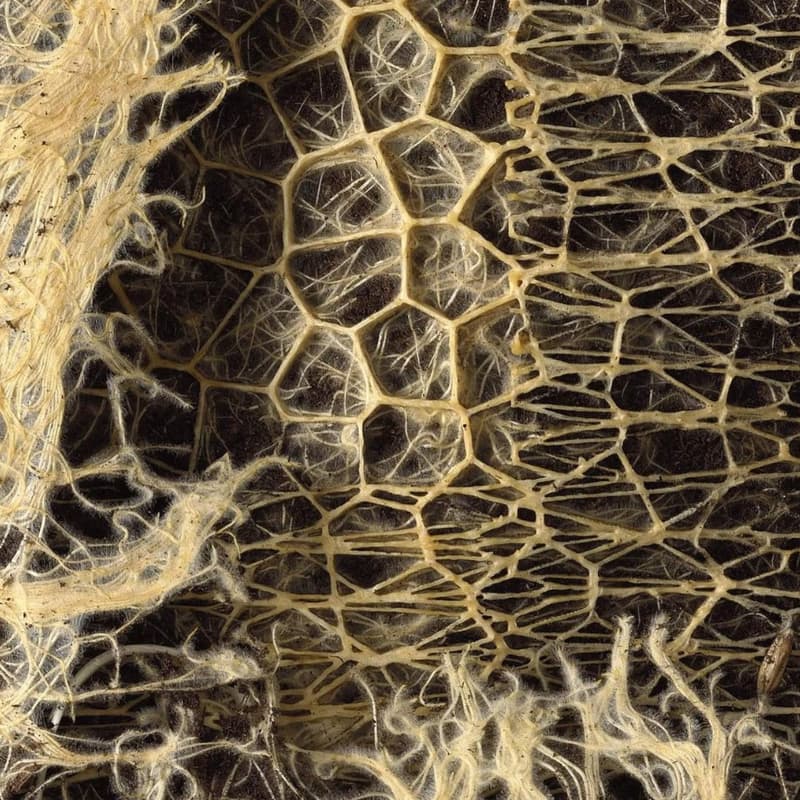
Thumbnail image: Interwoven (2021), an artwork by Diana Scherer created from woven plant roots.