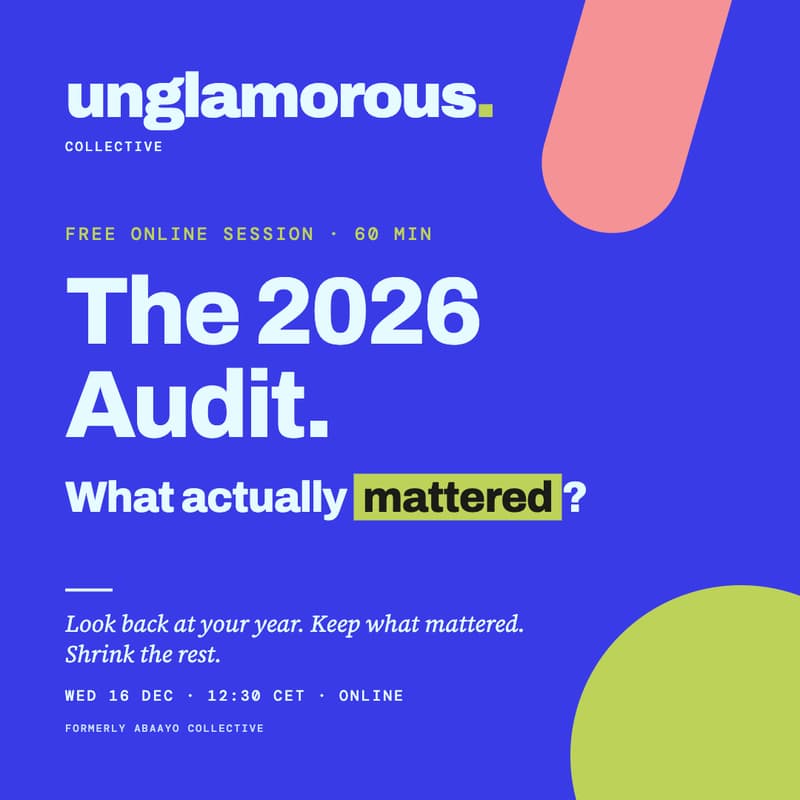
The 2026 Audit: What actually mattered?
You worked hard this year. Really hard. But how much of it actually changed something?
If you work in aid, development, humanitarian response, civic tech or the public sector, you know the feeling. The donor report that took a week. The meeting about the meeting. The project you pushed through in a sprint, then watched get quietly sidelined. And somewhere in there, the work that actually mattered.
This is a free, hands-on hour to look at your year honestly. Not to beat yourself up. To decide what comes with you into 2027.
What we’ll do
You’ll work through a short self-assessment, with a few quick inputs from me along the way. You’ll:
Name the work from 2026 you’re proudest of.
Map your year on two questions: did it make a real difference, and what did it cost you?
Find the drain: the work that costs a lot and changes little.
Sort what you can stop from what you have to do.
Pick up five practical moves for the must-do stuff, from shrinking it to quietly making it useful.
Leave with your own Stop, Shrink, Protect list for 2027 and one commitment for Q1.
Who it’s for
Social impact professionals who are tired of ticking boxes. Aid, humanitarian, development, civic tech, public sector, and the freelancers who work alongside them.
Good to know
60 minutes, online.
You’ll get the worksheet. It’s yours and stays private.
You choose what you share.
No wellness speak. No lectures. Just an honest look at real work.
Can’t make it live? Register anyway and we’ll send you the recording.
The exercise works best live, though. Block the hour if you can.
Your host
Justyna (Juśka) Linke has spent 15+ years in change management, foresight and co-creation. She founded Unglamorous. She researches why organisations end up ticking boxes instead of doing the work, and what that does to the people inside them.
About Unglamorous Collective
This session is a taste of Unglamorous Collective, a six-week programme and peer community for social impact professionals who want their work to matter and still have a life. The first cohort starts in Q1 2027.