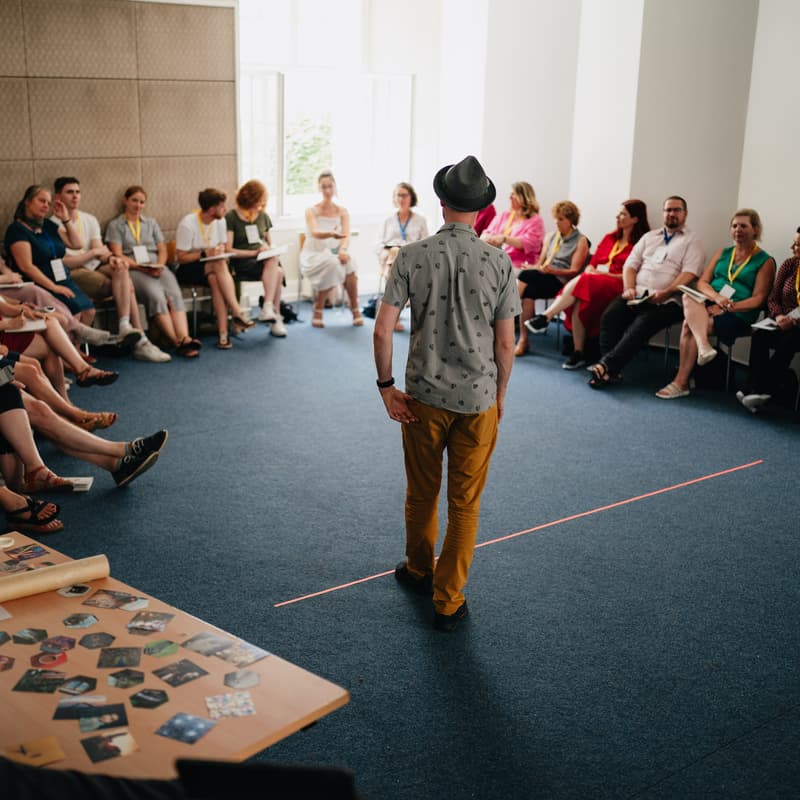

Get the "Quiet Ones" talking (without putting them on the spot)
You notice the person in the corner
You ask the group a question. The same person answers first.
Again. They mean well. They’re smart. And they’ve now spoken for four of the last five minutes.
Meanwhile, someone in the corner has been nodding all morning. They haven’t said a word. You can tell they have something. You just don’t know how to bring it into the room without putting them on the spot.
So you try the usual things. “Anyone else?” A long pause. You call on someone by name and watch them freeze.
Or you go around the circle, and everyone spends their turn rehearsing instead of listening.
The quiet ones aren’t the problem
I used to be the person in the corner. I’d sit in meetings with an idea I thought was good, waiting for a gap in the conversation that never came. By the time I’d worked up the courage, the conversation had moved on.
It wasn’t that I had nothing to say. Speaking up just cost more than I could afford in that moment.
Here’s what I believe about quiet people in groups: they’re doing the maths on risk.
Will I sound stupid?
Is this the right moment?
What if nobody reacts?
When speaking up feels costly, only the fastest and most confident voices come in.
Everyone else waits.
You can lower that cost. Not in the moment with a clever question, but before the session even starts, in how you design it. That’s what psychological safety looks like in practice, and it’s much less mysterious than it sounds.
I’m excited to share how I am designing my sessions so all voices are heard in my upcoming workshop.
What you’ll learn
Why people stay quiet. We’ll look at what’s actually going on for the person in the corner, so you can stop guessing and start designing for them.
What to avoid. Why putting people on the spot is one of the worst things you can do at the start of a session.
The Four Engagement Layers. It’s a simple sequence from my book, The Campfire Method, that lowers the cost of speaking up one step at a time. You’ll experience it for yourself, not just hear about it. That includes what to do when writing things down isn’t the right way in for your group.
Immediate Sign-Up Bonus
What to say when one person takes over the room
As a facilitator, it’s your responsibility to balance the voices in the room, not just let the loudest voices fill the space.
Every extra minute they take is a minute someone quieter doesn’t get.
The Make Space Scripts give you the exact words to step in without shutting someone down, from a gentle redirect to a clear boundary.
It’s designed as a simple cheat sheet you can print and keep on your desk, ready for the next time you need to make space for more voices.
Who is this for
You don’t need to call yourself a facilitator
You run workshops or trainings. You’ve built a thoughtful agenda and still watched the same three people carry the whole session. You want a way to plan for everyone else.
You lead a team. You know the meetings where decisions get made by whoever spoke loudest, while the person with the missing piece stayed quiet. You want to hear from them before the decision, not after.
You bring people together in other ways, as a teacher, L&D lead, or community organizer. You care about who gets heard, and you’re tired of hoping it works out.
About the Host
Hey, I’m Jan
I’m a facilitator, a people-loving introvert, and the author of The Campfire Method. For more than ten years, I’ve designed and led workshops for teams, organizations, and conferences, and trained facilitators through my EPIC Facilitator Training.
I didn’t come to this as a natural. I came to it as the quiet one. Everything I’ll share in this workshop has been tested in real rooms, with real people deciding whether it was safe to speak.
F.A.Q.
Before you come to the Workshop
What will it be like?
Be ready to participate: This isn’t a sit-back-and-take-notes kind of session. The High-Stakes Facilitation Lab is highly participatory. You’ll be engaging in reflection prompts, live polls, breakout discussions, and roleplay-based practice.
I'm an "quiet one" myself. Will I have to speak or be on camera?
No. I’ll invite, never push. You can take part in the chat, in writing, or in a small group. It would be a strange workshop if I put you on the spot. And as a fellow introvert, I design my sessions so you leave with more energy than you came in with.
That said, expect this to be interactive, with optional Breakout Room conversations and group discussions.
Do I need to be a professional facilitator or trainer?
Not at all. If you lead groups and recognize the moments when just a few voices are taking over, or nobody engages at all, you'll leave with ideas you can use in your own work.
Will there be a recording?
Yes. Everyone who signs up gets the replay, whether or not they attend live.
Is this a sales pitch?
It’s a full workshop, not a teaser. At the end, I’ll spend a few minutes on EPIC Facilitator Training, which starts October 27, for anyone who wants to go deeper. If that’s not for you, you’ll still leave with a redesigned session and the scripts.
Can I bring a friend?
Yes, and please do. Send them this page so they sign up themselves. That way they get their own copy of the scripts and the replay.