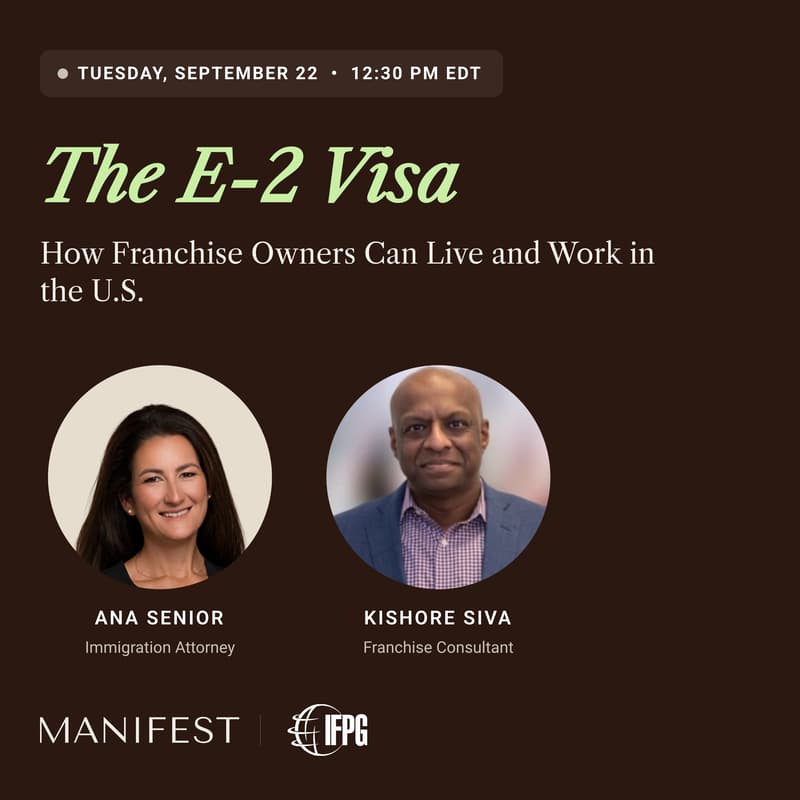

The E-2 Visa: How Franchise Owners Can Live and Work in the U.S.
Buying a franchise is one of the cleanest ways to start a business in the U.S. The brand exists, the playbook exists, the customers already know the name. What's not clean is the visa that lets you move here and actually run it.
That's what the E-2 is for. You invest in a U.S. business, you direct and develop it, and you and your family live here while you do. But the visa has real requirements — your nationality has to qualify, your capital has to be substantial and committed, and the business has to do more than support your household. And here's the part most people get wrong: they pick the franchise first and deal with the visa later, when the two decisions should be made together.
Ana Senior, Immigration Attorney at Manifest Law, and Kishore Silva, Franchise Consultant at IFPG, walk through both sides of that decision:
Who qualifies for the E-2 — treaty country nationality, qualifying ownership, an active role directing the business, and what "substantial" investment actually means in practice
How franchise buying actually works — the FDD, discovery day, validating with existing franchisees, and why franchise consultants cost candidates nothing
Why franchising and the E-2 fit together — a documented operating model and transparent fees make for a more credible business plan (though no franchise guarantees a visa approval)
The mistakes that sink applications — underfunding the launch, a passive-investor mindset, misaligned timing between lease, funding, and filing, and skipping diligence
A start-to-finish case study — how one investor's franchise evaluation and E-2 filing run as a single coordinated process, from business criteria to committing funds and filing
If you're comparing franchise concepts right now, the visa questions should be part of that decision — not something you sort out after you sign. Bring your questions; we're leaving plenty of room for Q&A.
RSVP now to save your spot!