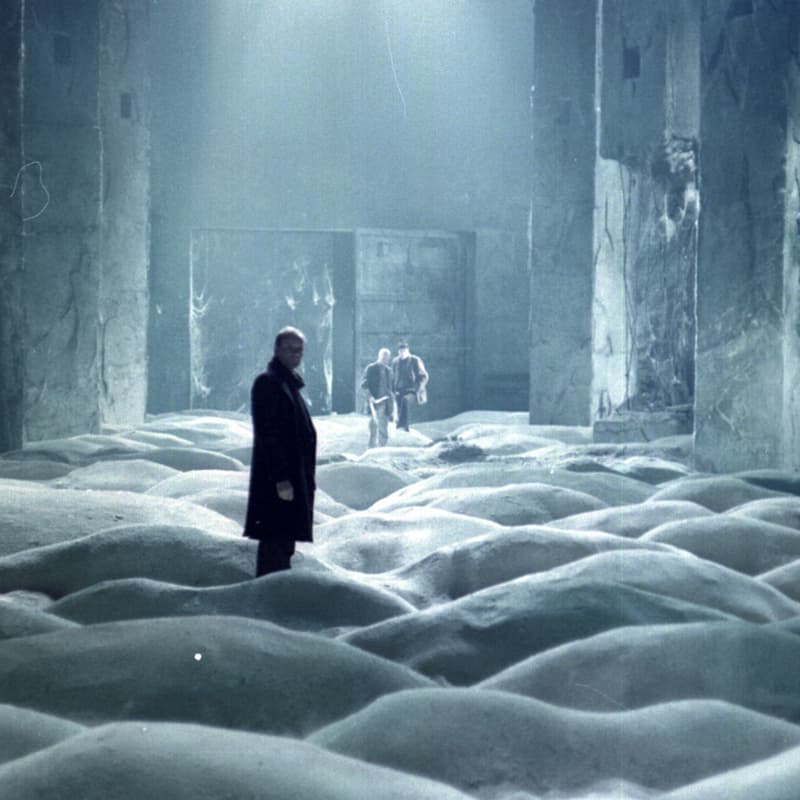

ストーカー / Stalker
灰色に沈んだ都市の傍らに、有刺鉄線で封鎖された「ゾーン」が横たわっている。物理法則さえ歪むこの禁断の領域で、道案内を生業とする男が二人の依頼人を導いていく。作家と物理学者、それぞれ異なる動機を胸に秘めた三人が向かう先は、あらゆる願いを叶えるという謎の「部屋」。しかしタルコフスキーが真に見つめるのは、人間の欲望そのものの正体だった。セピア色の現実世界と、緑に染まるゾーンとの対比が織りなす映像詩は、観る者の心に深い問いかけを残す。願いとは何か、希望とは何か。長い沈黙と台詞の応酬が交錯する中で、三人それぞれの魂の軌跡が静かに浮かび上がってくる。
In the haunting twilight of Soviet cinema, Tarkovsky crafts a pilgrimage through humanity's deepest longings. Three men venture into the Zone—a mysterious realm where reality bends and desires manifest—guided by the enigmatic Stalker, whose weathered face carries the weight of countless journeys. What begins as science fiction transforms into something far more profound: a meditation on faith, doubt, and the terrifying possibility that we might actually receive what we think we want.
Shot in sepia-toned desolation that gives way to the Zone's eerie, verdant beauty, every frame breathes with deliberate intention. Tarkovsky's camera moves like a prayer, lingering on puddles that reflect invisible truths and ruins that whisper of forgotten civilizations. The dialogue crackles with philosophical tension as Writer and Scientist—cynical representatives of art and science—confront their own motivations under the Stalker's patient guidance.
This is cinema as spiritual archaeology, excavating the soul's hidden chambers. In our valley beneath Fuji-san, where nature's power reshapes human understanding daily, Stalker resonates with particular intensity—a reminder that some journeys change us before we reach our destination.