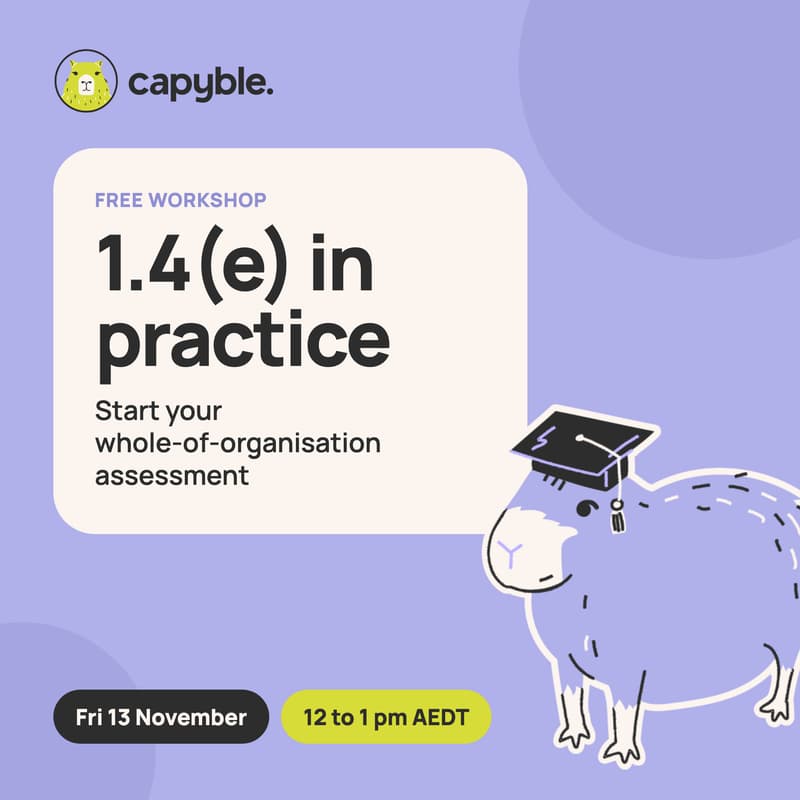

The National Code: 1.4(e) in practice
The National Code exists so that students and staff are safe, and properly supported when something goes wrong. Clause 1.4(e) is where that intention gets practical. It asks every provider to look honestly at how their organisation works as a system: where risk sits, what is helping prevention, and what is getting in the way.
For TEQSA-registered providers, the Code applies from 1 January 2027. Most teams we speak with understand what 1.4(e) says. The harder part is knowing where to start, especially with a small team and the work spread across governance, student services, HR and accommodation.
This is a working session. You won’t just hear about 1.4(e). You’ll start it.
What we’ll do together
Read clause 1.4(e) as written, and talk through what it asks of you in practice.
Look at where organisations tend to get stuck, and why.
Work through the first four steps of an assessment for one part of your organisation, using a one-page worksheet.
Check your current policy against the seven things clause 2.3 says it must include.
See how CapyBenchmark brings the remaining steps together (gaps, priorities and an organisation-wide view), using a gap someone in the session has shared.
What you’ll leave with
A first assessment of one area, already started.
A clear read on where your policy meets clause 2.3, and where it doesn’t yet.
Capyble’s guide to 1.4(e), with all seven steps.
Who this is for
Anyone at a TEQSA-registered provider who is pulling the Prevention and Response Plan together, or who will be asked to contribute to it. Compliance and governance leads, student safety and wellbeing teams, people and culture, and accommodation managers. You don’t need to have started yet.
To get the most from it, have your current policy on preventing and responding to gender-based violence open on screen. If you don’t have one yet, come anyway. The worksheet works without it.