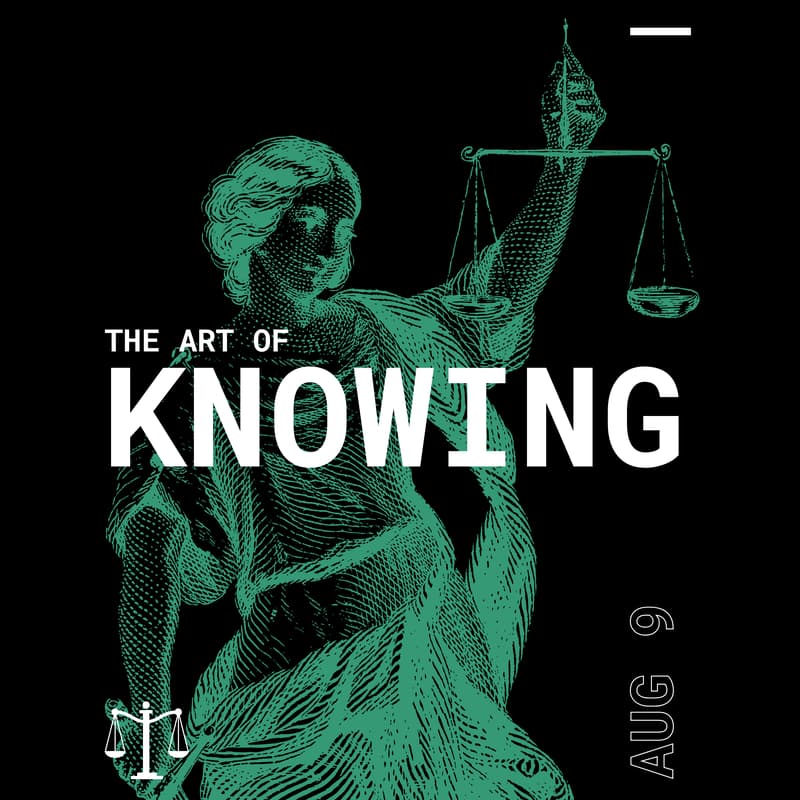

The Art of Knowing: Part 7
You did not need to have attended Part 1-6 to understand or participate in Part 7.
What's true, what's false, and how can we actually know anything today?
Most of us encounter more information daily than we did in an entire week back when we were in school, and many of us feel less capable than ever to make sense of that information.
This multi-part series, adapted from a course Bradley Mankoff taught at Loyola Marymount University, will arm you with the tools you need to regain confidence in the modern information landscape.
Session 1 demonstrated that in the past, almost every consensus of experts was later proven false. In addition to these fallacies of consensus and authority, we also introduced several other logical fallacies.”
Session 2 showed that politicians and bureaucrats have an incentive to deviate from the truth, so we should expect nothing less!
Session 3 did the same but for journalists and academics.
Session 4 applied this skepticism to the particular “Conspiracy Theory”. Politicians, bureaucrats, journalists, and academics alike are obsessed with “Conspiracy Theory”. We learned why they’ve got it all wrong.
Sessions 5/6 (same session) studied many different alleged reasons why conspiracy theories are dangerous. We found that most don't hold up.
Session 7, the finale, introduces some popular conspiracy theories as tools to apply skills from previous sessions, if you attended. You are still welcome if you did not attend previous sessions.
Things to consider before attending:
What's one conspiracy theory that is interesting to you for any reason?
Why might it be dangerous to take it seriously?
Why might it be dangerous to ignore it?
Readings:
You can find readings that covered the last few sessions here (Google Drive link). Each zip file contains a set of pdfs that provide a specific perspective on our general topic:
popper_vs_pigden: the foundation for the great conspiracy theory debate
american_history: charts the special place that "conspiracy theory" has in the United States.
infiltration: Cass Sunstein argues that the government should infiltrate groups of conspiracy theorists. Hagen rebuts.
fact_checking: Scholars go back and forth as to the quality of the modern fact-checking industry.
role_of_race: How do scholars discuss the manner in which race intermingles with conspiracy theory?
Your host
Bradley Mankoff, earned his Ph.D. at UCLA in Political Science, and taught many political sciences courses.