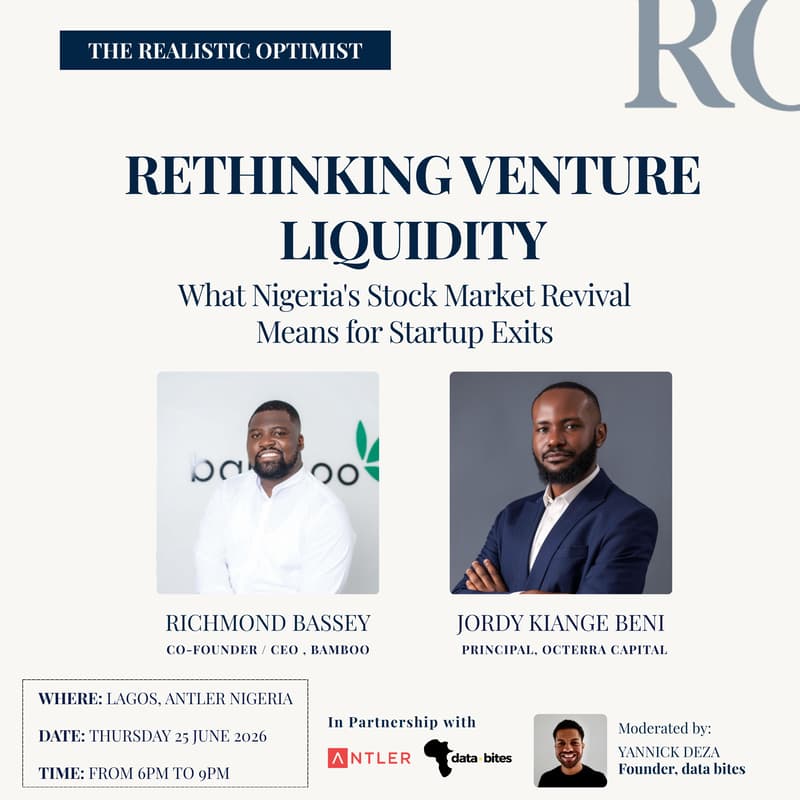

Rethinking Venture Liquidity in Africa | RO Events
"Liquidity" has become the most pronounced word in African venture.
A decade of growing deal volume hides a more sober realisation: only returns will judge the success of the category; and returns require liquidity events - at the right time, of the right kind. Something that has proven anything but immediate in African markets.
No wonder why the standard 10+2 fund structure - modelled after more mature markets - has made expectations especially unforgiving, raising doubts on its suitability for the African context.
But something is shifting on the other side of the wall.
Nigerian pension funds, freed by regulatory change to deploy more aggressively, are pouring into equities. Retail investors have more direct access to the stock market than ever. The NGX is in the middle of a multi-year rally, and it's about to absorb the largest listing in its history: the Dangote Refinery IPO, a deal alone worth more than half the exchange's entire current market cap, following the precedent MTN set in 2019.
Capital, in other words, is not the scarce resource.
And today, more than ever, it seeks equities, with the underlying promise of African "frontier markets" dynamism.
The retail appetite is there. The institutional appetite is there too. And regulators are more willing than ever to remove the barriers.
How can this be orchestrated to reach the "depth" capital markets everyone keeps longing for?
We'll dig into this with two people sitting on opposite sides of the same problem.
Richmond, founder of Bamboo, has built the platform giving African retail investors direct access to US stocks, Nigerian stocks, naira savings, and fixed-income instruments. He watches what actually moves capital into public equities in real time and what that says about the appetite waiting on the other side of any future listing.
Jordy, Principal at Octerra Capital, backs the early-stage companies that would need to exist ten years from now for any of this to matter. He sits closer to the company performance itself, and what capital these companies actually need to make it successfully to the stock exchange.
Two views of the same capital market, looking at each other from opposite ends of the pipeline.