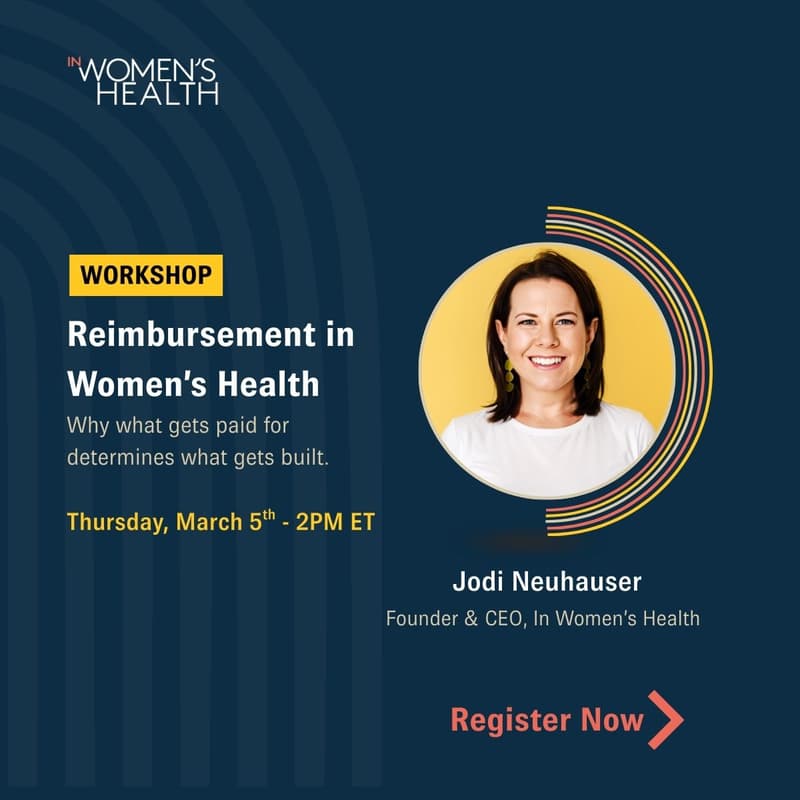

Reimbursement in Women's Health
Women’s Health Reimbursement 101
Hosted by In Women’s Health
Healthcare is driven by two critical forces in women’s health: Research and Reimbursement.
While only 4–7% of NIH funding goes toward conditions that primarily affect women, reimbursement determines which services are offered, which innovations scale, and which patients gain access to care.
In this foundational session, we unpack:
How reimbursement actually works in the U.S. healthcare system
The role of the AMA’s RUC committee and CMS in setting payment rates
Why undervaluation of women’s health procedures impacts access, investment, and outcomes
Real examples of reimbursement disparities (including differences between procedures like endometrial ablation and vasectomy)
How reimbursement incentives shape what gets built, funded, and prioritized
If you want to understand why certain women’s health services struggle to scale — or why innovation doesn’t always translate to access — you need to understand reimbursement.
This session is designed for operators, investors, clinicians, and leaders who want a clear, systems-level understanding of how money flows in healthcare — and why it matters for women’s health.