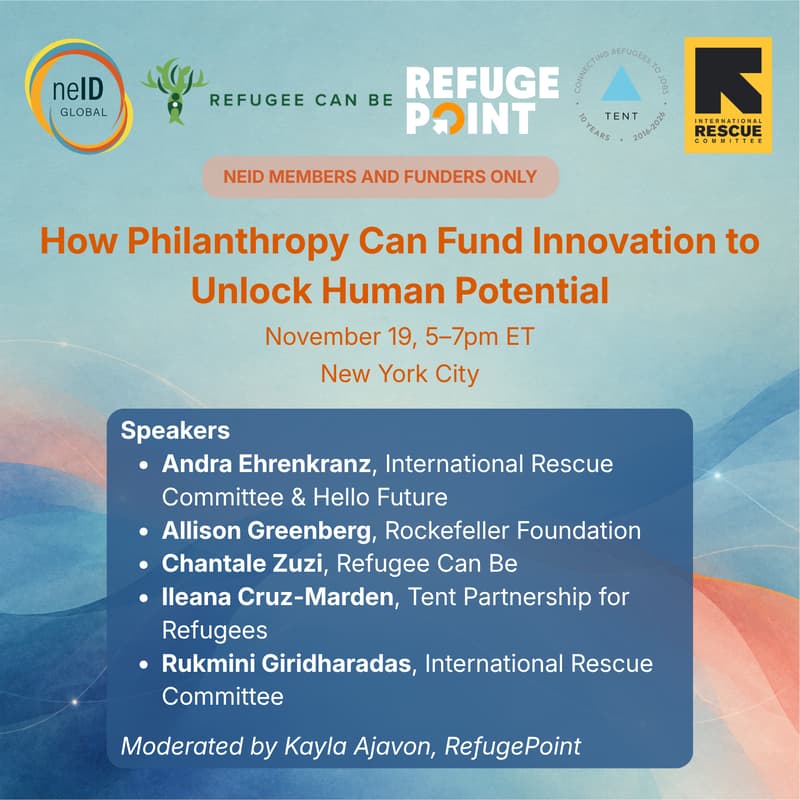

How Philanthropy Can Fund Innovation to Unlock Human Potential
More people are being forced from their homes each year, driven by long-running conflicts and the worsening effects of climate change. At the same time, governments are returning more migrants and refugees to places like Syria and Afghanistan, while humanitarian funding has fallen sharply, creating an increasingly difficult funding environment just as needs are rising. This moment is a test of our humanity: whether, in the face of shrinking resources, we retreat to helping people merely survive — or find new ways to actually help them thrive.
Meeting that challenge requires more than simply stretching existing approaches further. It calls for new ways of thinking about how we unlock human potential: new technologies (including AI); new models for building skills and long-term agency; and new forms of collaboration across philanthropy, humanitarian organizations, the private sector and local actors.
The challenge is no longer simply to do more with less. It is to do differently with less — asking better questions, building stronger evidence, combining capabilities in new ways, and helping promising innovations create lasting systems change.
This conversation will explore:
Where is the most promising innovation happening today, and what does it take to move from pilot to scale?
How can philanthropy fund innovation with the patience and willingness to take the risks that it needs?
How do we design for agency and long-term opportunity, while bringing together cross-sector partners to invest in the capabilities people need to truly thrive?
Panelists
Kayla Ajavon, RefugePoint & NEID Global NYC Committee Member — Moderator
Andra Ehrenkranz, International Rescue Committee & Hello Future
Allison Greenberg, Rockefeller Foundation
Chantale Zuzi, Refugee Can Be
Ileana Cruz-Marden, Tent Partnership for Refugees
Rukmini Giridharadas, International Rescue Committee