
Longevity Opportunites and the Money Trap
cosine matching
WHY MONEY FEELS HARDER WHEN YOU GET OLDER
Longevity Opportunities and the Money Trap
Maybe the greatest longevity risk is that our financial thinking has not lived long enough.
The moey trap is not about living longer; it is about living better when you live longer - not just expand health span but also expand money helth span. Why is there a money trap? Because longevity financial health planning can be like planning with outdated assumptions.
When we are young, we have time on our side. Financially, we are more like equity: volatile, flexible, with decades to recover, reinvent and compound. As time becomes scarcer, we become more like a bond: fewer years to correct mistakes, rebuild capital or recover from decisions made too late.
Longevity can change that equation. Longer healthy lives can mean more years to work, learn, build businesses, invest, compound capital and create entirely new life chapters. But the opportunity only works if our financial lifespan grows with our biological lifespan. And this means a shift in perspectives when we talk about money and longevity.
Think about a grandmother never giving birthday or Christmas presents. Her explanation is simple: “I don’t have the money for that.” Nobody had told me when she was young that looking after money early was also a way of preserving something much more human later: freedom, independence, life joy — and the joy of being able to give.
That is why this conversation matters whether you are 25, 45 or 65.
Plan early and join us to re-code your life:
In our lunch and learn we explore.
Why start investing early? How do compound effects work for — or against — us? How can longer lives become an opportunity rather than a financial burden?
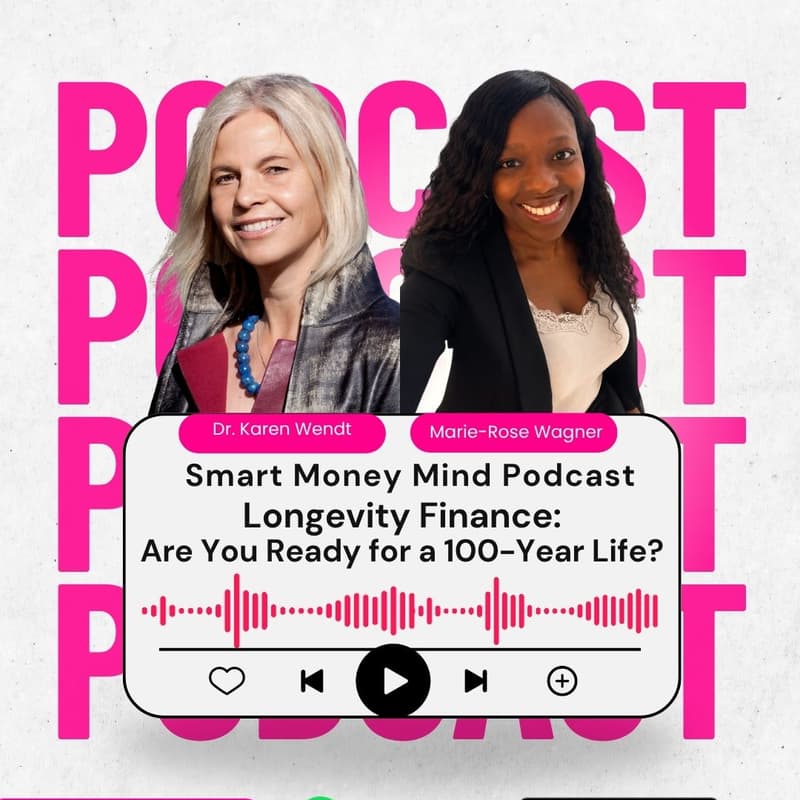
Marie-Rose Wagner, our Longevity Economy interviewer, joins Dr. Karen Wendt for a provocative conversation about money, time, compounding, healthspan and the new economics of a longer life.
And longevity investing is not only about money: invest early in the assets that make a longer life worth living — movement, sleep, nutrition, preventive health, learning, purpose and strong relationships — because health capital and human capital compound and we are living the times of ANI - affecto-neuro-immunology.