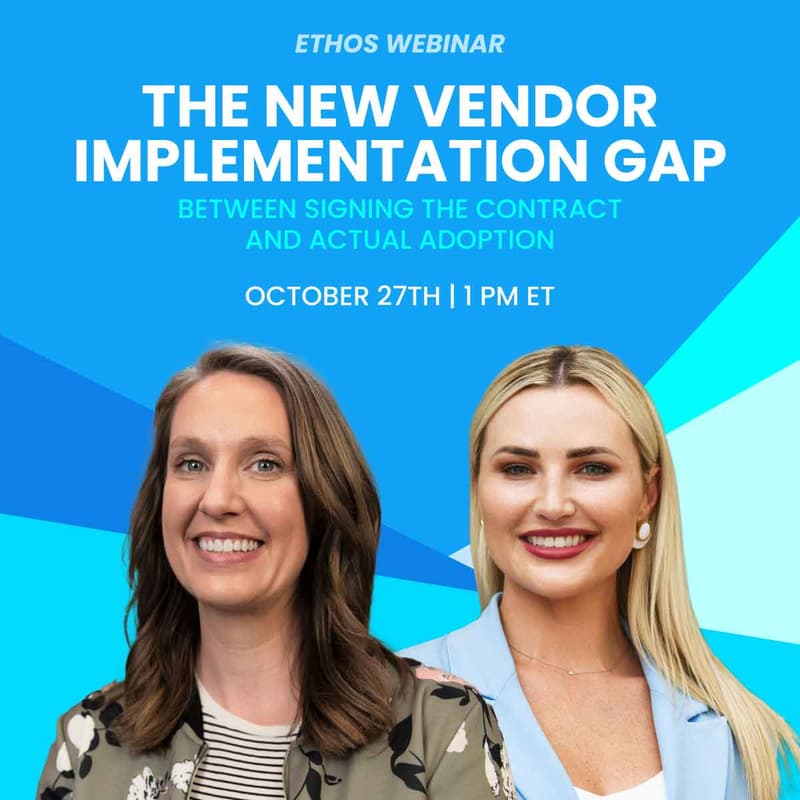

The New Vendor Implementation Gap: Between Signing the Contract and Actual Adoption
What we wish we knew before implementing a new vendor company-wide.
Every plan sponsor eventually hears the pitch for a big benefits change: a new point solution, a new care model, a new vendor promising to solve the problem everyone's tired of solving. However, the space between signing that contract and employees actually using it, trusting it, and benefiting from it is where most implementations quietly succeed or fail.
This webinar goes inside a real vendor rollout to show what it actually looks like.
Join us for a conversation with Kristina Ewing, Director of Health & Wellbeing at Andersen Construction, as she walks through her organization's implementation of direct primary care across a multi-state workforce (among other vendor implementations). The real sequence of decisions, conversations, and course-corrections it took to get a major benefits change from signed contract to everyday adoption.
What You'll Take Away
- How to get real leadership buy-in: what the board and fiduciary committee conversation actually looked like, and what to expect from leadership once implementation begins
- What implementation adds to your team's plate: the administrative load nobody warns you about, and the hard lessons on contract language, service level agreements, and performance guarantees
- How to keep new and existing vendors working together: avoiding the data gaps and manual workarounds that show up when a new solution meets your existing tech stack
- How to actually get employees to adopt it: what communication worked, who it should come from, and how to weave education into open enrollment instead of bolting it on after
- The honest highs and lows: what Kristina would do differently, and the moments that made the effort worth it
About Kristina Ewing
Kristina Ewing is Director of Health & Wellbeing at Andersen Construction, a general contractor with offices across Oregon, Washington, and Idaho. She's spent 22 years with the company, moving from finance into benefits leadership in 2017, and has built a reputation for treating employee wellbeing as core business strategy rather than an HR checkbox. She's helped build regional partnerships around mental health and substance use prevention in the construction industry, and she brings that same structured, people-first approach to every major benefits decision she makes. When Kristina implements something, she implements it in a way that's built to last, not just built to launch.
Kristina Ewing's LinkedIn:
kristina-m-ewing
Chelsea Ryckis' LinkedIn:
chelsea-ryckis-8508a192
What You'll Get Out of It
If you've ever hesitated on a benefits change because you couldn't picture what implementation would actually require of your team, this session gives you the picture. You'll leave with a real framework for evaluating your own readiness (leadership, administration, integration, and member experience) and the confidence to close the gap between "we signed the contract" and "this is actually working."
-----
SHRM:
Ethos Benefits is recognized by SHRM to offer professional development credits (PDCs) for SHRM-CP® or SHRM-SCP® recertification activities.
HRCI:
Ethos Benefits is approved to offer HRCI® recertification credits for this program. This program has been approved for 0.5 - 1 HR (General) recertification credit(s) toward aPHR®, PHR®, SPHR®, and GPHR® certification.