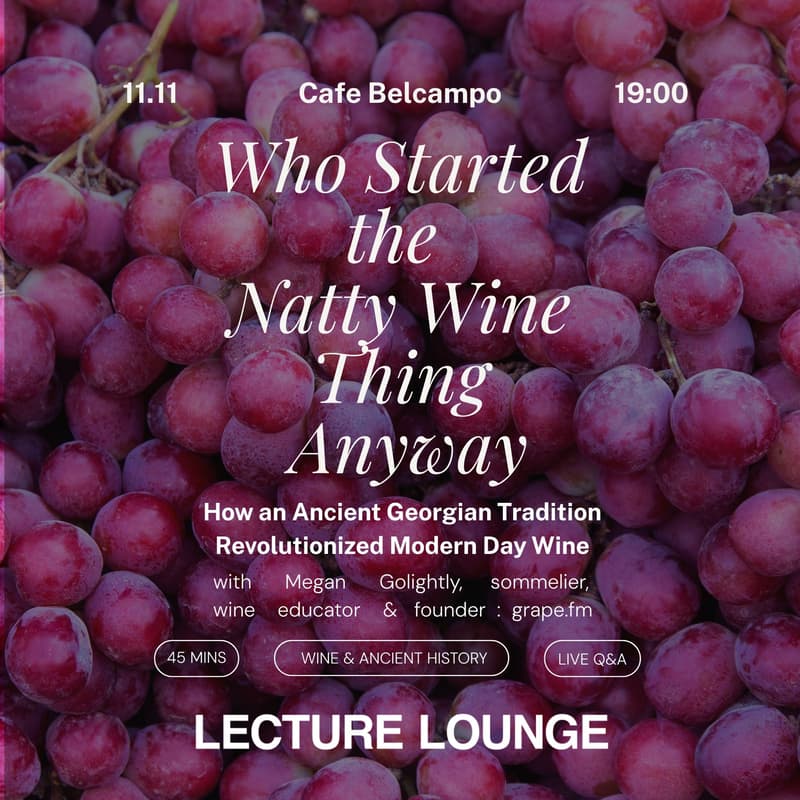


Who Started the Natty Wine Thing Anyway
This is not a talk about a trend.
Everyone has an opinion about natural wine. Almost no one knows where it actually came from.
The short answer most people give is France. The 1970s. A group of winemakers in Beaujolais who decided the industry had lost the plot and started stripping everything back. That story is real, but it’s not the origin. Not even close.
The real answer is Georgia. 8,000 years ago. Before barrels, before bottles, before France was making wine at all, Georgian farmers were fermenting grapes in clay vessels buried underground, and the results were, by every modern definition, natural wine. The method didn’t disappear. It survived intact, largely unknown to the Western wine world, until people started paying attention.
Megan Golightly is a sommelier, wine educator and the founder of grape.fm. She traces the full lineage: from the Caucasian cradle of winemaking to the Beaujolais rebels who gave natural wine its modern identity, to the terminology war that has been confusing drinkers ever since. Biological, biodynamic, organic, natural: four words that get used interchangeably by people who mean entirely different things.
By the end of the evening, you’ll know the difference. And you’ll understand why calling natural wine a trend gets the history exactly backwards.
The format
Doors open at 19:00. Come early, grab a drink and mingle before it starts. The talk begins at 19:30: 45 minutes, followed by an open Q&A. No official end. The bar stays open after, so stick around to keep talking with Megan.
The talk is in English.About Lecture Lounge
A bi-monthly series of expert-led talks, held in bars — never a lecture hall. One subject, one speaker, intimate enough size to ask anything. Somewhere between a bar and a classroom. Every event so far has sold out.
FAQ: Why does my card show as charged when I join the waitlist?
If you've joined the waitlist for a sold-out ticket type and noticed your bank app showing a deduction, don't worry — no money has actually left your account.
When you join a waitlist, we place an authorization hold on your card rather than charging it. Most banks reduce your available balance immediately for a pending hold, so it can look identical to a completed payment in your banking app — but it isn't. The funds haven't been captured, and they're only captured if and when you're approved off the waitlist.
If you're not approved (or you cancel), the hold is released right away on our end, though it can take your bank a few extra days to clear it from your statement — that timing is on their side, not ours.
If you have any questions about this, feel free to reach out to us directly.