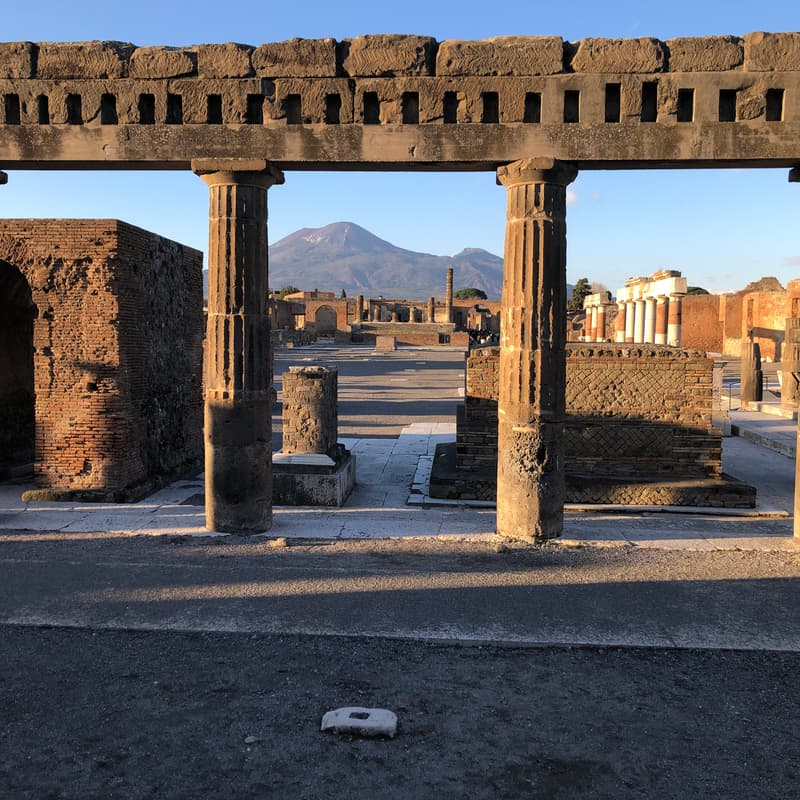

Excavating at Pompeii: An Archaeologist’s Career in Ruins
Although most people will think of it primarily as a tourist site, the ancient city of Pompeii has been an active and open laboratory for archaeological research since its excavation began in 1748. That work continues today, uncovering new and interesting information about the people who lived in the city across its long life, as well as those who died in the eruption of Vesuvius in AD 79.
Over the course of 20 years, Claire Weiss, PhD, has worked on several projects of research in the scavi [excavations], contributing to our understanding of how the city grew and developed, changing over time until it was destroyed. This Salon will introduce the history of ancient Pompeii, its discovery and history of excavation, and then present deeper detail about working on an archaeological project: what are the questions we ask, what are the methods we use to answer those questions, what are the artifacts we find and the information they hold?
About Claire Weiss, Ph.D:
Claire J. Weiss holds a PhD in Classical Art and Archaeology from the University of Virginia's Department of Art History (2018). She has worked in Pompeii since 2001, conducting research and excavations with three projects, and currently co-teaches a January-term class through Colorado State University about Pompeii, taught on-site in Pompeii. Her research focuses on Roman urbanism, specifically the construction of ancient Roman sidewalks as an expression of the different social and economic arrangements of Republican and Imperial cities.