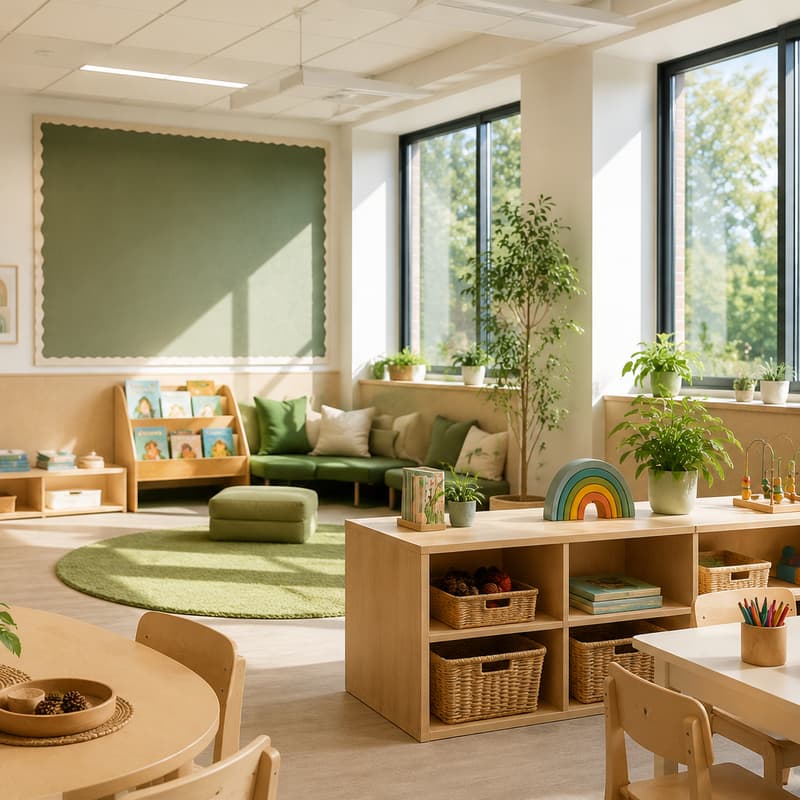
Designing Visual Environments for Inclusive Early Learning
Tuesday, 15 September
9:00 AM to 3:15 PM
Exact Venue TBC
London, England
About Event
Dear colleague,
How might we design nurseries and classrooms differently in future?
You are invited to a special policy and practice event in London exploring how the visual environments of schools and nurseries can support children’s attention, learning, wellbeing and inclusion.
A growing body of evidence from neuroscience, psychology, education and design suggests that young children experience visual environments very differently from adults. In busy educational settings, competing colour, movement, displays, lighting, clutter and visual detail can make it harder for children to tune in to one adult, one task, one signal or one instruction.
This may be especially important for children with SEND, and for children from diverse and disadvantaged backgrounds.
Classrooms and early years settings are rich, social and creative places. But visual design is often overlooked in conversations about SEND, inclusion, classroom quality, school readiness and educational practice. Displays, layout, lighting, resources, colour, clutter, access to nature and children’s sense of ownership can all shape how children experience learning environments, sometimes supporting attention, communication and regulation, and sometimes making these harder.
This event asks:
How can recent insights from psychology, neuroscience, education research and classroom design help us optimise the visual layout of early years and primary classrooms, to promote inclusive learning for children from diverse backgrounds, including children with SEND?
Through short talks, breakout discussions and an interactive panel, we will explore what is already known, where the evidence is still developing, and what this means for policy, guidance, classroom design, product development and everyday practice.
This event will focus on real world educational environments, including nurseries, early years settings and primary classrooms. It will not focus on home environments or digital learning environments.
Confirmed themes will include:
Attention capture, attention control and visual complexity
Visual clutter and children’s learning
Classroom design evidence
DfE guidance on the physical environment
Sensory environments and SEND
Dyslexia, language and communication needs
Nature, biophilic design and access to outdoor views
Lighting, including fluorescent and strip lighting
Early years classroom layout and design
Children’s ownership, participation and sense of belonging
The event will bring together researchers, educators, policymakers, early years leaders, SENCOs, education charities, journalists, designers and early years equipment producers.
Our aim is to create a practical cross sector conversation about how evidence can be translated into better environments for children.
This is not about criticising busy classrooms or adding pressure to educators. It is about asking a more useful question:
How can the environments around children better support attention, communication, regulation, access and participation?
Who should attend
This event is designed for people working across early years, primary education, SEND, policy, research, design and educational products.
It will be especially relevant for:
Educators
Early years leaders
SENCOs
School leaders
Policy professionals
Education researchers
Education charities
Classroom and nursery designers
Early years equipment producers
Journalists and sector commentators