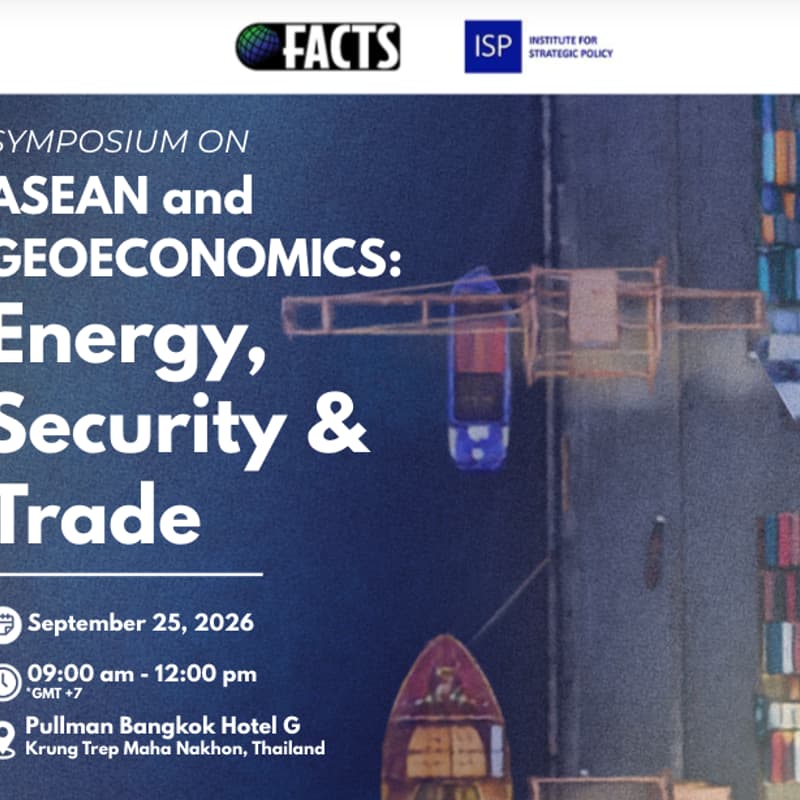

Symposium on ASEAN and Geoeconomics: Energy, Security, and Trade
Rising geopolitical friction and economic fragmentation pose critical risks to Southeast Asia’s autonomy and prosperity. The convergence of security and economics affects two primary sectors:
Energy: Representing 4% of global GDP, ASEAN faces soaring energy demand—projected to grow 2.6x by 2050. With regional output down 40% since the 1990s, the region relies on external sources for 80% of its fossil fuels and is expected to become a net natural gas importer by 2027.
Trade: A shifting multipolar trade environment and "slowbalization" became acute policy challenges after the July 2025 US Executive Order imposed 10%–40% reciprocal tariffs alongside strict transshipment rules. In response, countries like Thailand, Malaysia, Singapore, and Vietnam have tightened inspection measures.
Without a coordinated response, trade friction could severely undermine regional growth, even as critical frameworks like RCEP and the upgraded ATIGA await full implementation.
To address these interlocking challenges, FACTS Asia and the Institute for Strategic Policy (ISP) Thailand are co-hosting a half-day symposium.
Join us to explore how regional policy can transition from aspirational cooperation into operational reality!