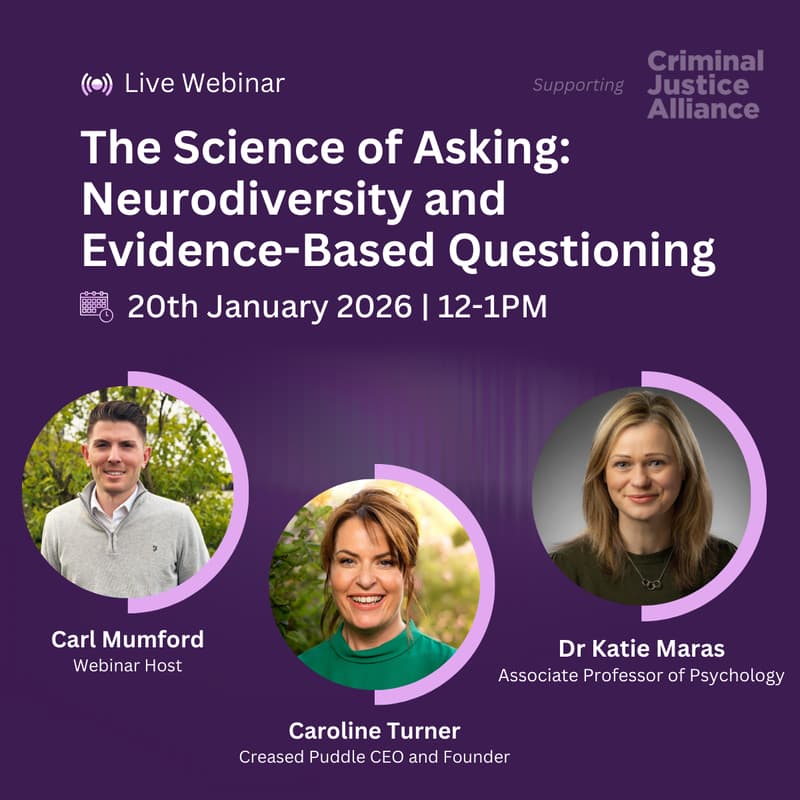

The Science of Asking: Neurodiversity and Evidence-Based Questioning
Asking questions in ways that reflect different ways of thinking can significantly improve communication, understanding and outcomes for neurodivergent people.
Dr Katie Maras is delivering a one-hour webinar that shows how this works in practice. Drawing on her leading research into memory, communication and interview practice with autistic people, the session explores evidence-informed techniques you can take straight back into your role, helping you communicate with greater confidence, clarity and care.
Dr Katie Maras
Katie Maras is an Associate Professor of Psychology and Director of the Policing Academic Centre of Excellence (P-ACE) at the University of Bath. Her research spans two key areas: neurodiversity and forensic psychology, and the intersection between them. She has particular expertise regarding interviewing techniques and is currently leading a three-year ESRC-funded project examining how autistic people can be supported to provide their best evidence in court. Katie works with policy makers, police and other legal professionals to provide evidence-based policy, guidance and training when working with autistic people.
Caroline Turner
Caroline Turner is a former Police Sergeant who founded Creased Puddle in early 2018. With the help of an amazing team, Creased Puddle has since grown to become a recognised centre of expertise for neurodiversity.
Caroline also has the pleasure of heading up the Creased Puddle training team who deliver face to face and live online events throughout the world. She is a fully qualified Neurodiversity Trainer and Workplace Needs Assessor and brings 25 years of inclusion and diversity experience to her work.
Caroline has designed, written and delivered more than 1000 training courses and speaking events which have received national endorsement from industry leads.
Why should you attend?
If your role involves speaking with people with different communication styles and processing needs, the way questions are framed can make a real difference. Small, thoughtful shifts in wording, structure and pace can transform a conversation, making it easier for people to share what they know and how they feel. These approaches do not just support the individual, they also help you do your job more effectively, particularly in situations where responses may have legal implications or shape decisions about safety, support or next steps.
During the session we will explore:
Why certain types of questions can unintentionally increase pressure or confusion
How processing styles influence the way information is understood and recalled
How to phrase questions clearly, without losing depth or accuracy
How to build shared understanding and trust so people feel able to respond in a way that is authentic to them
By applying these evidence-based techniques, you can support clearer communication that works with people’s thinking styles, not against them.
This event is supporting the Criminal Justice Alliance
10% of all ticket sales will be donated to the Criminal Justice Alliance, supporting wider work to improve fairness within the justice system.
This webinar is ideal for professionals across policing, education, health, social care, youth work and the voluntary sector, as well as anyone in the wider workplace who regularly holds sensitive or important conversations with neurodivergent people.
Accessibility
This event will have live captions.