Cognitive Security Meetup & Unconference: "Psychedelics — Opening the Mind or Expanding the Attack Surface?"
What is Cognitive Security
Cognitive Security or CogSec is an emerging interdisciplinary field studying mental self-defense against mind manipulation, social engineering and persuasion techniques.
In some sense cognitive security can be thought of as the opposite of mind manipulation. Mind manipulation seeks to bypass a person's critical thinking and influence a person's behaviour or beliefs via psychological vulnerabilities. Cognitive Security aims to protect our mental autonomy in forming beliefs and making decisions as well as understand ways in which human minds are vulnerable in order to build resilience against various forms of manipulation and persuasion.
Cognitive Security as a field is certainly concerned with "conventional" bad actors such as charismatic individuals, private corporations, public organisations and governments manipulating cognition — be it intentionally or unintentionally. But the overall scope is more broad: it also aims to protect individual minds against hostile memes (self-replicating units of cultural information), hostile egregores (distributed thought entities), emergent social media dynamics and hypothetical future threats like superpersuasive AI.
There is also US-based group focused on CogSec, you can read their definition on their website.
Meetup structure
The meetup will start with an in-person 45-min talk on "Psychedelics — Opening the Mind or Expanding the Attack Surface?" by Sasha Putilin (the meetup host & organiser), writer of the blog Psychotechnology.
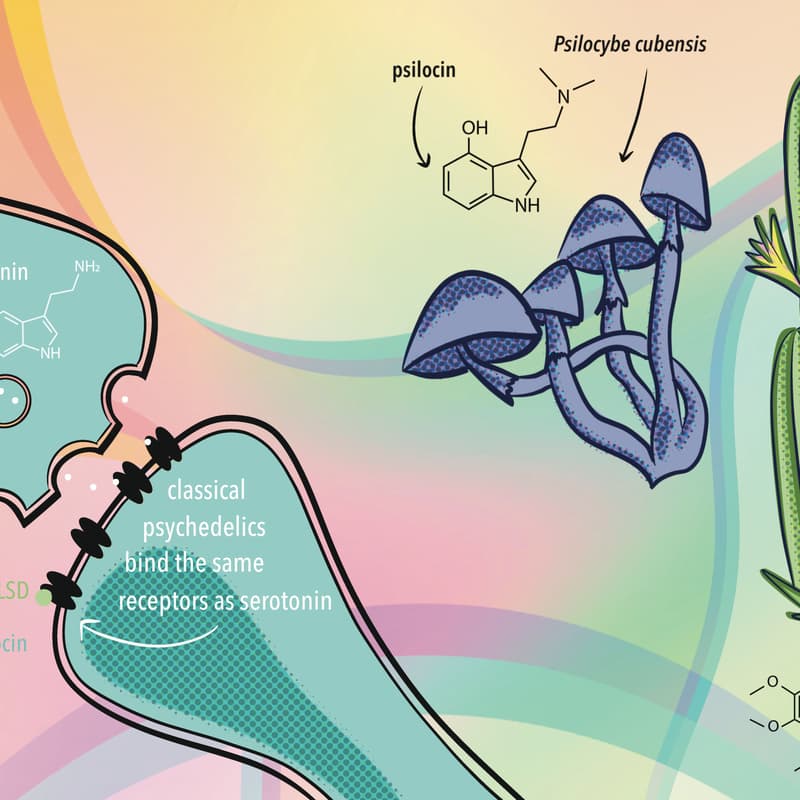
Psychedelics can open the mind and make it more plastic. But the flip side of this is making the mind more vulnerable to external influence — for better or worse. This talk will discuss models of psychedelic actions in the brains: ReBUS (relaxed beliefs), neural annealing, ego dissolution, no-self, ontological shifts, iterating your ”epistemic aesthetic”, vasocomputation.
Psychedelics (and meditation) are the closest thing we have to the root access to our own mind. The talk will also examine how can this “root access” be used by malicious actors. When we are freed from rigid beliefs, in what ways does this make us vulnerable to new ones?
The frame will generally be pro-psychedelic and equip you with mental models that would help you understand how mind updates itself on psychedelics. But we will also examine case studies of psychedelic brainwashing and psychedelics use in various cults.
Some relevant posts from my blog:
Neural Annealing: Directing Psychedelic Trips Towards Healing
DIY Psychological Parts-Work: A Hacker’s Guide to IFS and Entactogens
Near-Instantly Aborting the Worst Pain Imaginable with Psychedelics
Meditation as Wakeful Relaxation: Unclenching Smooth Muscle
Unconference
The talk will be followed by unconference, a participant-driven conference with write-in schedule on the wall. Anyone who wants to initiate a discussion on a topic can claim a time and a space. We had several unconferences in the last few months at Newspeak House, so might've been to one already — this one will have a similar format.
That said, you can also simply come and hang out with people — unconference is there to give some structure and help like-minded people find each other.
Schedule
7:00 PM Doors open
7:30 PM Sasha Putilin's talk "Psychedelics — Opening the Mind or Expanding the Attack Surface?" with Q&A
8:30 PM Break: discussion and socialising. Proposing unconference topics.
9:00 PM until late unconference
Potential discussion topics
You are very much welcome to propose your own discussion topics not listed here. These topics are provided for reference.
What counts as manipulation? How is it different from normal attempts to influence minds? How can we best defend against it? Why defend against it at all?
Group Dynamics & Cognitive Security. How group psychology affects individual thinking? Collective defense against manipulation
Psychedelics. Nowadays they are often used as therapeutic tools that help people overcome emotional challenges and gain mental flexibility, but in the past CIA was attempting to use them for mind control (Project MKUltra). What do psychedelics say about human mind's ability to process information? How psychedelics help or hurt personal epistemology?
Future Challenges. Potential impacts of advanced AI on human cognition. Preparing for increased sophistication in persuasion technology.
Memes & Thought Patterns. Identifying and analyzing harmful thought patterns. How ideas spread and self-replicate.
Social media's impact on cognitive autonomy. Information overload & building healthy information consumption habits
Your personal stories of getting manipulated and resisting manipulation. What did you learn about it?
A note on future meetups
We are looking for people to give talks on CogSec-related topics. If you are interested in giving one, please contact me, the organiser in some way. The best way is to come to the meetup and chat there.