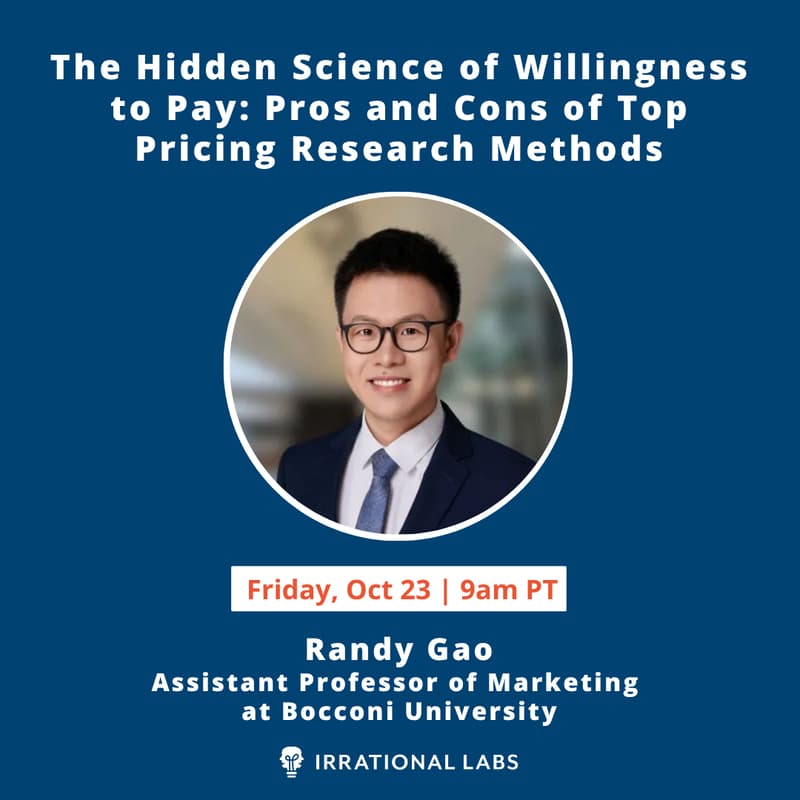

The Hidden Science of Willingness to Pay | Pros and Cons of Top Pricing Research Methods
Would customers buy an air fryer for $24?
One survey method suggested 82% would. Another suggested just 39%. The product and price were the same. The way researchers asked was different.
Randy Yang Gao, Assistant Professor of Marketing at Bocconi University, studies how to ask the most important question in pricing research, the Willingness To Pay question.
He has some of the most recent and most robust research on how to ask these types of questions and the tradeoffs for each type of question. His latest research, with nearly 13,000 participants across 21 studies, found that two common ways of measuring willingness to pay produce very different results, even though they should match in theory. Yet neither method consistently matched what people actually did when offered a real purchase at a set price.
Join Irrational Labs and Randy Gao to explore what explains this gap. Together, we'll dig into what his research shows, why it happens, and what it means for the way your team tests prices.
📅 Friday, October 23
🕘 9:00 AM PT (10am MT | 11am CT | 12pm ET | 6pm CEST)
What you'll take away:
Why “How much would you pay?” can prompt people to name a price, even when they aren’t interested in buying
Why neither method consistently predicts actual purchase decisions
How the way you set up a survey can mask the differences you’re trying to measure
A simple habit for making pricing calls with more confidence
This session is for anyone focused on setting and changing prices, or studying customer willingness to pay.
Expect practical takeaways you can bring to your next pricing experiment or user research study.