
R&D Tasting Lab: An Interactive, Multi-Sensory Tea and Sake Experience
Calling early adopters and industry peers: Join us for an intimate tasting and workshop led by Yoshiharu Matsushita, a 7th generation tea farmer and sake-brewing innovator on his visit to NYC from Kakegawa, Shizuoka—one of Japan’s most vital tea-producing areas.
Presented by Libi Project, this tasting lab and working session explores the evolving intersection of tradition and innovation at the forefront of contemporary Japanese beverage craft today. As part of a collaboration between Brooklyn-based Gentle Artefacts and Matsushita Tea Farms, this tasting lab invites NYC-based professionals from across the F&B, culinary, and creative communities to become participants in their project of introducing two collections of novel Japanese tea and matcha based beverages from Matsushita’s tea farm and onsite aroma and flavor research institute and new DIY sake brewing facility.
Special food parings will be jointly curated by Miso Maru and Annn
This tasting lab and working session is designed as a learning-forward experience and conversation, introducing Japanese tea as a living, evolving craft.
Through guided tastings and an in-depth workshop led by Yoshiharu Matsushita, participants will gain insights into contemporary challenges and opportunities in tea production and how technical innovation can creatively recast traditional agricultural philosophies and practices. The emphasis is on knowledge exchange, sensory experience, and dialogue between participants, Matsushita-san, and hosts.
In addition to his highly award-winning tea and matcha, tasting lab participants will be the first outside of Japan to sample two novel types of tea/matcha-based beverage. Spanning sake-adjacent expressions and sparkling soda formats, Matsushita’s new collections reimagine Japanese tea through contemporary farming, fermentation, and brewing techniques—remaining grounded in centuries-old farming philosophies. Designed for those drawn to the dialogue between old and new, the experience centers on:
Next-generation Japanese tea, matcha, and sake-based beverages
A guided tasting and working session with producer/brewer insight into cultivation practices and production process technique
Tasting flights with intentional food pairings (4 drinks and snacks)
Open conversation around innovation, provenance, and cultural continuity and culinary craft, with opportunities to give directional feedback on their experience of the tastings directly to the producer
Program
Co hosted by Libi Project × Gentle Artefacts
1. Arrival & Welcome Pour (10 mins)
Guests arrive, welcomed with a sparkling Japanese tea
Informal introduction to Gentle Artefacts, Libi Project, and Index Space
Tasting lab and working session framing as a dialogic learning environment
2. Intro to Japanese Tea Today (15 mins)
Context-setting by Gentle Artefacts
An introduction on Japanese tea, tea cultivation, and beverage manufacturing.
Topics:
Overview of Japanese tea beyond matcha stereotypes
How tea is cultivated consumed domestically in Japan today
Current shifts in global interest and consumption as drivers of experimentation and innovation in Japan and beyond
3. Guided Tasting: Appreciating the Difference in Kakegawan Tea (25 mins)
Led by Mr. Yoshiharu Matsushita (Matsushitaen Tea Farms & Aroma Tea Research Institute)
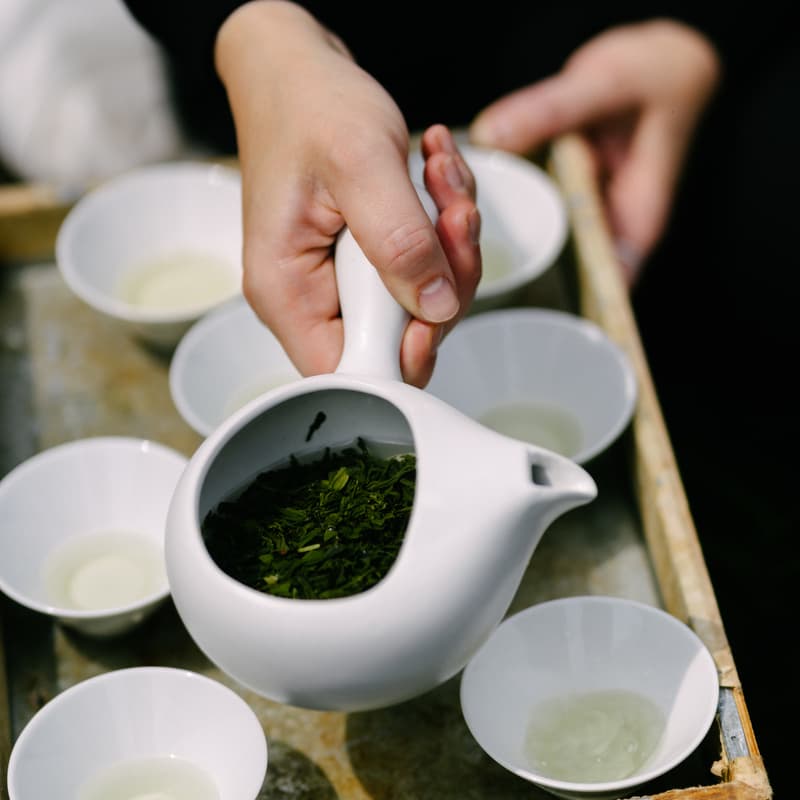
Matsushita-san will serve a flight of his award-winning teas and matcha, guiding guests through his farms’ and region’s distinctive approach to tea cultivation past and present. In addition to the gustatory pleasures of exploring tea and matcha alongside their maker, areas of focus include:
How art and science inform Matsushita-san’s approach to tea craft
Key varietals and processing methods from the region
Differences in flavor profile, aroma, and texture
How terroir translates into taste
Particularities of the Kakegawa region
How Kakegawa became one of Japan’s most important tea-producing regions
Climate, soil, and farming techniques unique to Shizuoka
The role of cooperative family farming and regional identity in cultivating critically acclaimed products
Special Menu from Miso Maru and Annn will be served
MISOMARU
1) Miso Soup Bomb
Choice of:
• Aburaage (fried tofu skin)
• Negi (dried chives)
2) Tawara-Style Rice Ball
Small rice ball in traditional tawara shape, topped with toasted white sesame seeds
Paired with Tsuyobi Sencha
ANN
1) Dessert – Shiro-an (White Bean Paste)
Choice of:
• White Bean (Plain)
• White Bean with Kinkan Orange (Kumquat)
Paired with Tsuyobi Matcha
4. R&D Tasting Lab & Working Session (30 mins)
Gentle Artefacts and Matsushita-san
Guests are invited to sample 2 flights of unreleased tea beverages in their R&D phase, each of which will be paired with 2 simple, flavor-forward snacks. Each flight focuses on a novel tea expression and format developed by Matsushita-san onsite at his Tea Aroma Research Institute and brewing facility at his family’s farm.
The first flight spans 5 sparkling sake-based beverages that are based on agricultural products ranging from sencha (steamed green tea) to matcha (powdered tea) to ume (Japanese plums harvested from Matsushita’s orchards). The second flight presents sparkling tea, matcha, and fruit-based refreshers.
Each R&D tasting lab flight highlights:
Traditional reference points (what people expect Japanese tea to taste like)
New formats and expressions (sparkling, sake-adjacent, contemporary processing)
How tea interacts with food in unexpected ways
The tasting lab is an interactive conversation between audience and producer, with an opportunity to share observations and feedback.
5. Innovation & the Future of Tea Craft (25 mins)
Conversation with Mr. Matsushita
An open conversation, guided by Gentle Artefacts, invites participants to ask questions and share.
Key themes:
Why Matsushitaen is choosing to innovate now
Bridging tradition with new production methods
Experimentation with fermentation, carbonation, and format
Balancing cultural responsibility with global audiences
6. Open Discussion & Community Exchange (15 mins)
Informal dialogue among guests
Cross-disciplinary perspectives from creatives, technologists, and F&B professionals
How tea culture intersects with design, hospitality, sustainability, and lifestyle
Facilitated by Gentle Artefacts
Gabriel Coren is an anthropologist whose work bridges field-based inquiry and creative practice.
Sabrina Li heads a small creative agency, Selfhood, focused on bringing Western and East/S.E. Asian fashion and lifestyle brands into conversation, collaboration, and embrace.
As co-founders of Gentle Artefacts, Gabriel and Sabrina bring both ethnographic and creative-commercial lenses to Japanese agriculture and tea culture today, inviting others to experience tea as unique assemblage material and craft practices. This is the approach to tea that informs Gentle Artefacts’ curatorial voice — one that values sensory experience, embodied knowledge, and the connections between people and place.
Through Gentle Artefacts, Sabrina and Gabriel invite others to join them in exploring Japanese tea and matcha not merely as a beverages but as a material and cultural forms that can offering deeper insights into contemporary craft-scale farming practices, regionally specific agricultural ways of life, and the ever-evolving rituals that have continue to sustain tea traditions across generations. Their co-led workshops, field excursions, and tastings situate Japan tea today in its broader ecological, cultural, and historical contexts by encouraging participants to engage with tea as a lived experience rather than a mere commodity or trend.
Yoshiharu Matsushita
Yoshiharu Matsushita leads Matsushita Tea Garden, a family-run organic tea farm in Kakegawa, Shizuoka Prefecture, with a legacy that stretches back to its founding in 1915 and beyond to the 19th century. Under his stewardship, the family farm has remained deeply rooted in traditional cultivation while pioneering contemporary approaches to tea production.
Matsushita’s work is defined by a belief that truly exceptional tea begins in the soil — cultivated with rich biodiversity, abundant microorganisms, and respect for natural ecology — producing leaves that express both purity and character. He has overseen the farm’s development of innovative organic tea products, including matcha, sencha, gyokuro, and specialty blends, while maintaining a deep commitment to ecological stewardship and regional identity. Notably, the farm’s patented processing method for producing high-quality organic matcha reflects Matsushita’s willingness to experiment within tradition, blending rigorous craft with curiosity and care.
Under his guidance, Matsushita Tea Garden continues to explore new expressions of Japanese tea — from classic deep-steamed sencha to contemporary liqueurs and sparkling tea formats — without losing sight of the farm’s century-old values of “温もりの創造” (the creation of warmth) and joy shared through tea.