
Learn from top founders and operators In-person from our fireside chat, workshop & networking events⚡
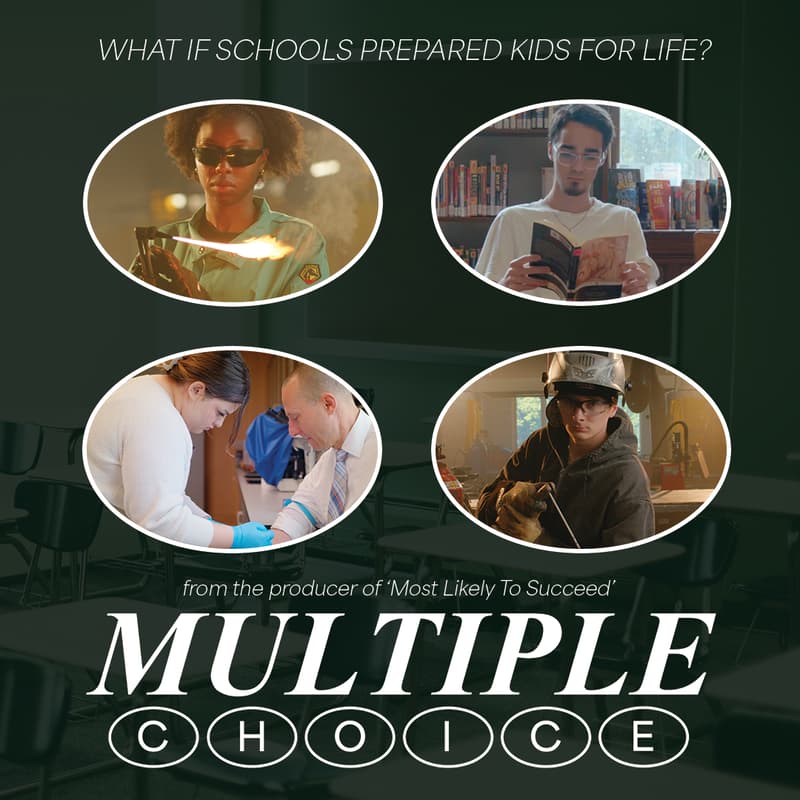
Film Night: MULTIPLE CHOICE - What if schools prepared kids for life?
Calling all passionate Educators, Ed-Tech Founders, Ed-Innovators, and Anyone interested in innovative approaches to learning that prepare young people for Life.
The What School Could Be community & Ted Dintersmith
Present MULTIPLE CHOICE
- a film exploring: What if schools prepared kids for life?
In a world filled with AI and change, is our current education system still fit for purpose?
Explore an alternative reality of a school doing things differently - What school could be.
Food 🌮 Drinks🧋 & the Movie 🎥 is on us this time 🙂
Agenda
5:00 - 5:25 PM (25 mins) - Get to know each other & Welcome
5:25- 6:40 PM (75 mins) - Watch: MULTIPLE CHOICE
6:40 - 7:00 PM (20 mins) - Conversations
Hosted by Ashish Alexander - Future Founder of Revlearn Unschool Academy (a Revolutionary High School where students control their day, and start life today)
I look foward to meeting you there!
Watch the Film Trailer here:
Film Synopsis
For decades, the 'University for all' agenda has created a no-win choice for highschool graduates: take on the risk and expense of university degree or work a low-wage job.
But in an economically-challenged US community, one education leader is demonstrating the immense power of career-based learning - not as a last-chance resort for some, but as foundational for all.
This film explores the complicated history of the Western Education System that has led to career prep being neglected in favor of a test-heavy, high-stress "university for all" philosophy, and offers up an alternate vision that places students at the center of their learning.
Get exposed to a reality, where students explore diverse careers, collaborate, and master traditional and new-economy skills, offering an inspiring vision of kids finding joy in their learning, as they create purposeful, prosperous future paths.
In an age of unprecedented technological change, Multiple Choice examines our fundamental beliefs about the honor and dignity of work, and challenges us to ask, in a world dominated by computer intelligence, what is our human edge? How can we future-proof our kids and our communities?
Learn from top founders and operators In-person from our fireside chat, workshop & networking events⚡