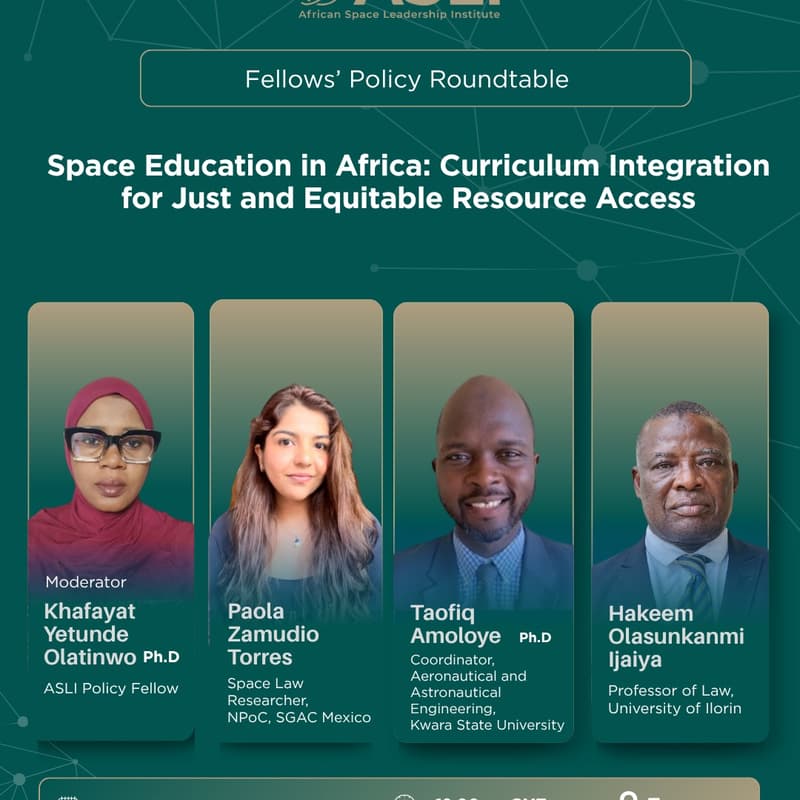
ASLI Fellows Roundtable
Africa’s growing engagement with space science, technology and governance presents an important opportunity to advance the continent’s development priorities and ensure equitable access to the benefits of outer space. However, achieving this ambition requires more than establishing space institutions, investing in satellite technology or developing national and continental space policies. It also requires building a strong foundation of knowledge, skills and interest among Africans from an early age. The incorporation of space education into the African school curriculum from basic to secondary through university and post graduate levels, is therefore critical to build the human capacity to meaningfully engage in the global space sector.
This panel discussion explores the idea that, intentionally and actively, preparation and education of the next generation is necessary in Africa to establish sustainable space capabilities. If space studies are integrated into educational curriculum at various levels, young Africans can start to recognise opportunities for innovation, research and career progression early in their school education. This exposure could feed the future African space scientists, satellite designers, space scientists, manufacturers of space-related equipment, space engineers, astronauts, legal experts and space policy makers. It can also enable the continent to foster African-led research, entrepreneurship and technological innovations in order to minimise reliance on external sources, and enhance scope to promote solutions that meet African needs.
The panel will therefore examine how space science and technology, governance and policy can be incorporated into the curricula of education systems in Africa, making it accessible, relevant and sustainable. It will look at how space education can be translated into meaningful participation in Africa's space sector with respect to institutional partnerships, approaches, resources and commitments. At the end of the day, the focus of the discussion is on how education is needed to build Africa's space capabilities, enhance African innovations and foster equitable access to the opportunities and benefits inherent in outer space.