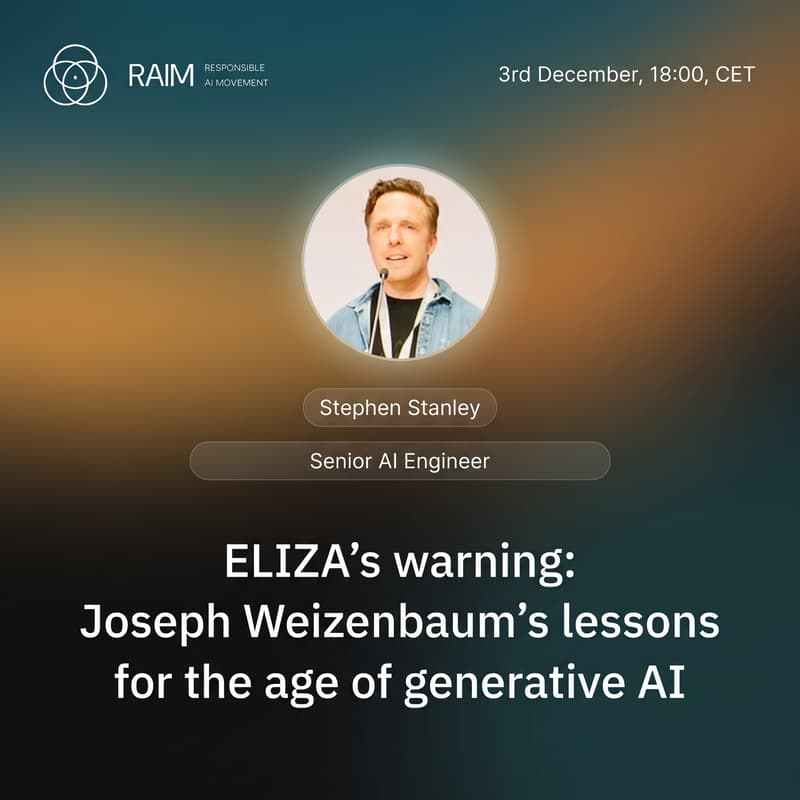

ELIZA’s warning: Joseph Weizenbaum’s lessons for the age of generative AI
In the 1960s, Joseph Weizenbaum built ELIZA, the first chatbot, as both a research tool and a playful warning against the seduction of apparent machine intelligence. Later in life he turned against his own invention. Sixty years on, his warning matters more than ever.
AI systems are complex socio-technical systems that affect people, and especially how people understand themselves, yet technologists rarely consider this. Weizenbaum's life and legacy help us think carefully about which decisions should, and should not, be handed to computer calculation, and how to build systems that expand rather than reduce human potential.
📌 What you'll learn
You'll learn how Joseph Weizenbaum built ELIZA as both a research tool and a playful warning against the seduction of apparent machine intelligence, and why that warning is still relevant today.
You'll learn why the creator of ELIZA turned against his own invention, and how his break with MIT's "Artificial Intelligentsia" shaped later generations of critical technologists.
You'll learn to recognise the "ELIZA effect" in its modern form, and how to decide between human judgement and computer calculation when building generative AI systems.
📌 Who should join
Anyone deciding whether and how to build AI systems, especially chatbots, that will affect people
Software engineers and data scientists building AI systems, especially systems that make decisions
Technologists who feel ambivalent about AI and would like support to think critically and creatively about it
📌 About the speaker
Stephen is a Senior AI Engineer with a background in data science, building sovereign EU-hosted, multi-agent communication and memory systems for automating everyday work tasks.