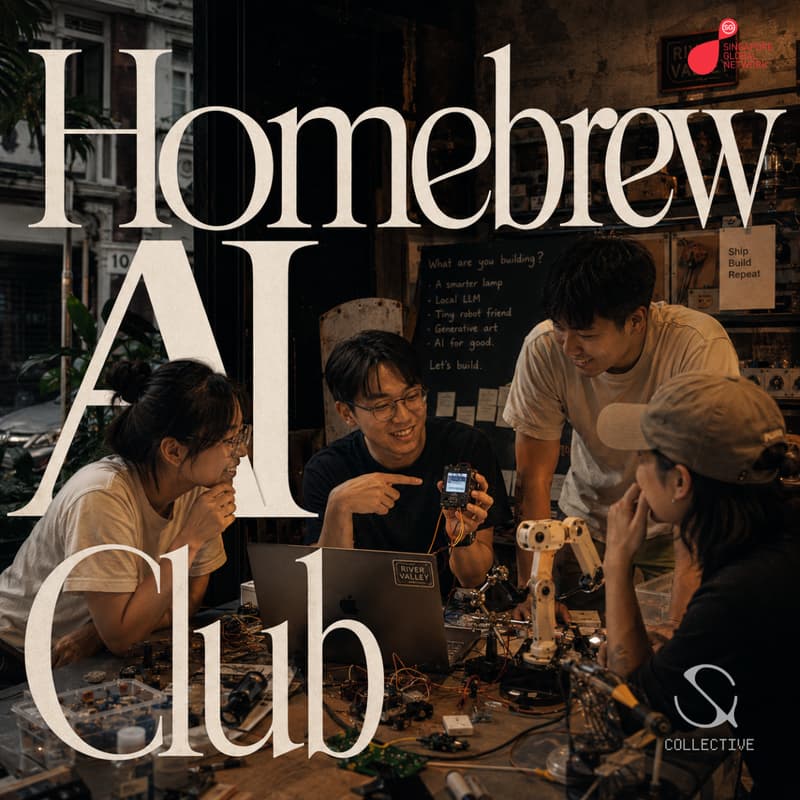

SQ Homebrew S2: Second-brain retrieval that actually finds things
Second-brain retrieval that actually finds things
You have notes, chats, documents, meeting transcripts, bookmarks, code, and maybe a growing pile of AI-generated summaries. But when you need the one decision, customer detail, source, or prior discussion that matters, does your system actually find it?
This is a hands-on workshop for people building or maintaining a personal brain, company brain, research system, or internal knowledge stack. We’ll get past generic “add embeddings and call it RAG” advice and work through the retrieval and operating choices that determine whether a brain stays useful as it grows.
Note: These are technical sessions, please bring your laptop. Ideally bring a real retrieval problem from your own system.
Heng Hong Lee (co-founder, Lightsprint — YC P26; previously Meta / Facebook Messenger and Fazz) leads the build.
We’ll discuss
What should be indexed, and which index should answer which question?
When do keyword, metadata, graph, vector, and hybrid retrieval each win?
How do you build meta-indexes that route a question to the right corpus or retrieval method?
What is the right durable format for notes, decisions, source material, tasks, and derived summaries?
Should your ontology be explicit and fixed, dynamically inferred, or both?
How do you preserve provenance, freshness, and confidence instead of treating a ranked result as truth?
How should RBAC, source-level permissions, and private data shape retrieval in a company brain?
How do you ingest continuously without duplicating, silently overwriting, or losing the audit trail?
How do you measure retrieval quality and maintain a brain over time?
We’ll use concrete patterns from operating a live knowledge system: bounded source windows and coverage tracking, immutable source references, query planning, hybrid retrieval, reciprocal-rank fusion, exact metadata readback, separating “candidate signal” from verified truth, and treating index freshness as an operational concern rather than a one-time setup.
Expect technical discussion, architecture tradeoffs, examples, and practical peer debugging.
When
Fridays 3.30pm - 5.30pm
After The Stage
About Homebrew AI Club
A startup team/builder leads a real build at SQ Collective. Demo by doing. Homebrew Computer Club energy, AI-era problems.
About SQ Collective
SQ Collective, River Valley, Singapore. Builder and founder community for practitioners working with AI.
Named after the Homebrew Computer Club, Menlo Park, 1975: people showing what they soldered or coded that week, not pitching decks. The word came from homebrewed beer. Make it yourself instead of waiting for the factory.