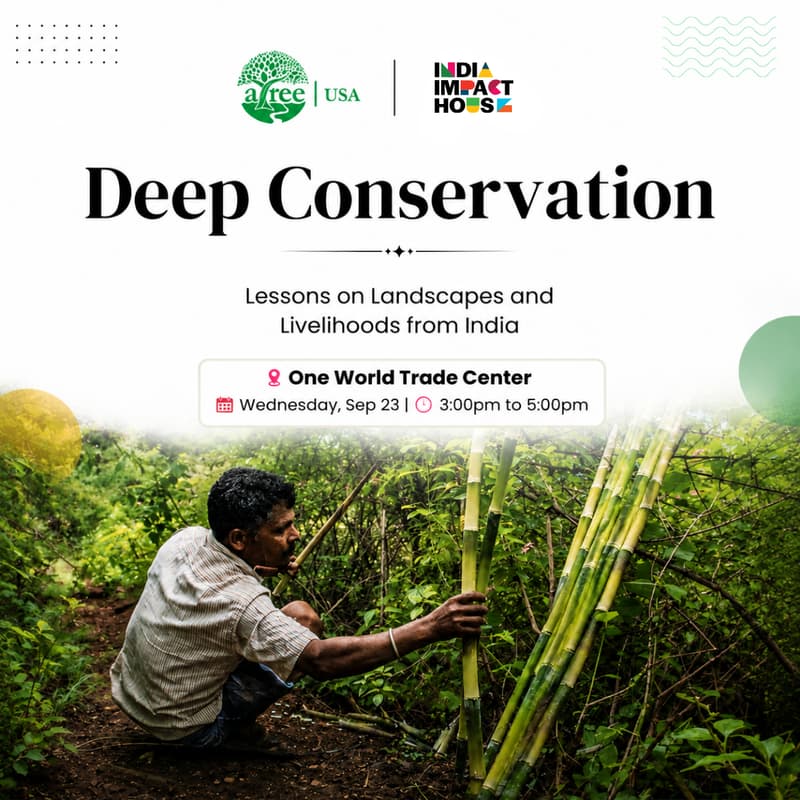

Deep Conservation: Lessons on Landscapes and Livelihoods from India
The session brings together an opening conversation on the long-term work of community-led conservation, followed by a panel exploring what it takes to scale such models, strengthen livelihoods, and enable more effective philanthropic support across the Global South.
Opening Conversation
Kamal Bawa, Founder and President Emeritus, ATREE
Moderator: Jonathan S, Executive Director, ATREE
Panel Discussion
Akash Mehta, Founder, Fable Fund and Fable and Mane
Anita Arjundas, Executive Director, ATREE
Katie Frohardt, Executive Director, Wild Earth Allies
Naghma Mulla, CEO, EdelGive Foundation
Moderator: Kelly Jonas, Director, Mongabay's Network Program
More about the conversation
Landscapes and rural communities globally are undergoing rapid, profound change. The shifts are often sharpest for areas in the Global South with high biodiversity and high vulnerability to climate change. How does conservation take root amid such upheaval? What does it take to restore ecosystems and build lasting livelihoods — not for a funding cycle, but for generations? Few places offer richer ground for answers than India.
An opening conversation with ATREE's founder and leadership looks honestly at what this work involves: the patience it demands, the setbacks along the way, and the choices that made it viable. A panel of conservation and philanthropic leaders then takes up the harder questions — why models like this remain rare, what stands in the way of building more, how funding practices help or hinder long-term community-led work, and what India's experience offers landscapes far beyond it.
The session closes with a networking reception.