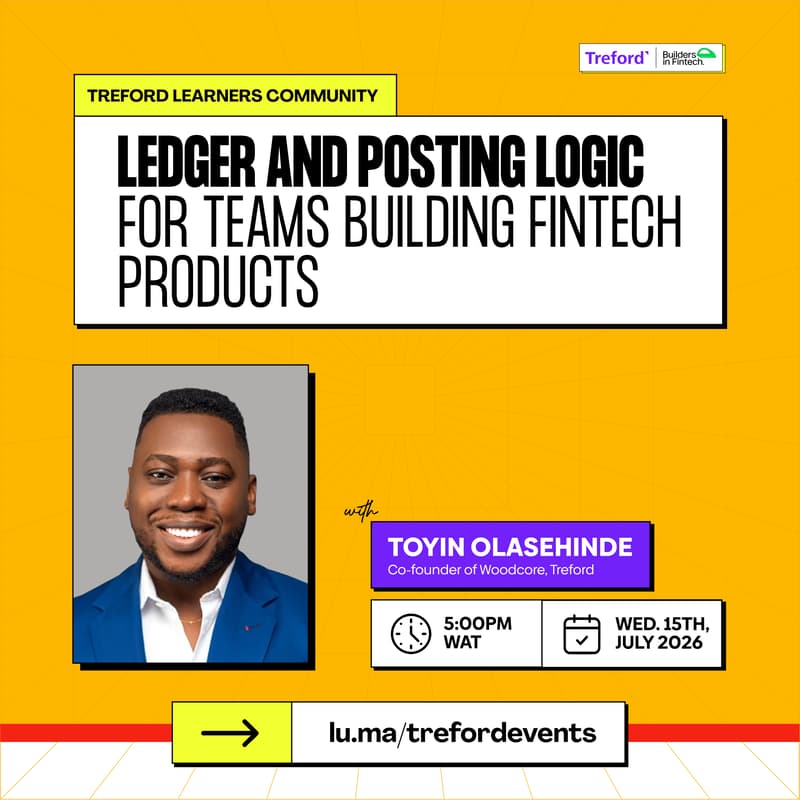

Ledger and Posting Logic for Teams Building Fintech Products
🎯 Session Overview
Every transaction on a fintech platform creates a chain of entries across multiple ledgers simultaneously. Most teams never see this layer clearly, and that invisibility is exactly where reconciliation problems begin. And for fintechs that rely on a licensed bank's core banking system rather than owning one themselves, there is an additional layer of risk if your internal representation is not properly maintained and reconciled against what the bank holds on your behalf.
This session aims to make your invisible layer visible, walking you through what happens at the ledger level, not to turn PMs and engineers into accountants, but to give them enough understanding to build correctly from the start, ask better questions, and avoid the reconciliation problems that are far more common and far more expensive than most teams expect.
What you'll learn
A clear understanding of what a ledger is, what double-entry posting means in a banking context, and why every transaction touches more than one ledger at the same time
An understanding of the key ledger types — customer accounts, income ledgers, liability ledgers, asset ledgers, expense ledgers, tax payable ledgers — and what role each plays in a transaction flow
A mental model for reading a posting matrix: what the debit and credit entries should look like for a given transaction, and how to spot when something has posted incorrectly
An understanding of why fintechs that do not own a core banking system still need to maintain an internal ledger — and what happens when that internal representation drifts from the position the partner bank holds on their behalf.
A clear picture of what happens at the ledger level across three real fintech scenarios: an inward or outward payment via a payment switch or gateway, a customer bill payment or airtime purchase, and a transaction involving fees, taxes, or reward points
The ability to ask better questions when a new product feature has transaction implications — before engineering builds something that posts incorrectly and creates a reconciliation problem that is difficult and expensive to unwind
🧑🏽🏫Meet your Facilitator
Toyin is a dynamic generalized specialist with a core expertise in Product Management and over eight years of experience leading teams, products, and operations. Currently driving people, operations, and product strategy at Woodcore Inc. and Treford, Toyin oversees the entire product lifecycle - from defining the product vision and prioritizing requirements to collaborating with engineering, marketing, and support teams to meet revenue goals.
💬About Treford Learner Community (TLC)
Treford Learner Community is a gathering of professionals around the world looking to meet other like minds and grow together through community engagements physically and virtually.