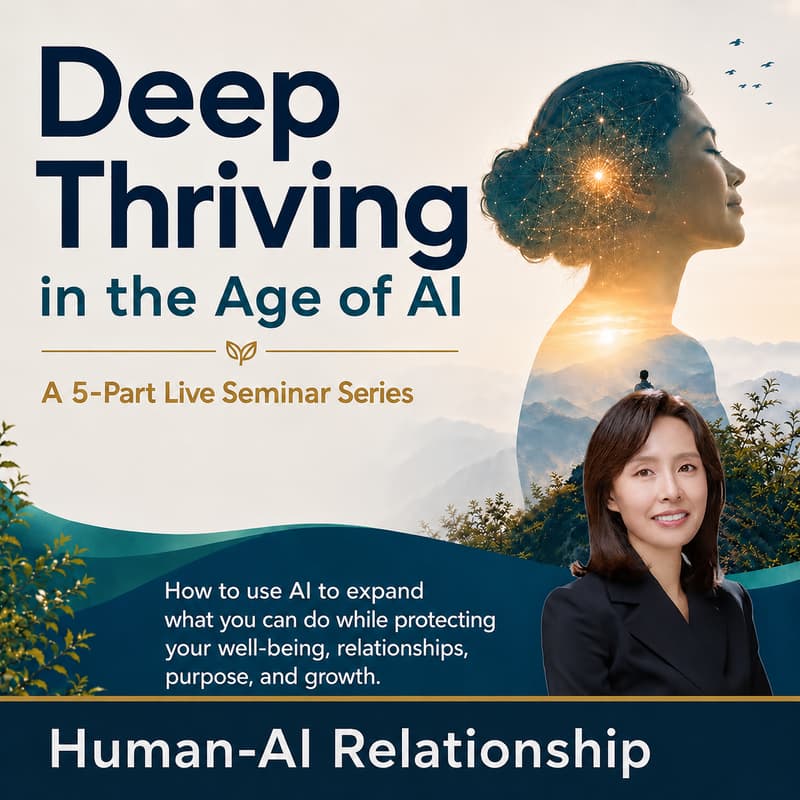

Finding the Optimal Human-AI Relationship
Deep Thriving in the Age of AI: Part 4
Human-AI Relationship
What Should Our Relationship with AI Look Like? What is my preferred relationship with AI?
Do I want a forever-supportive assistant? One that challenges my ideas and critiques my thinking? A collaborator? A companion?
It is becoming increasingly common for people to spend a large part of their day interacting with AI rather than with other people. At work, many of us use AI across more and more tasks and are encouraged to collaborate with it whenever possible. In our personal lives, AI chatbots are also becoming available almost everywhere, including social media, apps, search, and customer service.
As we spend more time working with AI, discussing personal matters, and navigating difficult situations together, an important question emerges:
What should an optimal human-AI relationship look like?
And more personally:
What kind of relationship with AI helps me become more productive while also protecting my judgment, relationships, autonomy, and well-being?
In this session I will review recent scientific findings on how people perceive and experience their relationships with AI chatbots, including AI as an assistant, collaborator, or companion. We will explore:
Why people may prefer different interaction styles with AI, from highly supportive to more challenging and critical
The potential benefits of different human-AI relationships, including support, learning, productivity, and exploration
The possible risks, including overreliance, reduced independent thinking, blurred boundaries, and displacement of human interaction
How we can become more intentional about shaping and adjusting the way AI interacts with us
About Me
I am Prof. Pilyoung Kim. I’m a developmental psychologist, neuroscientist, and Professor of Psychology at the University of Denver, where I also direct the Center for Brain, AI, and Child.
For more than 20 years, I’ve studied how we develop, experience emotions, build relationships, and maintain our well-being.
More recently, my work has expanded to an important new question: how is AI changing the way we think, relate to others, and live our lives?
I’ve also had the opportunity to contribute to AI safety and policy efforts involving OpenAI, Google, leading AI policy organizations, and a U.S. Congressional briefing.
Why I Created This Series
I teach university students how to thrive in the age of AI, drawing on research from psychology, neuroscience, and human-AI interaction. The questions we explore in the classroom include how AI affects our creativity, judgment, social relationships, and well-being, and how we can protect and strengthen these critical human capacities, both with and without AI.
I created the Deep Thriving in the Age of AI seminar series to bring these research-informed strategies beyond the university classroom. My goal is to make the science accessible and practical, so more people can understand how AI is affecting us, recognize the human strengths they already have, and develop concrete ways to continue learning, growing, and thriving.