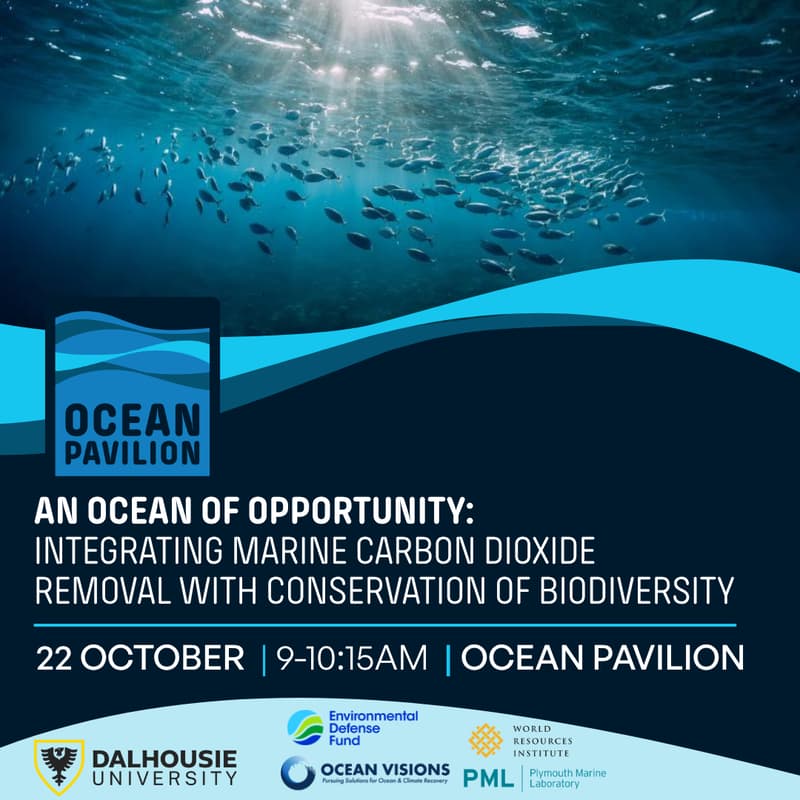
An ocean of opportunity: integrating marine carbon dioxide removal with conservation of biodiversity
Responsible and ethical research on marine carbon dioxide removal (mCDR) is essential to assess potential carbon removal as well as environmental, ecological, and socio-economic trade-offs, including impacts on biodiversity. Converging expertise across science, policy, and society is necessary to leverage interdisciplinary expertise, co-produce community-informed science to guide decision-making, and ensure that community perspectives are integrated into project design. To ensure that mCDR projects offer more benefits than harm to biodiversity and the environment, recent global efforts have brought together fishers, aquaculture, and Indigenous community members alongside scientists, and policy experts to co-develop frameworks and best practice guides focused at this intersection. In this panel, we will share perspectives from the leaders pioneering such global initiatives. We will highlight the intersection of mCDR, CBD COP17, and BBNJ goals by focusing on the need to protect biodiversity by restoring ocean ecosystems, integrate climate mitigation with conservation of biodiversity, and center efforts around Indigenous and local communities, including fishers and aquaculture.
Moderator: Dr. Kalina Grabb, Dalhousie University (Postdoctoral Fellow, CONVERGE CDR Research Lead)
Panelists
Dr. Leonardo Valenzuela Perez, Ocean Visions (Senior Director of International Partnerships and Policy)
Dr. Kristin Kleisner, Environmental Defense Fund (Associate Vice President, Oceans)
Professor Matt Frost, Plymouth Marine Laboratory, (Head of Office for International Affairs)
Dr. Tom Pickerell, World Resources Institute (Global Director, Ocean Program)