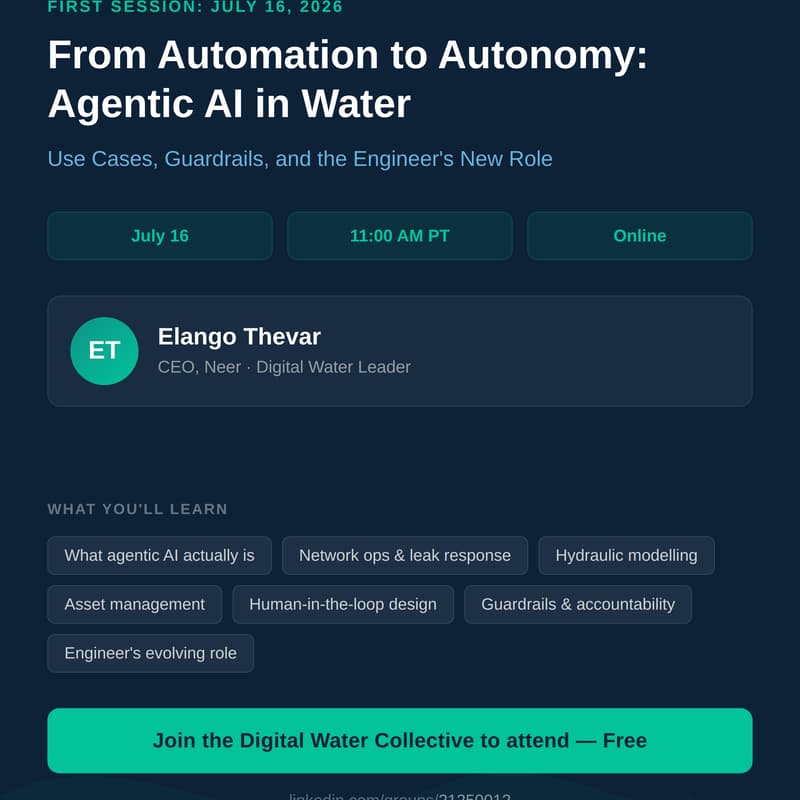
From Automation to Autonomy: Agentic AI in Water — Use Cases, Guardrails, and the Engineer's New Role
Water utilities have long used automation, but agentic AI is different: systems that can plan, decide, and act toward goals with minimal human input. This talk explores what that shift means for the water sector.
We'll start with a practical grounding — what agentic AI actually is and how it differs from traditional automation and chatbots — then walk through emerging use cases: network operations and leak response, hydraulic modelling and scenario analysis, asset management, water quality monitoring, and customer service. From there, we'll tackle the harder questions: What happens when an agent makes the wrong call on critical infrastructure? Where do we draw the line between autonomy and human oversight? We'll cover ethical considerations and practical guardrails — human-in-the-loop design, auditability, fail-safes, and accountability.
Finally, we'll look at what this means for water engineers themselves. Far from being replaced, engineers become more essential — as domain experts who define goals, set constraints, and validate outcomes. The role shifts from operator to orchestrator, and engineering judgment becomes the most important guardrail of all.
Attendees will leave with a clear-eyed view of both the opportunity and the risks, and a framework for thinking about where agentic AI belongs — and doesn't — in their organisations.