
Mt. Adams PBA June Quarterly Meeting
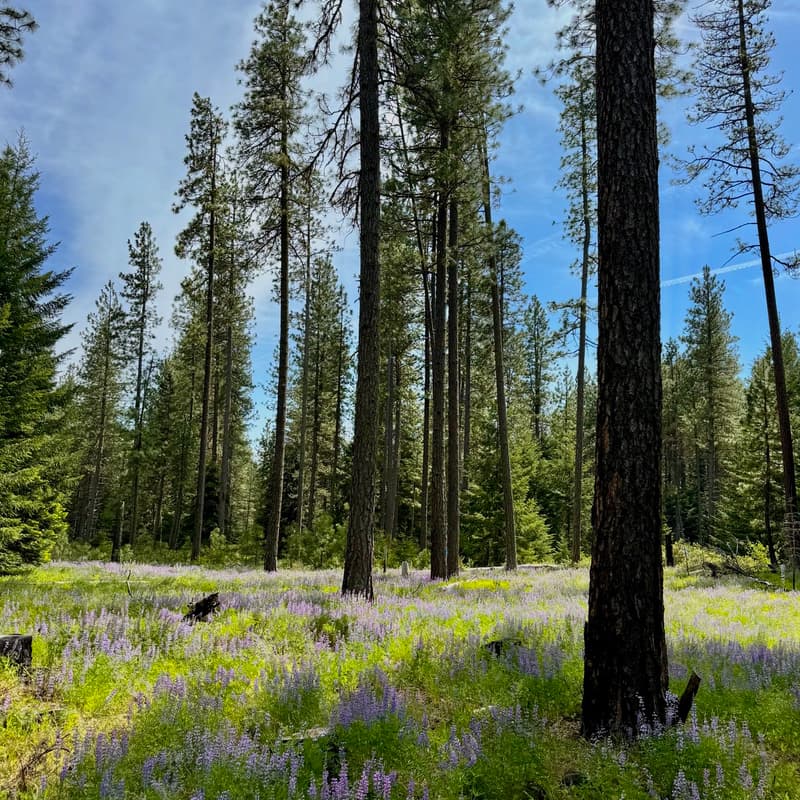
Our June Quarterly meeting will feature a presentation and field tour led by University of Oregon student Flora Booker. Her research on the Mt. Adams Community Forest highlights how community-led burning reshapes forest structure and plant communities over time.
We will walk through several units on the Community Forest to visually compare an un-burned, un-thinned control plot to other areas burned at different times and seasons. Discussion topics will include
Significant research findings, including the role of fire in reducing bitterbrush height and the ways that understory plants regrow over time after Rx fire.
Unique fire-adapted plants of the ecosystem and their important roles.
Ways to get involved with community science work
Questions? Contact Mt. Adams PBA coordinator Emery Cowan at emery@mtadamsstewards.org
Research Title and Abstract
EARLY SUCCESSIONAL DYNAMICS FOLLOWING PRESCRIBED FIRE IN A PONDEROSA PINE WOODLAND
As wildfire intensity and extent increases under climate change, it is vital to explore the role of community-led prescribed fire in both reducing wildfire risk and shaping plant growth in eastern Cascade ponderosa pine ecosystems. I analyzed plant presence across prescribed fire and other treatments implemented over seven years by the Mount Adams Resource Stewards Prescribed Burn Association (MARS PBA) in Glenwood, Washington. I focused on Purshia tridentata, given its role as a ladder fuel that could assist fire into the forest canopy. Community impacts were measured and facilitated by (1) quantifying the amount and diversity of species and functional groups across sites with different treatments, (2) recording overstory plant size and structure, and (3) fostering community science engagement.
Data were analyzed using generalized mixed models across functional groups, revealing that the height of the ladder fuel Purshia tridentata significantly decreased after fire relative to other treatments, suggesting that burning can contribute to increased wildfire resilience (P = 0.0079). Species richness increased with time since burn, and plant communities diverged by treatment, with some species occurring in burned plots and others restricted to unburned areas. Community science efforts are supported by developing a field-ready plant guide and creating an iNaturalist project to create tools that support education, outreach, and ongoing stewardship.