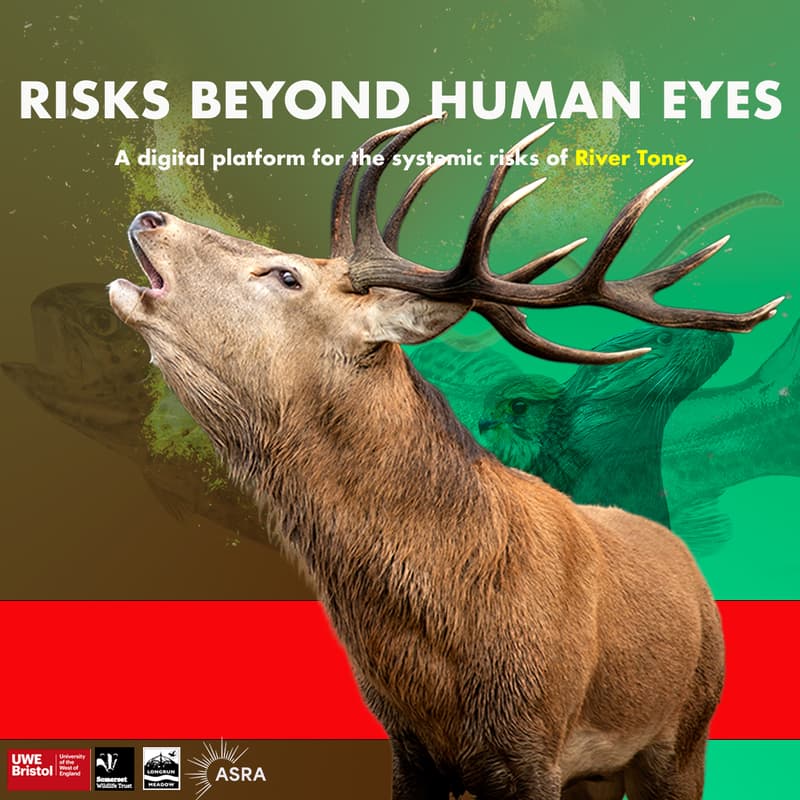

River Tone Risks Beyond Human Eyes: Final Event
Where it all comes together
Join the team for one final time, back where we started at the wonderful Museum of Somerset. How much has changed? What have we achieved? What risks do we know see? And what are we going to do about them?
On the day
Firstly, please join us for a special lunch, networking and catching up with friends at 1330.
This session is in two halves. Firstly, from 1400-1500, we’ll present the platform in its fullness, revised and improved from April. We’ll invite any nonhuman animals that wish to speak to also be hear here.
The second half. Next, from 1500-1530, we'll focus on the systemic risk response plan before at 1530, closing the project with 30 mins reflecting together on this journey, re-centring our nonhuman animals, their futures and their rights going forward.
From 1600. Afterwards, you’ll all invited (along with any additional friends or family) to join us for a celebratory drink in a near by pub (from 1630).
We hope you can make it to mark this milestone. We’re also hoping to be joined by some additional friends of the project, supporters, funders and those that have been working in the background.
-
What happens if I can't make it? No matter how big or small your contribution to this project has been, you are part of this River Community, and how this community grows doesn’t end with the project. So look out for our follow up comms where we set all the next steps and life beyond the project.
-
For the full project info, please see our Project FAQs document.
This project is open to anyone from the River Tone catchment - from Elworthy to Burrowbridge, Luxhay to West Bagborough. Come and join this bold attempt to reconnect River Tone with their people and animals, and make new friends along the way.
-
Dates for your diary:
25 June. Online. “Telling the story of River Tone Risks Beyond Human Eyes. nature-Centric Systemic risk”. Online event to a global audience.
-
This project is kindly funded by the EPSRC's Ecological Citizen(s) Network and led by the University West of England and ASRA, in partnership with Friends of Longrun Medaow and Somerset Wildlife Trust