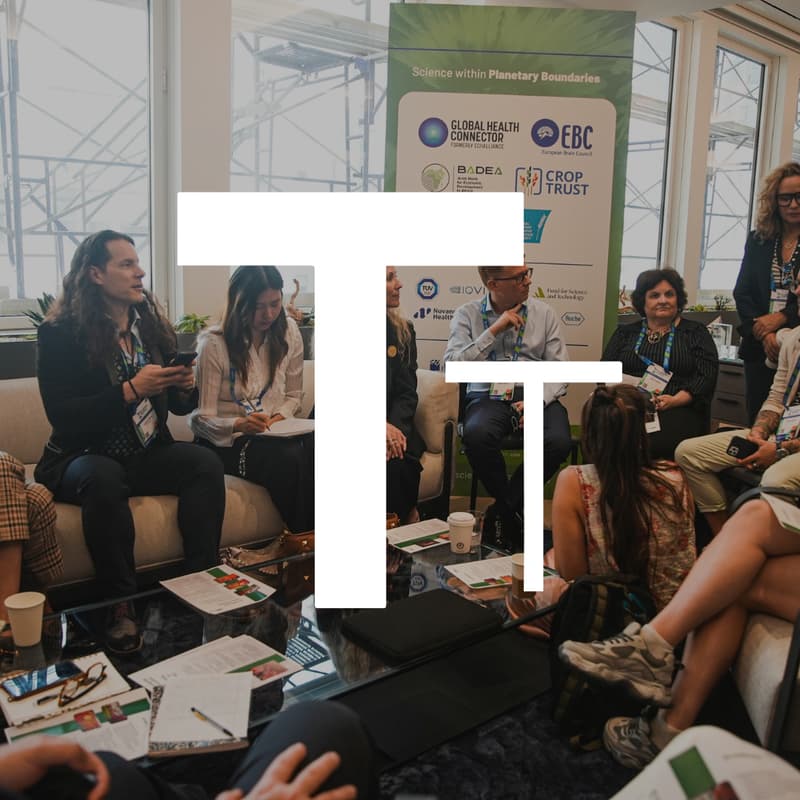

TTI Investor Salon · COP31 Antalya | Climate Infrastructure and Energy Transition Finance
Climate Infrastructure and Energy Transition Finance | COP31 Antalya
How can capital flow into energy-transition infrastructure amid geopolitical uncertainty?
Join us in Antalya for a focused discussion on geopolitical risks, energy markets and investment opportunities across emerging markets. The conversation will explore how investors, financial institutions and development actors can structure financing, allocate risk and mobilise private capital for the energy transition.
The programme will feature expert discussions on energy finance and infrastructure, a fireside chat on international investment perspectives, and opportunities for investors and climate-tech entrepreneurs to connect through curated networking and investor–startup exchanges.
Programme highlights
Geopolitical risks and their implications for energy markets and investment decisions
Financing energy-transition infrastructure in emerging markets
Mobilising private and development capital
International investment perspectives on emerging technologies and climate solutions
Investor–startup exchange and networking
Limited seats. Secure your spot now.
AGENDA
08:30–09:00 | Registration, Welcome Coffee & Networking
09:00–09:15 | Opening & Welcome Remarks
Haluk Haksal – Top Tier Impact
Opening remarks introducing Top Tier Impact, the COP31 context and the objectives of the event.
09:15–09:45 | TTI Startup and Scale-up Presentations
Presentations by selected startups and scale-ups showcasing their technologies, business models, climate impact, investment potential and opportunities for commercial growth.
09:45–10:45 | Panel Discussion
Climate Infrastructure and Energy Transition Finance
Moderator
Engin Göksu: A senior investment and international finance professional with experience at Deutsche Bank, IFC and EBRD. His expertise spans infrastructure investment, project finance, blended finance and political-risk assessment in emerging markets. He held senior investment, resource-mobilisation and country-management roles at EBRD and now advises public- and private-sector clients as an independent consultant. He holds a master’s degree from Johns Hopkins University-SAIS.
Panellists
Prof. Dr. Figen Yıldırım: Professor and Dean of the Faculty of Economics, Administrative and Social Sciences at İstinye University, Türkiye, specialising in international trade, strategic marketing management and sustainability. Her research examines the macroeconomic effects of renewable energy investment, Türkiye’s energy dependence and green supply chain design under uncertainty. She has coordinated numerous European Union and development agency projects, provides commentary on global trade and geoeconomics on business television channels, and moderates sessions at major industry summits.
Lisa A. Kaestner: Division Director for Türkiye, Kazakhstan and Uzbekistan at the International Finance Corporation (IFC), World Bank Group. With over 25 years of experience in development finance and private investment mobilisation, she previously led IFC's operations in Ukraine, including investment initiatives supporting renewable energy, infrastructure and private sector resilience.
Bora Bariman: Founder of Hormuz Straits Partnership, an advisory firm helping energy, mining and commodity trading companies access capital for growth. He is also a Senior Advisor to Alphier Capital - a boutique advisory focused on natural resources in frontier markets.
Previously covering the energy and marine sector with institutions such as Lloyds Bank and National Bank of Fujairah, Bora held senior roles focused on shipping, structured commodity finance, upstream reserve based lending and midstream finance for refineries, LNG and oil terminals, gas infrastructure. Most recently he has advised energy transition focused investors on hydrogen trade and logistics, grid-scale batteries, and power transmission technologies.
Bora is a graduate of the Harvard Kennedy School of Government where his coursework focused on finance of large-scale infrastructure and regulation of energy markets.
Chris Neidl: Carbon Removal Lead for the UN Climate High-Level Champions and a key contributor to CDR2030, a global initiative launched from the COP30 action agenda to accelerate carbon dioxide removal. He brings more than two decades of experience in clean energy and climate policy, including 15 years working in renewable energy and solar across North America, South Asia, East Africa, and Central America. His work has spanned renewable energy finance, business development, policy advocacy, and industrial decarbonization. He co-founded OpenAir, a grassroots carbon removal policy initiative, and the 4 Corners Carbon Coalition, which supports locally led carbon removal projects. He has also served in advisory roles for the Carbon XPRIZE and U.S. Department of Energy. His current work focuses on integrating carbon removal into industrial systems, carbon markets, climate finance, and international climate policy. Chris is based in New York City.
Dr Şahin Yaman: An international political economist, Türkiye’s former Chief Negotiator at the World Trade Organization (WTO), and a lecturer in Dynamics of World Oil at Middle East Technical University (METU). He regularly contributes expert commentary on global markets, energy and international political economy to Bloomberg.
Discussion Focus
The discussion will begin with an overview of geopolitical risks and their implications for energy markets, investment decisions and energy-transition finance. It will then explore investment opportunities, financing mechanisms and risk allocation for energy-transition infrastructure, with a focus on mobilising private and development capital in emerging markets.
10:45–11:15 | Coffee Break & Networking
An opportunity for investors, entrepreneurs, speakers and participants to connect and explore potential collaborations.
11:15–11:45 | Fireside Chat with an International Climate and Energy Investor (TBC)
A conversation exploring international investment perspectives on the energy transition, emerging technologies, infrastructure financing and opportunities to mobilise private capital for scalable climate solutions.
11:45–12:15 | Investor–Startup Exchange & Networking
An opportunity for investors and climate-tech entrepreneurs to explore investment opportunities and potential partnerships.
12:15–12:30 | Closing Remarks
Haluk Haksal – Top Tier Impact
Key takeaways, reflections on investment opportunities, and next steps for continued collaboration.