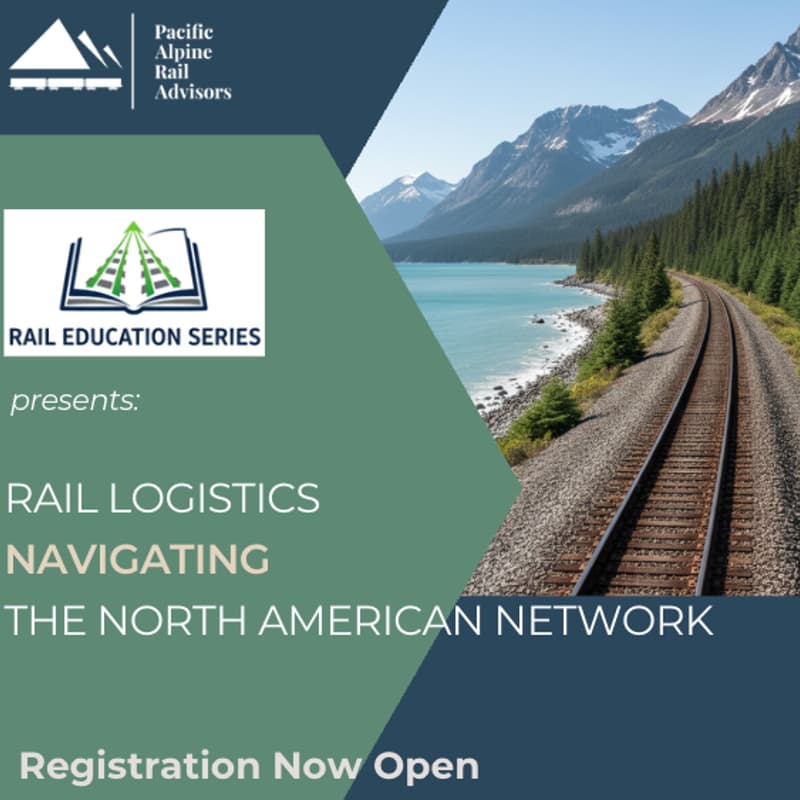

Rail Logistics: Navigating the North American Network
The Challenge: Rail operates on a completely different set of physics and economics than trucking or ocean freight. For logistics professionals new to the mode, the learning curve can be steep and unforgiving.
The Solution: This Executive Briefing is designed as a fast-track foundation for those entering the rail sector or managing a modal shift. We strip away the confusion to explain how the North American rail logistics actually works.
What You Will Learn:
The Map & The Math: Understanding the Class I network, interchanges, and shortlines.
Truck vs. Rail Logic: Why rail doesn't move like a truck, and how to adjust your supply chain expectations.
Operational Mechanics: How a car moves from A to B (yards, trains, transloads, and railcar types).
👨🏫 Your Instructor
Adam Nori | President & Principal Consultant, Pacific Alpine Rail Advisors
With 19+ years of expertise in rail supply chain and procurement, Adam specializes in helping shippers navigate high-stakes negotiations and fleet strategy.
💡 Who Should Attend?
Logistics Managers transitioning from Truckload/LTL, Procurement Officers new to rail categories, and Supply Chain Analysts.
📋 Course Syllabus
Part 1: The North American Rail Foundation
Understanding the Class I Railroad landscape and geographic territories.
The essential logic of the "North American Network" as a single integrated system.
Defining the roles of Short Lines and Regional railroads in the first-and-last-mile ecosystem.
Assessing the current state of network velocity and its impact on shipper supply chains.
Part 2: Mastering Operational Mechanics
Interchange Logic: How railcars move between carriers and the hidden friction points in transit.
Car Cycle Fundamentals: Analyzing the components of a cycle to identify "time-waste" in transit and at facilities.
Switching & Terminal Operations: High-level overview of yard movements and their influence on total lead times.
Strategies for improving car turn-around times without increasing fleet size.
Part 3: Network Flow & Visibility
Decoding the "Why" behind network disruptions and congestion.
The difference between railroad-provided data and actionable logistics intelligence.
Leveraging visibility tools to move from reactive "firefighting" to proactive network management.
Identifying "choke points" in the North American grid before they impact your facility.
Part 4: Strategic Carrier Management
Best practices for communicating with Class I and Short Line operational teams.
Understanding the "Service Design" mindset of the railroads to better align your shipments.
High-level tactics for managing transit time variability and improving schedule reliability.
Part 5: 2026 Logistics Outlook
The Future of Flow: How upcoming network changes and consolidations may affect your routing.
Technology & Integration: The evolving role of automation and AI in rail network management.
The 2026 Strategy: A strategic roadmap for mastering network flow in an era of supply chain sovereignty.
Register now to secure your seat.