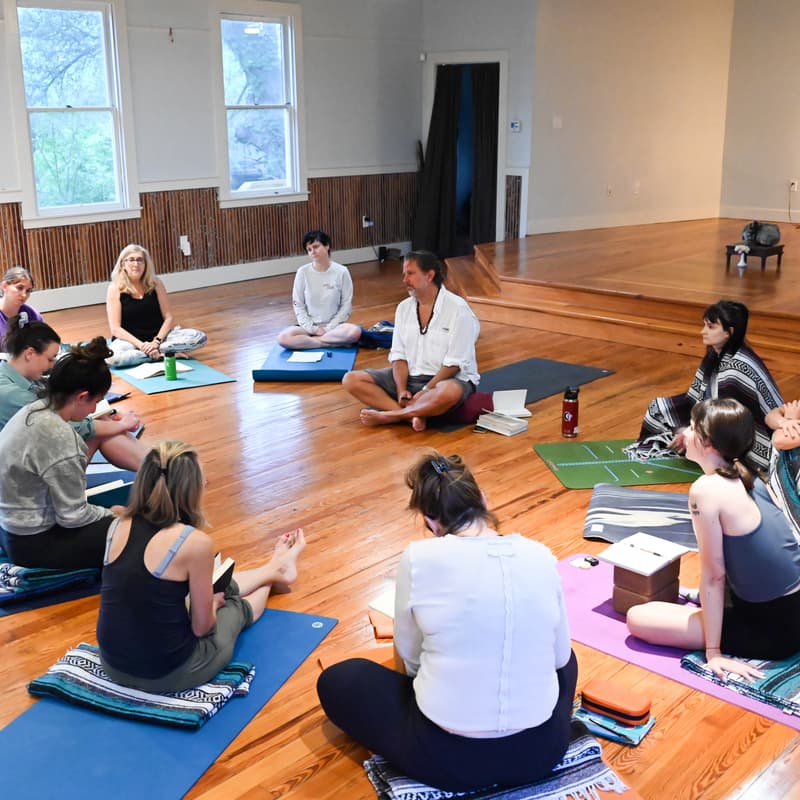

Writing the Heart: A One-Day Immersion
Writing the Heart: A One-Day Immersion
Saturday, October 24, 2026 | 9:00 a.m.–4:00 p.m. | Boulder, Colorado
The Stories We Carry Are Waiting for Us to Slow Down
Most of us carry around stories we haven’t quite found the words for yet.
There may be a memory that keeps returning. A loss we’re still trying to understand. A relationship that changed us. A journey, a turning point, a moment of beauty or heartbreak that we know mattered, even if we can’t quite say why.
We feel the pull to write about these things. We may even promise ourselves that we will. But life moves fast. Weeks become months. And when we finally sit down with a notebook, another voice often shows up:
Where do I even start?*
What if I get it wrong?*
Who would want to read this anyway?*
Before long, the blank page stops feeling like a place of discovery and starts feeling like a test.
Writing the Heart is about finding another way in.
Over the years, I’ve developed a writing practice that brings together two things I care deeply about: the craft of writing and the exploration of our inner lives. I love good writing, and I care deeply about craft. But I don’t believe writing is only about producing something polished or publishable. For me, writing has always also been a way of paying attention. It can bring us into closer contact with our memories, our longings, our losses, our contradictions, and the questions we’re still living.
And I’ve seen something interesting happen, both in my own writing and in the writing of people I teach: when we give our experiences our full attention, the stories we thought we already understood often become stranger, richer, and more alive.
On Saturday, October 24, we’ll step away from our usual routines and spend a day together in Boulder writing, reading, learning craft, sharing stories, eating together, and giving ourselves something that’s increasingly difficult to find: **unhurried time to listen for what wants to be written.**
This Day Is for You If...
* You’re working on a memoir, personal essay, or other piece of personal writing and want to go deeper.
* You’ve been wanting to write but have trouble finding your way onto the page.
* You want to recover a creative part of yourself that’s gotten buried beneath the responsibilities of everyday life.
* You want to write with more honesty, freedom, and emotional depth—and less self-consciousness.
* You want practical tools for turning memories and freewriting into scenes and stories.
* Or maybe you simply want to understand your own life a little better and spend a day writing in good company.
You don’t need to arrive with a project, and you don’t need to think of yourself as a “writer.” Bring a notebook, a good pen, your curiosity, and a willingness to follow the writing wherever it leads.
How the Morning Will Flow
We’ll begin with a brief meditation. Nothing elaborate or intimidating—just a few minutes to settle into our bodies, quiet some of the outside noise, and actually arrive.
Then I’ll lead you through the core Writing the Heart practice I use in my ongoing classes.
We’ll begin with a passage from a memoir or another piece of literary nonfiction I love. I do this in every Writing the Heart class. We’ll read it not only as writers paying attention to craft, but as human beings listening for the place where somebody else’s story touches our own.
From that passage, I’ll choose three lines or phrases as writing cues.
You’ll choose the one that has some energy for you—not necessarily the one that makes the most sense intellectually—and write continuously for about twenty minutes.
The invitation is simple: don’t plan the story before you write it.
Follow the image. Follow the memory. Follow the body. Follow the sentence.
Sometimes you’ll know exactly where you’re going. Sometimes you won’t have a clue. And sometimes something you haven’t thought about in twenty years will walk through the door.
That’s part of the practice.
Afterward, anyone who wants to can read what they’ve written. Sharing is always optional. We won’t critique these fresh pieces in the traditional workshop sense. Instead, we’ll listen closely and generously. We’ll notice what feels alive. We’ll talk about what the writing is doing. And we’ll honor what it means to put some part of an inner life into words and then read those words to a room full of people.
We’ll move through this rhythm several times during the morning:
Read. Listen. Write. Share. Reflect.
My hope is that, little by little, some of the noise falls away and you begin to trust your own writing mind again—or maybe discover that you can trust it in the first place.
Lunch, Conversation & Community
At midday, we’ll stop for a catered lunch together.
This isn’t just a break in the program. I want this day to have some breathing room in it—time for conversation and laughter, wandering outside for a few minutes, meeting other people who care about stories, and simply being together without rushing to the next thing.
Lunch is included in your tuition.
The Afternoon: Turning Raw Writing Into Story
The morning is largely about discovery. The afternoon will turn more explicitly toward **craft**.
Because once something alive appears on the page, another question arises:
How do I turn this into a story?
I’ll teach some of the principles I’ve learned—and keep relearning—over more than three decades as a writer, editor, journalist, memoirist, and writing teacher.
We’ll explore questions such as:
Where is the emotional energy?
Not every memory needs to become a story. We’ll talk about recognizing the moments that carry genuine narrative charge—and learning to trust them.
How do I move from reflection into scene?
We’ll look at how to bring a remembered experience back to life through action, sensory detail, dialogue, place, and specificity.
What gives a story momentum?
One of the simplest pieces of advice I give memoir writers is: give the narrator something to do. Let them walk into a room, drive across a state, pack a suitcase, make dinner, wait for a phone call. Action gives the reader something to follow while the deeper emotional story unfolds underneath it.
Who is telling the story?
Memoir contains at least two versions of us: the person who lived the experience and the person who is looking back on it now. We’ll explore how to work with both perspectives without losing the immediacy of the original moment.
And throughout the afternoon, we’ll keep returning to the central question of the day: How do we make something artful and true from the raw material of a life?
Two Guest Authors Will Join Us
I’m also delighted that two guest authors will join us during the day.
They’ll bring their own approaches to the page and talk with us about some of the practical challenges every writer encounters: creating scenes, choosing the details that matter, finding the emotional center of a piece, and shaping lived experience into compelling narrative.
I want you to hear more than one writer’s voice and more than one way of working. There isn’t a single correct way to write a life. I certainly don’t have the only way. Part of becoming a writer is gathering tools from other writers and discovering which ones unlock something in you.
There will also be time for questions and conversation with our guests.
What You’ll Take Home
By the end of the day, my hope is that you’ll leave with more than inspiration.
You’ll have several pieces of new writing—some of which may contain the beginnings of essays, memoir scenes, or stories you’ll want to keep developing.
You’ll have practical craft tools for working with scene, action, reflection, sensory detail, narrative movement, and the different perspectives available to a memoir writer.
You’ll have a repeatable writing practice you can return to whenever you feel stuck or disconnected from your creative life.
And perhaps most importantly, I hope you’ll leave with a little more trust—trust in your memories, your curiosity, your voice, and your ability to sit down without knowing exactly what you’re going to say and find out by writing.
Because our stories matter.
Not because every experience contains a neat lesson. Most of the important things in life don’t.
They matter because writing lets us stay with the questions a little longer. It helps us notice what we missed the first time around. And every once in a while, if we’re patient and willing not to know, the page shows us something about our lives that we didn’t know when we began the sentence.
That’s the territory I love, and it’s the territory I want us to explore together.
About Brad Wetzler
Brad Wetzler is an author, memoirist, journalist, editor, and writing teacher with more than 35 years of experience telling true stories.** He is the author of "Into the Soul of the World: My Journey to Healing," a memoir about his own long search for meaning, healing, and a deeper way of being in the world.
Brad spent six years as an editor at Outside magazine and nearly two decades as a contributing editor. His writing has appeared in The New York Times, Newsweek, GQ, Wired, Travel + Leisure, Men’s Journal, Yoga Journal, and other publications. His reporting has taken him from the West Bank to the Amazon, Greenland, India, and across the American West.
Today, Brad teaches memoir and personal narrative and works privately with writers on books, essays, and the stories they most want to tell. He is the creator of **Writing the Heart**, an ongoing writing practice and community that brings together literary craft, contemplative attention, and something Brad has come to believe through his own life as a writer: writing can be more than a way of making stories. It can be a way of discovering what our lives are trying to tell us.
Brad lives and teaches in Boulder, Colorado.
Tuition & Registration
To keep the day intimate and make room for real conversation and individual attention, space is limited
Your tuition includes the full-day immersion, all guided writing sessions and craft instruction, sessions with two guest authors, workshop materials, and a catered lunch.
Tuition: $300
Current Writing the Heart Community Members: $265
I’d truly love to have you join us for this day of writing, craft, reflection, good food, and human connection in Boulder.
Reserve your seat and come spend a day listening for the stories that are waiting for you.