
How Observational Memory Reached SoTA on BEAM
Long-running agents eventually outgrow their context windows. Most teams solve this with compaction, but repeatedly summarizing history loses details, flattens important changes, and makes past decisions difficult to verify.
Observational Memory (OM) is Mastra’s memory system for giving agents durable context across long-running conversations. You can add it to your own agents to manage growing histories automatically.
Inspired by human memory, its background Observer and Reflector continuously record events, connect related information, and discard noise.
The results were startling. OM achieved the highest score ever recorded on LongMemEval. Now it has reached state-of-the-art (SoTA) performance on Beyond a Million Tokens (BEAM), with the top published scores at both 100K and 1M tokens. This shows that the same approach continues to work as conversations grow from thousands to millions of tokens.
In this workshop, we’ll start with how OM works and how to use it in an agent. We’ll cover:
How the Observer and Reflector maintain a compact, chronological memory
How asynchronous processing, temporal markers, and recall preserve important details
How OM keeps agent context stable and prompt-cacheable
We’ll then break down the team’s BEAM methodology and findings. We’ll cover:
How BEAM tests ten memory abilities across conversations up to 10M tokens
How OM scored 83.3% at 100K and 80.6% at 1M using default settings
What the results and failures reveal about memory at extreme context lengths
Join us for a live demo, real code, and the chance to ask questions directly to the engineers who built the feature.
Hosted by
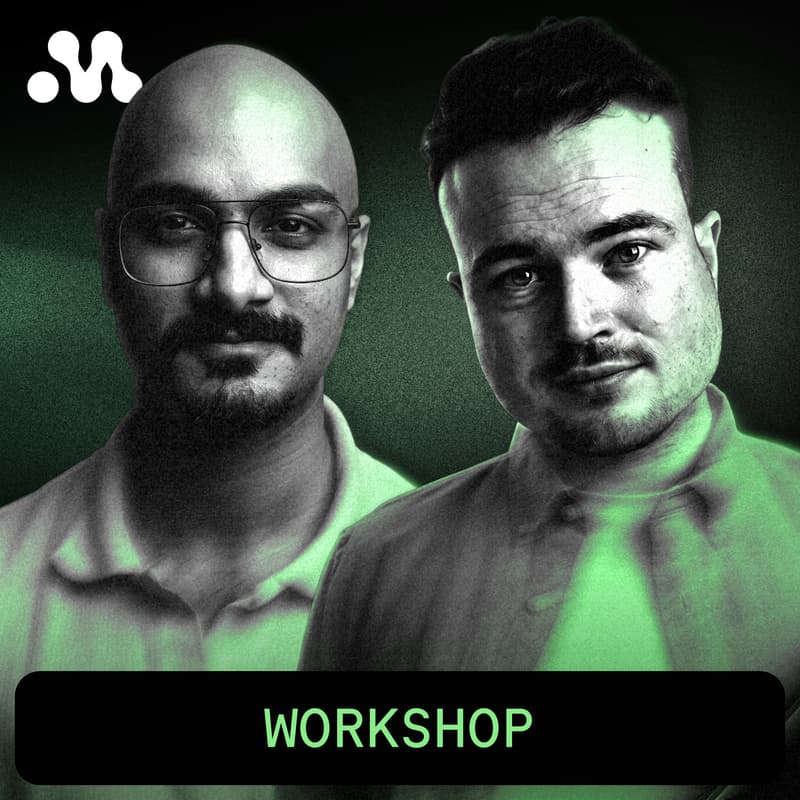
Alex Booker, Developer Experience, Mastra
Aamish Ahmad Beg, Research, Mastra
Recording and code examples will be available to everyone who registers.