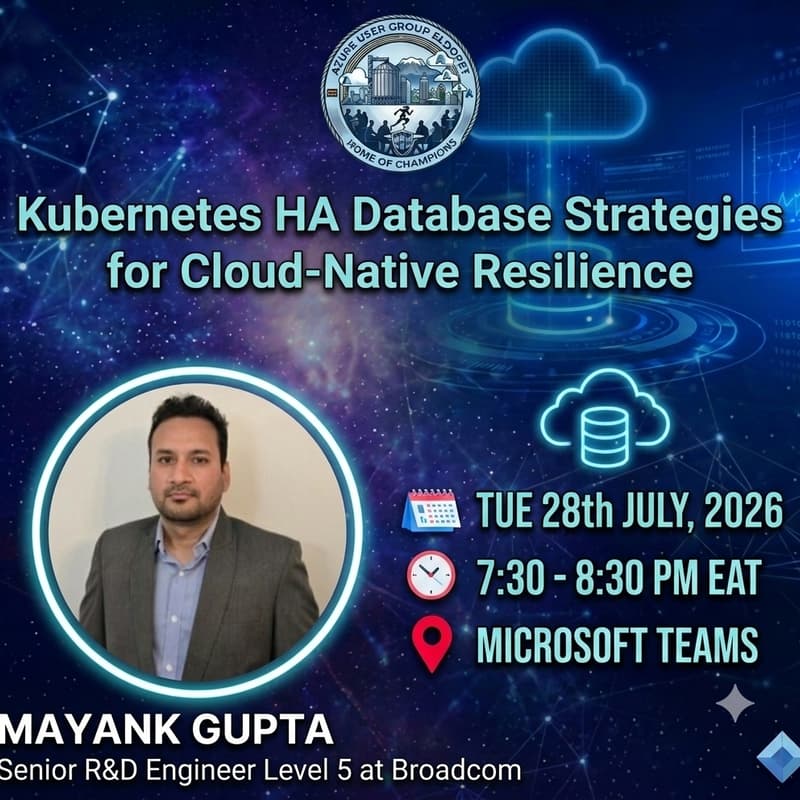
Kubernetes HA Database Strategies for Cloud-Native Resilience
Private Kubernetes clouds are increasingly used to host mission-critical databases, making high availability, resilience, and recovery planning essential for business continuity. While Kubernetes provides strong orchestration capabilities for containerized workloads, stateful databases introduce challenges related to replication, failover, persistent storage, traffic routing, and infrastructure recovery.
This session explores practical strategies for designing highly available database platforms on private Kubernetes infrastructure. Attendees will learn how replication models, automated and manual failover, resilient storage architectures, Kubernetes-native patterns, and recovery procedures work together to maintain database availability during node failures, storage disruptions, network issues, and maintenance events.
The presentation reviews Kubernetes and database resilience capabilities, including StatefulSets, Pod Disruption Budgets, TiDB Operator, AlloyDB Omni Kubernetes Operator, PostgreSQL with Patroni and pg_auto_failover, MySQL Group Replication, and MariaDB Enterprise Operator. It also explains key tradeoffs between data consistency, recovery objectives, operational complexity, and infrastructure readiness.
Beyond architecture and tooling, the session emphasizes validation through failure testing and gameday exercises. By simulating node failures, zonal outages, and network disruptions, teams can uncover hidden weaknesses, strengthen recovery procedures, and improve operational confidence. Participants will leave with a practical framework for building, testing, and continuously improving Kubernetes-based database platforms that can survive infrastructure failures while supporting availability, reliability, and business continuity