
Developing enabling tools for design of better, healthier and tastier food products
Foods are amongst the most complex materials that one can study in terms of material mechanics. Yet if we are to deliver innovations in food production, we need understanding for how such complex materials behave rheologically under various loading and environmental conditions (strain rate/time, temperature). Only then we can provide solutions to the several, pressing challenges related to food, including a shift to sustainable, nutritious and enjoyable food products with a lower environmental impact, healthier human outcomes and positive sensory perceptions.
This talk will summarise our research related to the human digestion process of starch based foods which crucially affects the rate of release of nutrients in the gastrointestinal tract. We show how constitutive laws are calibrated through independent tests and then used as inputs in Finite Element (FE) models to simulate food structure breakdown during the gastric process. Parameters related to diffusion, reaction and mechanical deformation parameters are calibrated using experimental data. Peristaltic waves are simulated via displacement boundary conditions on the stomach wall, while chemical loading is represented by a mass field of gastric fluids. Furthermore, our studies related to the food oral process of chocolate will be presented. We show how microstructure can impact the macroscopic response and the whole sequence of events during the oral process, providing physical insight towards understanding consumer sensory perception of this popular product.
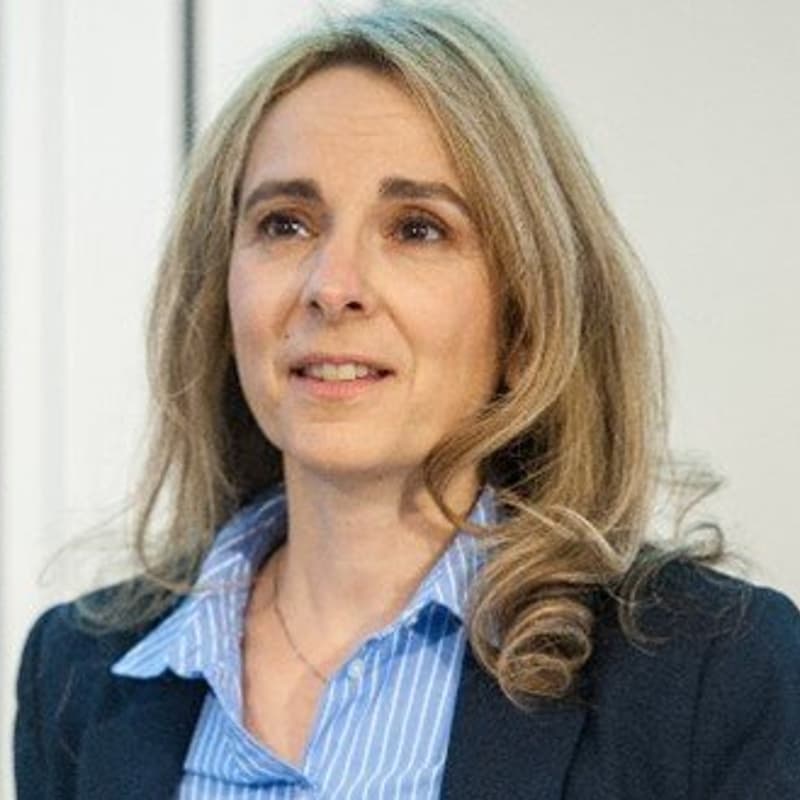
Prof Maria Charalambides (MC) is a Professor in Mechanics of Materials in Mechanical Engineering Department at Imperial. She leads her research group in Soft Solids that she established since her appointment as an academic at Imperial in 1997. She has extensive expertise on mechanical modelling and characterisation of soft polymeric solids including adhesives, gels, paints, foods, biopolymers and synthetic polymer composites. Amongst Maria’s research interests is mechanics of soft solids and particulate polymeric composites, rheological characterisation and modelling of soft solids used in various composite materials such as in foods, binders in particulate composites, paints for art conservation, adhesives and mechanical recycling of plastic packaging. Her group has developed computational models which can predict the effect of microstructure on bulk properties, through experimental as well as modelling studies. She is the immediate Past President of the British Society of Rheology. She has over 100 peer reviewed papers and has supervised numerous PhDs to completion and several Postdocs. Her work has been funded from UKRI as well as UK Industry.
Online and in-person.
Please do contact the CSM committee if you would require any assistance for accessing the venue.