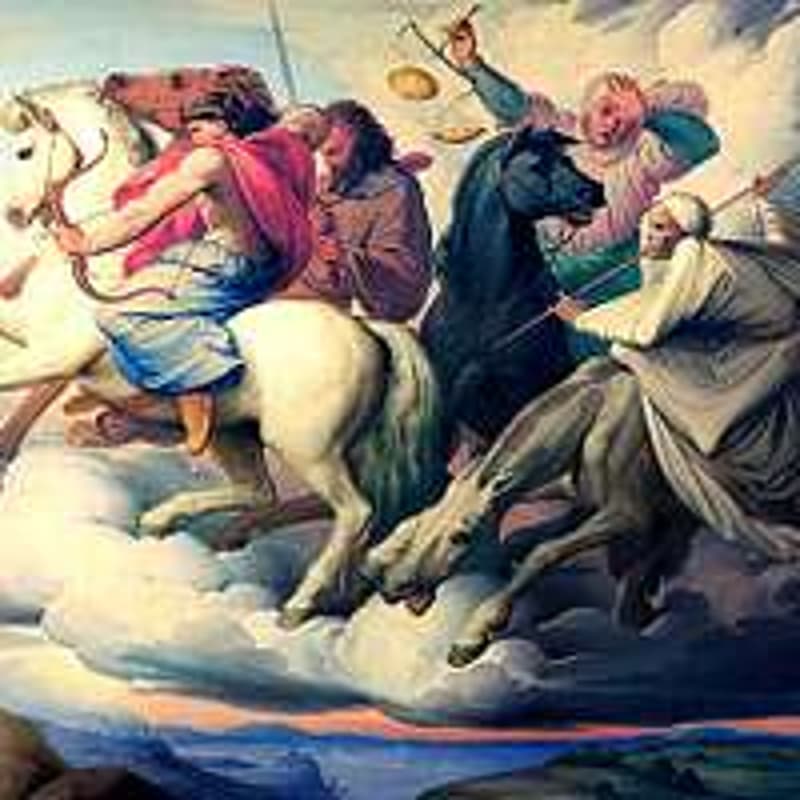

Classical Signs, New Fears: Islamic Eschatology and Technological Apocalypse in an Age of AI
Part of a series of seminars on Signs of the Times: Christians, Muslims and the Apocalypse
Speaker on 9 June: Syed Farooq
(Doctoral Student, Rice University, Houston; Visiting Researcher, CMCS Oxford)
An online-only event
Abstract
Classical themes of the apocalypse appear in the foundational works of religious literature where apocalyptic ideas are often conveyed through symbolic signs and warnings; the same is true of Islamic eschatology. There was a time when the end of the world was strictly a matter of faith, a divine script written by God. Today, the script is also being written by us. We first saw the face of a man-made apocalypse in the nuclear age, when Oppenheimer famously realized, "Now I am become Death, the destroyer of worlds."
A new concern now emerges: the "technological apocalypse." Stephen Hawking warned that artificial intelligence could eventually "re-design itself at an ever-increasing rate," superseding humans who remain constrained by slow biological evolution. Interestingly, technology companies and their founders are increasingly using theological language to describe the risks of their own creations, effectively secularizing the apocalypse.
The first part of the seminar traces the foundational apocalyptic motifs in Islamic traditions. The second part turns to emerging apocalyptic themes in the modern and contemporary world, primarily the technological singularity and artificial intelligence, arguing that these secular eschatologies inherit, rework, and sometimes invert classical religious schemas.
------
The topic of End Times prophecy in the Bible is a major focus of the CMCS Reading the Bible in the Context of Islam (RBCI) project on Daniel, Islam, Apocalyptic.
------