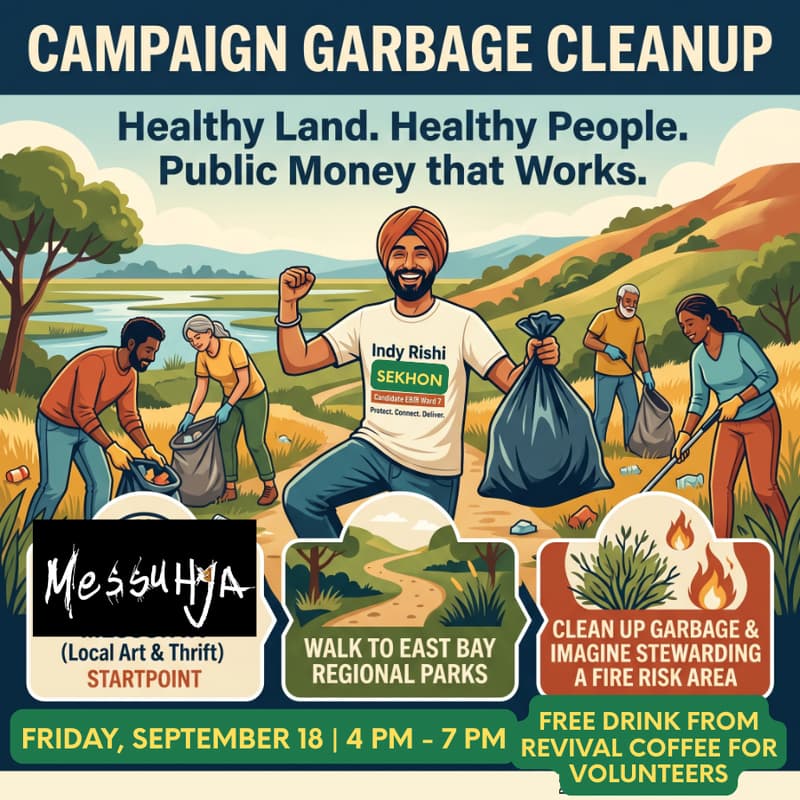
🧹 Clean Streets, Healthy Parks: Community Cleanup & Fire Stewardship Walk
Join us for a hands-on community action day where public health meets ecological stewardship! We are gathering at Messuhya, our beloved local art and thrift space, for coffee, community connection, and orientation before embarking on a guided cleanup walk down to the East Bay Regional Park District trailheads.As we walk, we will pick up garbage along our neighborhood corridors and park edges. Once we arrive at the parkland, we will engage in an interactive session imagining and prototyping active stewardship for high-fire-risk zones—learning how dry waste removal, brush management, and community care protect our neighborhoods from wildfire threats.Whether you are passionate about local art, climate resilience, public health, or just want to get outside and meet your neighbors, everyone is welcome!🌿
The Science: Why Cleaning Up & Walking Heals Us Park spaces and outdoor movement are our greatest preventative healthcare assets. Research in horticultural therapy, ecotherapy, and environmental psychology highlights how walking and group cleanups directly improve our mental and physical well-being:Stress Reduction & Cortisol Lowering: Physical activity in natural environments significantly reduces cortisol (the primary stress hormone) while boosting serotonin, dopamine, and endorphins.Physical Vitality & Functional Movement: Walking while bending, lifting, and carrying trash provides dynamic exercise that improves cardiovascular endurance, muscle flexibility, and overall mobility.Building Belonging & Reducing Isolation: Participating in group environmental action reduces feelings of loneliness, builds trust, and fosters a shared sense of accomplishment and civic purpose.Cognitive Clarity & Mood Enhancement: Absorbing outdoor tasks distracts from negative thought patterns, engages cognitive problem-solving, and promotes emotional stability and joy.Wildfire Risk Mitigation: Removing flammable litter and understanding fuel-break dynamics in wildland-urban interface areas strengthens neighborhood resilience against climate hazards.