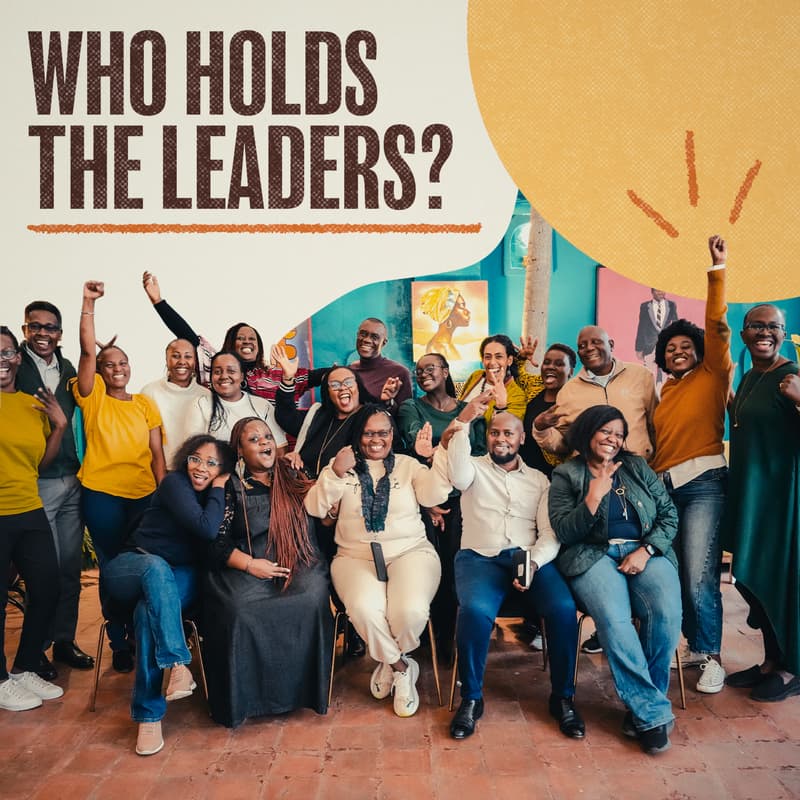

Who Holds the Leaders? Leader Care as Infrastructure for Systems Change
About the session
Across the social impact sector, leaders are navigating funding contraction, organizational transitions, mergers, growing uncertainty, and pressure to accomplish more with fewer resources.
Much of the response to that pressure focuses on the individual leader. Build resilience. Set boundaries. Find a coach. Take care of yourself.
But what if we are asking the wrong question?
Instead of asking how leaders can become better at carrying impossible conditions, perhaps we should ask who is responsible for changing the conditions they are being asked to carry.
This is particularly important for African social impact leaders operating within funding and governance systems where significant power can sit outside their organizations. Funders determine the flexibility and duration of capital. Boards shape expectations and executive support. Intermediaries influence access to resources and networks. Partners and field builders help establish the norms for what effective leadership is supposed to look like.
Those systems can sustain leaders. They can also leave them isolated, overextended, and responsible for absorbing pressures that originate far beyond their own organizations.
This session starts from a central proposition: leader care is not an individual wellness benefit. It is infrastructure for power shifting and systems change.
What are leaders actually carrying right now? Which assumptions and practices within philanthropy, governance, partnerships, and the wider social impact sector are making leadership harder? What support is already working? And what would it look like to build institutions and relationships that value the people carrying the work as much as the outcomes they produce?
The aim is not to ask African leaders to tell difficult stories so that others can listen sympathetically. It is to recognize their experience as expertise and use it to examine the systems around leadership.
Because if we believe leaders are responsible for sustaining organizations through extraordinary uncertainty, we also need to ask: who is responsible for sustaining them?
What to expect
A 90-minute participatory working session built around candid reflection, small-group dialogue, collective sensemaking, and a rotating fishbowl conversation.
Participants will first examine what leaders have been carrying over the past two years, the sector norms making leadership harder, the support that is already helping, and the infrastructure leaders actually need. Insights from across the room will be gathered and clustered to identify common patterns, tensions, and possibilities.
Those findings will then become the agenda for a facilitated conversation between African social impact leaders, funders, board members, intermediaries, and field builders.
The emphasis is not on positioning leaders on one side and funders on the other. It is on identifying where responsibility and power currently sit, what different actors can change, and how the sector can move from individual coping strategies toward shared responsibility for the conditions of leadership.
Participants will leave by identifying something within their own sphere of influence that they can change.
Who this is for
This session is for African social impact leaders, funders, board members, philanthropic intermediaries, field builders, and others who shape the conditions in which organizations and their leaders are expected to deliver.
What you will get out of it
A clearer picture of what African social impact leaders are carrying amid funding contraction and organizational uncertainty
An examination of the sector norms and power dynamics that can contribute to isolation, overwork, and unsustainable leadership
Examples of the practices, relationships, and resources that are already helping leaders navigate difficult periods
Practical ideas for what funders, boards, intermediaries, and field builders can change within the systems they influence
A shift from thinking about leader care as individual resilience toward treating it as shared infrastructure for healthier organizations and more sustainable systems change
Hosted by
Blood:Water