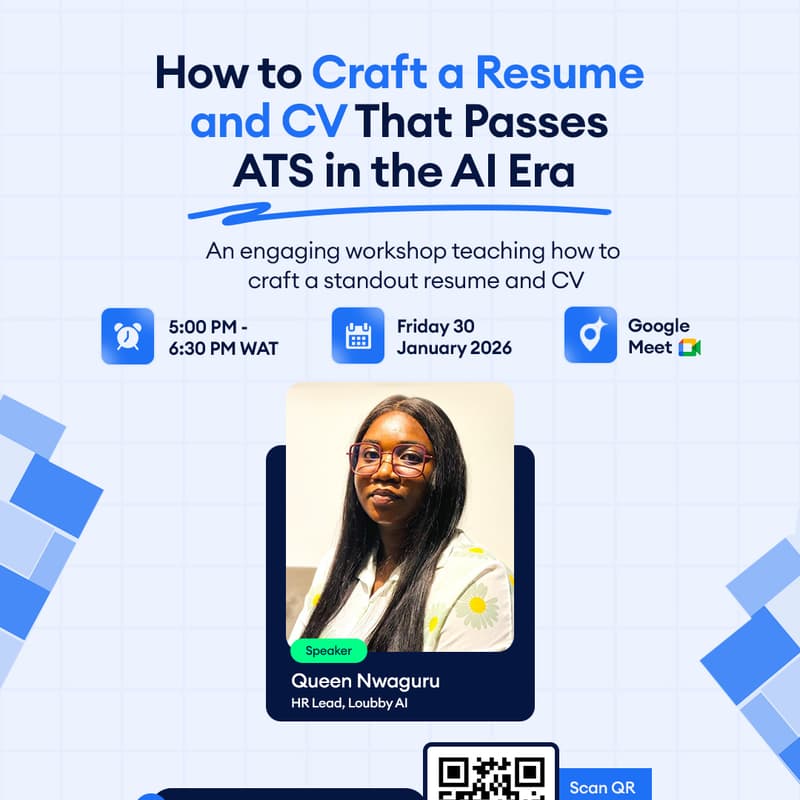
How to Craft a Resume and CV That Passes ATS in the AI Era
Today your CV is screened by software before a human ever sees it. This workshop explains how AI screening works across three stages: ATS parsing, keyword and skill matching, and ranking and scoring. You will learn simple formatting and structure that ATS can read, how to tailor language so systems and recruiters see relevant skills, and what content errors lower your score. The session finishes with guidance for human review and clear, practical takeaways you can apply immediately.
Key Learning Outcomes
By the end, attendees will be able to:
Know why ATS reviews your CV before a human and how that affects visibility.
Identify parsing problems, such as tables, graphics, text boxes, creative fonts, and heavy design, and apply expected formatting: simple layout, clear headings, standard sections, easy-to-read text.
Match your CV to a job by making skills and experience role-specific, using keywords naturally and avoiding keyword stuffing or copying job descriptions word-for-word.
Replace vague statements with measurable outcomes, for example, use "Increased organic traffic by 70% through SEO optimisation" instead of "Responsible for marketing."
Recognize how ranking and scoring work, and ensure clear employment dates, consistent job history, measurable contributions, and complete education and contact details.
Spot common content errors that reduce ATS performance: keyword stuffing, vague descriptions without outcomes, missing dates or qualifications, and using one generic CV for every application.
Prepare your CV for human review by keeping language clear and human, ensuring consistency with your LinkedIn and interview answers, and maintaining accuracy and honesty.
Apply simple takeaways: use clean, readable formatting, tailor your CV to each role, write clearly about what you actually did, and remember ATS is the first gate, not the final decision.