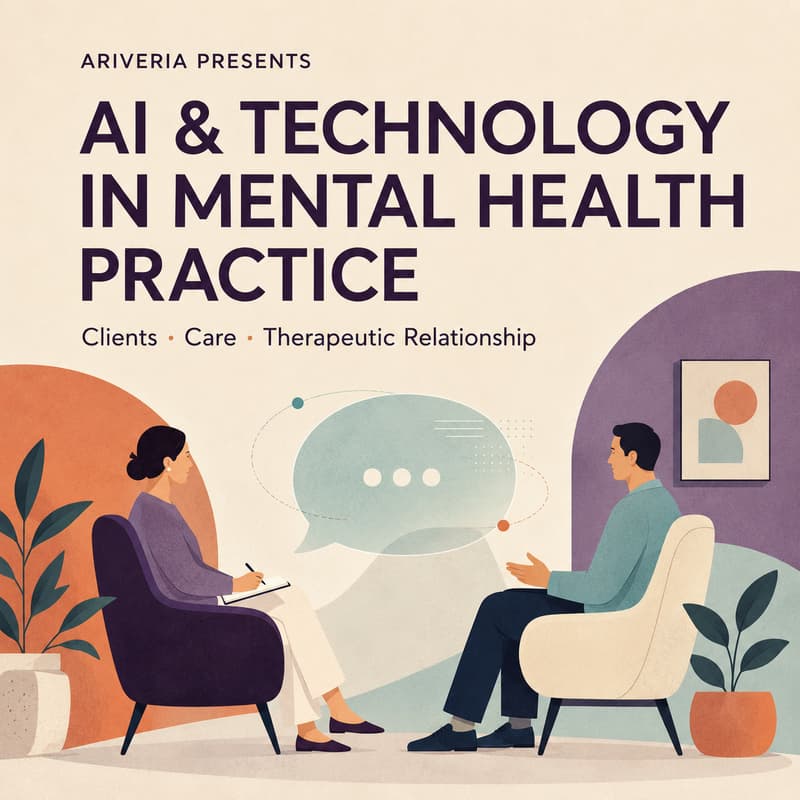
Understanding AI and Technology in Mental Health Practice: Clients, Care and the Therapeutic Relationship
If a client told you that they had been discussing their mental health with ChatGPT, how would you respond?
AI is already entering mental health practice, often through clients before practitioners. People are using ChatGPT and other digital tools to interpret emotions, seek reassurance, prepare for sessions, rehearse difficult conversations and continue reflecting between appointments.
These tools may offer useful forms of support, but they also introduce new questions about accuracy, privacy, dependency, professional boundaries and the therapeutic relationship.
About the session
This introductory, discussion-led session is designed to help mental health professionals understand how AI and emerging technologies are beginning to affect clients, care and everyday practice.
Rather than focusing on technical terminology or promoting particular products, we will examine the practical questions professionals are increasingly likely to encounter:
How are clients already using ChatGPT and other AI tools?
What happens when clients bring AI-generated advice, interpretations or labels into a session?
Does AI become a “silent third party” in the therapeutic relationship?
Where can technology genuinely support practitioners and clients?
What should remain firmly within human and professional judgment?
How should we think about privacy, misinformation, bias, dependency and blurred boundaries?
What we will explore
A plain-language introduction to generative AI and current mental-health technology
Common ways clients are using AI for reflection, reassurance and emotional support
The possible effects of AI on expectations, trust and the therapeutic alliance
Practical uses of technology across intake, administration, psychoeducation and between-session reflection
Risks, ethical questions and professional boundaries
Realistic case scenarios and ways practitioners can begin conversations about AI use with clients
Participants will leave with a clearer understanding of the current landscape, practical questions they can use with clients and a simple framework for considering where technology may, or may not, belong in their practice.
Who should attend?
This session is intended for:
Psychologists
Counsellors and psychotherapists
Clinical social workers
Clinic owners and practice leaders
Other professionals working in mental health and wellbeing
No technical background is required. Whether you are interested, uncertain or sceptical about AI, you are welcome.
Format
The session will combine a concise presentation, practical examples, facilitated case discussion, questions and time to connect with other mental health professionals.
Speakers: Ariveria Team
Nicholas - Chief Executive Officer and Chief Product Designer
Nicholas leads Ariveria’s product direction and experience design, focusing on how technology can support meaningful reflection while keeping human relationships and professional care at the centre.
Neil - Chief Technology Officer
Neil leads Ariveria’s engineering and technical architecture, including the responsible translation of emerging AI capabilities into practical user experiences.
Together, Nicholas and Neil will provide a product-and-technology perspective on the opportunities, limitations and difficult questions surrounding AI in mental health practice.
About Ariveria
Ariveria is a self-improvement and guided-reflection application designed to support people between important conversations, including between professional sessions.
Developed with input from mental-health professionals and informed by established psychological frameworks, Ariveria helps users capture and process the events that occur throughout the week, recognise patterns over time and return to future conversations with greater clarity.
The experience is designed to grow with the user while keeping human relationships, professional judgment and appropriate care at the centre. Ariveria is not intended to replace therapy or professional mental-health support.