
Neuroaesthetics in Europe Masterclass: Understand the Brain and Art
Neuroaesthetics in Europe
An immersive academic journey into how human beings perceive, understand and experience art—led by two internationally renowned figures in neuroaesthetics, Professor Semir Zeki and Professor David Freedberg.
Through lectures, discussion and close encounters with works of art, the programme brings together neuroscience, art history, visual perception, emotion and embodied experience. The taught programme is anchored in Paris, with major museums and artistic traditions across France, Spain and Italy presented as a wider learning route for continued study.
Programme at a glance
11 academic sessions
3 live online sessions
8 in-person sessions in Paris
14+ hours of academic content
August 2026
Taught in English
Maximum group size of 18 participants
No prior neuroscience and art training required
👉 Learn more about the programe
1. Introduction
This is not a conventional museum visit, nor a series of isolated lectures. It is a structured exploration of one central question:
How do human beings perceive, understand and experience art?
Why does colour feel stable when the world around us is constantly changing? How does the brain construct form and movement? Why can a painted gesture, a sculpted body or an image of pain produce an immediate physical and emotional response? What do we really mean when we speak of beauty, empathy or artistic experience?
Neuroaesthetics in Europe brings these questions into direct contact with artworks. Participants will study scientific ideas in the classroom, test them through observation in museums, and return to the works with a transformed way of seeing.
2. Why This Programme
A rare combination of intellectual depth and direct experience
Learn from two formative voices in the field: Semir Zeki and David Freedberg approach neuroaesthetics from different but complementary directions: the visual brain and the response of the beholder.
Build a coherent foundation: follow a carefully structured curriculum covering beauty, colour, form, movement, ambiguity, emotion, embodiment and empathy.
Study in front of the artwork: move beyond reproductions and slides. Observe how perception changes when scale, material, space and bodily presence become part of the encounter.
Connect science with art history: explore what neuroscience can add to historical, social, philosophical and formal interpretations of art—and where its limits lie.
Learn through questions, not prerequisites: the programme welcomes participants from different disciplines. Curiosity and close attention matter more than prior scientific training.
3. Faculty
Professor Semir Zeki
University College London
Emeritus Professor of Neuroaesthetics at UCL and a Fellow of the Royal Society. His pioneering work mapped the functional specialisation of the visual brain for colour, form and motion, and showed that these attributes are processed in parallel. He later extended this research to the neural correlates of affective states—including love, desire and beauty—helping establish neuroaesthetics as a field.
Professor David Freedberg
Columbia University
Pierre Matisse Professor of the History of Art at Columbia University and author of the landmarkThe Power of Images. His research traces psychological and embodied responses to art—from iconoclasm and censorship to movement, emotion and empathy—and in 2001 he founded the Italian Academy’s Humanities and Neurosciences Project to bring humanistic and scientific inquiry into dialogue.
4. The Learning Experience
We aim to move beyond the traditional classroom by creating a continuous exchange between scientific understanding and direct visual experience.
The programme includes:
Faculty lectures
Guided analysis of artworks in museums
Question-and-answer sessions
Small-group discussion
On-site observation exercises
Independent reflection and close looking
Each day in Paris moves between two modes of learning: a morning lecture and discussion, followed by an afternoon museum session focused on selected works. Participants will be invited to test ideas in real time—observing colour, form, movement, ambiguity, expression and bodily response as they occur. You will not simply leave with more information. You will return to the museum with different questions.
5. Programme Structure
11 sessions across three connected stages
Stage 1 · Online Orientation
14 August 2026
The programme begins online with Professor David Freedberg. Participants will introduce their backgrounds and interests, establish a shared vocabulary, and examine the promises and limits of neuroaesthetics as a field.
Stage 2 · Paris Intensive
15–18 August 2026
Eight in-person sessions with Professor Semir Zeki, delivered at a rhythm of two sessions per day. Mornings are devoted to lectures, discussion and questions; afternoons bring the scientific ideas into direct contact with works in Paris museums.
Stage 3 · Online Seminars
20 and 21 August
Two further online sessions with Professor David Freedberg connect the group’s museum encounters to focused studies of Renaissance and Baroque art, embodied response, movement, pain and empathy.
6. Curriculum
Semir Zeki · The Foundations of Neuroaesthetics
Lecture 1 · Art, Beauty and the Acquisition of Knowledge
The foundations of neuroaesthetics; art as a means of acquiring knowledge; distinctions between art and beauty, and between biological and artefactual beauty; abstraction and the formation of concepts.
Lecture 2 · The Brain’s Experience of Beauty
The neural mechanisms engaged by experiences of beauty across different sources—including visual, musical, sorrowful, joyful, moral and mathematical beauty—and the similarities in brain responses across cultural and ethnic backgrounds.
Lecture 3 · Colour as a Construction of the Brain
Colour vision as a guide to how the brain acquires knowledge; the Mondrian experiments; colour and form in Fauvist painting; and the brain’s stabilisation of the visual world, with examples from Vermeer, Goya, Velázquez and others.
Lecture 4 · The Brain as a Knowledge-Acquiring System
The brain as a massively parallel and asynchronous system; the relationship between knowledge and conscious experience; and the ways experience is represented in the brain.
Lecture 5 · The Neurobiology of Kinetic Art
How the brain perceives movement in art—from early expressions of motion to the constructions of Marcel Duchamp, Alexander Calder, Jean Tinguely and others.
Lecture 6 · How the Brain Constructs Form
The construction of form and the principle of form constancy, explored through the work of Cézanne, Picasso, Braque, Ellsworth Kelly and others.
Lecture 7 · Situational Constancy in Art
How the brain recognises and interprets situations across changing visual conditions, considered through works by Ribera, Vermeer, Goya and others.
Lecture 8 · Ambiguity in Art and the Brain
Why ambiguity is central to both artistic experience and brain function, with special reference to Michelangelo, Cézanne and Vermeer.
Each lecture is followed by questions and discussion.
David Freedberg · Images, Bodies and the Limits of Neuroaesthetics
Online Session 1 · What Can Neuroscience Add to Art?
An introductory seminar on the aims, methods and limits of neuroaesthetics. Participants will consider what neuroscience contributes to the understanding of images, why concepts such as “art” and “beauty” resist universal definition, and how the field might move from speculative claims towards the empirical study of human response.
Online Session 2 · Renaissance Art: Movement, Emotion and Embodied Response
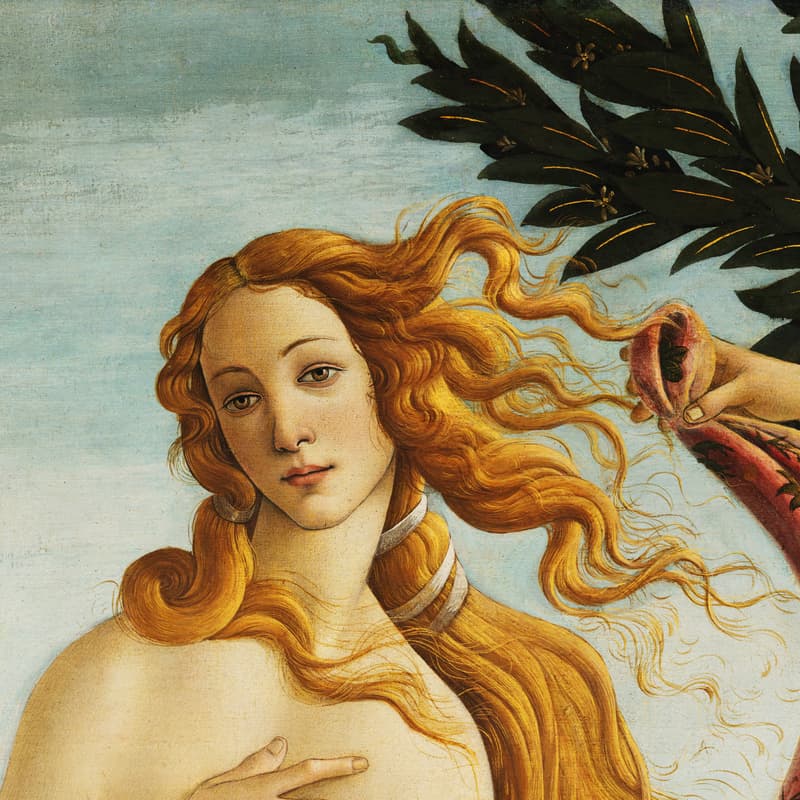
What can neuroscience contribute to the understanding of Renaissance art? Focusing on Botticelli and Michelangelo—and drawing on works in the Louvre, Uffizi, Vatican and Roman collections—this session brings traditional art-historical approaches into dialogue with the neuroscience of movement, emotion and bodily response. Topics include the felt grace and motion of Botticelli’s figures; Michelangelo’s muscular bodies, contrapposto and unfinished sculptures; the relationship between movement and emotion; and the possibilities and limitations of tools such as TMS, EEG and fMRI.
Online Session 3 · Baroque Art: Sensation, Pain and Empathy
Focusing on Caravaggio and Bernini, this session examines embodiment and sensory response in Baroque art. Participants will explore how images of movement, touch, pain and emotion engage motor and sensory systems, and how bodily understanding may underpin what is commonly called empathy. The discussion considers mirror-neuron theory, pre-reflective response, somatosensory experience, inhibition, reward and pleasure, while distinguishing empathy from sympathy. It also asks how biological response interacts with historical, cultural and individual difference.
7. Europe as a Living Laboratory
Artworks are not illustrations of the course. They are part of its evidence.
The programme's in-person teaching takes place in Paris. Museums in Madrid, Florence, Rome and Vatican City form a wider learning route for participants who wish to continue their study independently before or after the programme. Together, these collections provide a living archive through which questions of colour, form, movement, ambiguity, pain, empathy and embodied experience can be explored.
Paris
📍Musée d’Art Moderne de Paris
Works by Mondrian, Francis Bacon, Matisse and the Fauves offer direct points of entry into colour, form and the construction of visual experience.
📍Musée Picasso Paris
Trace different stages of Picasso’s artistic development and examine how the brain constructs and recognises form.
📍Musée du Louvre
Focus on works by Michelangelo and Titian while exploring the body, ambiguity, material presence and embodied response.
📍Musée d’Orsay
Encounter the transformations of colour, perception and representation that shaped modern visual experience.
Suggested Learning Route
The following museums are recommended for independent study and are not part of the taught Paris programme.
Madrid
📍Museo Nacional del Prado
Study works by Velázquez, Goya and Ribera, with particular attention to the perception of faces, bodies and situations. Two visits may be considered to allow for sustained looking.
📍Museo Nacional Centro de Arte Reina Sofía
Encounter Picasso’s Guernica and selected modern works through questions of emotion, pain, movement and collective memory.
📍Museo Nacional Thyssen-Bornemisza
View works by Derain, Van Gogh and Cézanne in relation to colour, form and perceptual construction.
Florence
Uffizi Galleries
Study Botticelli, Piero della Francesca and other Renaissance artists through movement, grace, expression, visual rhythm and historical context.
Galleria dell’Accademia
Focus on Michelangelo’s unfinished sculptures and the powerful bodily response created by figures that appear to emerge from—or remain held within—the stone.
Rome and Vatican City
📍Vatican Museums
Explore Renaissance art, classical sculpture and the artistic legacy that shaped Michelangelo and later European art.
📍St Peter’s Basilica
Consider scale, space, material, devotion and embodied experience in one of Europe’s most consequential religious environments.
📍Galleria Borghese
Examine movement, tension, touch and transformation in Baroque sculpture and painting, with particular relevance to Bernini.
📍Palazzo Barberini and Santa Maria del Popolo
Encounter works by Caravaggio and consider how light, gesture, pain and dramatic immediacy act on the body of the viewer.
8. Who Is This For?
The programme is designed for people interested in art, aesthetics, psychology, neuroscience, media, creativity and human experience, including:
Artists, designers and architects
Writers and creative practitioners
Art historians, curators and cultural professionals
Psychologists, counsellors and educators
Students and researchers in medicine, neuroscience and the life sciences
Anyone seeking a new way to understand art and human experience
No neuroscience background is required
You do not need to arrive with answers. You only need to bring your questions—and a willingness to look closely.
9. Practical Information
Dates: August 2026
Application Deadline: 12:00PM, 14 August 2026, Paris time
Language: English
Group Size: Maximum 18 participants
Academic Format: 11 sessions: 3 online sessions and 8 in-person sessions in Paris
Total Academic Content: Approximately 14+ hours
In-Person Faculty: Professor Semir Zeki · Paris
Online Faculty: Professor David Freedberg · Live via Zoom
On-Site Teaching Dates: 15–18 August 2026
Venue: Novotel Paris Porte de Versailles
Online Teaching Dates: 14 August, 20 and 21 August 2026
Fee: £1,550
The fee covers tuition only. Meals, museum admission, accommodation and transport are not included.