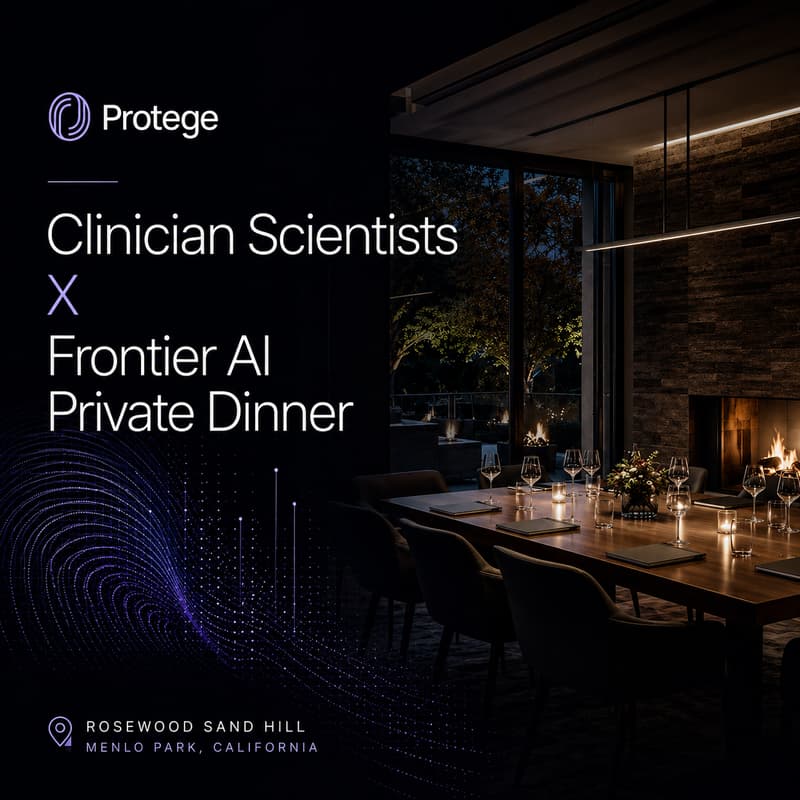

Clinician Scientists X Frontier AI Private Dinner
This dinner brings together leading Clinician Scientists and Frontier Lab model development for an honest, off-the-record evening of real conversation about what is actually moving the needle in safe, effective, and scalable clinical deployment of AI models.
Expect an exceptional dinner experience at Rosewood Sand Hill, one of Palo Alto's most celebrated fine dining destinations, known for its Californian menu, wood-fired grill, and produce from nearby farms to cultivate dishes full of seasonal flavors.
Attending clinician scientists:
Kevin Schulman, MD, MBA is Professor of Medicine, the Associate Chair of the Department of Medicine, Co-Chief for the Division of Hospital Medicine at Stanford and the Faculty Director of Stanford’s new MS in Clinical Informatics Management program. He is a health economist and has over 500 publications on the intersection of health and technology
Jin Ge, MD, is the Director of Clinician AI at UCSF. Jin's research focus on using clinical informatics, data science and AI
Xinran Liu, MD Informatics, Clinical Associate Professor at UCSF
Ron Li, MD, is the Medical Informatics Director for Digital Health, Stanford Health Care, the Co-founder and Director, Stanford Emerging Applications Lab (SEAL), and a Clinical Assistant Professor of Medicine in the Division of Hospital Medicine and Center for Biomedical Informatics Research. Ron's research focuses on the "delivery science" of AI capabilities in care delivery.
Debadutta (Dev) Dash, MD, MPH is an emergency medicine physician and assistant professor in the Department of Emergency Medicine at Stanford. Dev in trained in clinical informatics and his research interest includes computer vision and NLP in quality assurance initiatives.
About your Hosts: Protege helps research teams get access to high-quality, real-world data that is difficult to find, license, and operationalize on their own, while maintaining strong standards for privacy, provenance, and documentation.
The DataLab at Protege research team applies scientific rigor to the data layer, reducing the time and complexity of turning fragmented external data into training- and evaluation-ready datasets so AI researchers can focus more on model development and less on data sourcing and preparation.